1

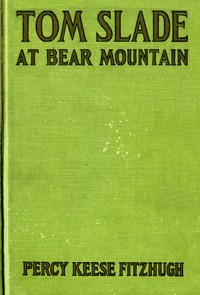
Tom Slade at Bear Mountain — A Closer Reading
(0 User reviews)
943
Project Gutenberg
2023
Not confirmed
Camping -- Juvenile fiction; Boy Scouts of America -- Juvenile fiction; New York (State) -- Juvenile fiction
Readers of public-domain and historical texts
Project Gutenberg digital edition
en
Edition facts
Words
42,541
Reading time
185 min
Text sections
5
The catalog record for Tom Slade at Bear Mountain — A Closer Reading provides practical reading context through 42,541 words, 3 hr 5 min estimated reading time, and 5 detected text sections.
The text analysis averages about 15.2 words per sentence, while the detected sections provide another way to judge how the source is divided.
Project Gutenberg metadata also associates the work with “Camping -- Juvenile fiction,” connecting these edition facts with the source record’s subject description.
Source:
Project Gutenberg record #72177
Percy Keese Fitzhugh's 1925 Boy Scouts novel uses a self-deprecating first-person narrator who recounts Tom Slade's Bear Mountain adventures from a distance, blending campfire comedy with outlaw drama. The narrative voice shifts between wry commentary and brisk action, with dialogue that mixes slapstick and tension.
Editorial Edition Score
4.7/5
★★★★★
★★★★★
Calculated from edition completeness, EPUB availability, text structure and catalogue metadata. Not a user rating.
How this score is calculated
- Description quality20 pts
- Title & short description10 pts
- Source metadata20 pts
- Text length15 pts
- Chapters / structure15 pts
- EPUB file integrity20 pts
Total of 100 points, scaled to a 2.5-5.0 range. Editions with an empty description or a missing EPUB file are not scored.
Edition quality
Read the Text
en painting rowboats as I drove along, and others repairing picturesquely rough structures by the wayside. The camping season had not yet opened and there was an alluring air of preparation as I drove along.
At Kanawauke Lakes, about a third of the distance to the Hudson, is the Boy Scout Headquarters, from which point, I understand, the various camps are provisioned and supervised. A lonely boy scout in a reefer jacket was lolling here; I did not ask him his business thereabouts so early in the spring; he seemed like the first robin to reach the north.
As I drove along the winding way, up hills and down, I noticed primitive country roads here and there, and I wondered where they could lead to in that hilly wilderness. Clearly they were not incidental to the making of the Park; they had an old country look about them, and I wondered to what remote habitations they might lead.
Not so much as a hamlet is there along that scenic course, but now and again I could see embowered in the woods or standing upon distant hillsides quaint little old-fashioned houses, the humble abodes of old settlers, I supposed. There could never have been any community life in that region, for these primitive abodes were secluded and widely scattered among the mountains.
Who were the hardy folk who had reared their simple homes so near to Nature’s heart--so far removed from civilization? The thought of them suggested pioneers of old. For no cabin of a restless Daniel Boone in the depths of the Kentucky wilderness would seem more remote than these same little ramshackle houses must have been less than a score of years ago, before the dedication of this region to the revival of woods-lore and pathfinding. I wondered whether these original inhabitants or their descendants had been ousted in the interests of the reservation. That would seem a pity, I told myself. They must have been a bold, adventurous race.
It was quite interesting, the contrast between these dwellings as I saw them hidden here and there in the distance, and the consciously primitive architecture of those modern camps. I could not help it, my fancy wandered to the old life of the district, and I conjured up visions of the hardy adventurers who must once have lived there. What did they do for a living? There was no village life. There was one of these houses, two hundred years old I should say, standing a little distance back from the road, and against its unpainted, weather-beaten side rested a motorcycle. I suppose perhaps one of those clanking, decorated paragons of romance, a state trooper, lived there.
Well, I mused, you cannot make modern camping and outdoor life and all that anything like the life of real scouts and pioneers; you can’t do it. The motorcycle sneaks in when you are not looking, they have machinery for making logs correctly rough, and when they are pressed for time they put up cabins in the glare of an arc light. You cannot link up the past with the present. The one is the one thing and the other is quite another, and there you are. But they are both very interesting, and the aggressiveness of one and traces of the other one were to be seen in this wild territory extending in from the Hudson Highlands.
Then suddenly, just as this historic name of Hudson Highlands was in my thoughts, I went rolling down-hill and around sweeping turns till the majestic river opened in full view before me. And soon I was skirting an extensive lawn where games are played, I suppose, and was making a circuitous approach to the picturesque rubble-stone building which is known as the Bear Mountain Inn. This is the neighborhood of Bear Mountain, one of those frowning giants that guards the noble river in its course. In popular usage its name has been used for the whole region through which I had passed.
If I had been truly of the spirit of those hardy folk to whom I was pleased to attach so much romance and tradition I suppose I should have climbed the mountain or done something of that sort. But instead I fell back into the modern way and parking my car in front of the attractive Inn I went inside for a hearty luncheon.
CHAPTER III—A Stranger
There were some scout officials lunching at the Inn; I suppose they had come up from the city. They wore khaki and ate chicken salad and talked about some Council or other; that and a new store-house. Not many others were lunching; it was too early in the season.
The narrator of Tom Slade at Bear Mountain introduces himself as a golf-playing bystander who “stumbled into the prelude of that black drama” while visiting his Aunt Martha in Kingston, New York. This framing device—a grown man recounting a boy’s adventure from a wicker chair—gives the story an ironic, self-aware tone unusual for a 1925 Boy Scouts novel. The narrator openly admits he was “either sitting in my wicker chair on the porch or playing golf” while Tom Slade confronted outlaws and dug for treasure. Yet the narrative quickly shifts into Tom’s perspective, creating a curious split between the detached observer and the immersive action.
A Narrator Who Steps Aside
The opening chapter establishes a distinctive narrative voice: the first-person speaker is not Tom Slade but an unnamed adult who repeatedly downplays his own role. He jokes that Aunt Martha was “really the one who did that” when Slick Somers was sent sprawling, and he speculates about what might have happened “if I had not stumbled into the prelude.” This self-deprecating frame distances the reader from the main action while also vouching for its authenticity. The narrator’s wry asides—such as deriving “amusement from thinking how my Aunt Martha was, as one might say, remotely involved”—create a conversational, almost conspiratorial tone. Yet after Chapter I, this voice largely disappears, and the story proceeds in a conventional third-person limited to Tom. The effect is a brief, playful metafictional gesture that sets the novel apart from straightforward adventure tales.
Comic Dialogue and Campfire Rhythm
Fitzhugh’s dialogue relies on rapid-fire banter and deadpan humor, especially between Tom and his friend Brent. In the cabin scene, Brent’s mock-serious observations—“I think this flourishing metropolis is haunted or bewitched or something. I just cut the peel off a potato only to find that there was no potato inside it”—are met with Tom’s exasperated corrections: “You peeled it all away.” The exchange mimics a vaudeville routine, with Brent playing the bumbling intellectual and Tom the practical camper. Their repartee extends to wordplay: Brent puns on “sole of camping” and quips about learning to slice bacon “over the radio; also how to make salads. Station E-A-T-S.” This comic rhythm slows the narrative during domestic interludes, contrasting with the tense, clipped sentences of action sequences like the rope climb out of the gulch. The shifts in pace are deliberate: leisurely campfire chatter gives way to sudden alerts (“Shh, listen!”), and the tone pivots from parody to genuine suspense.
Setting as a Character: The Cabin and the Gulch
The physical environment in Tom Slade at Bear Mountain is rendered with sensory specificity that grounds the fantastical outlaw plot. The cabin is described as a “little primitive abode, nestling in the surrounding wildness,” with bunks “like berths on a ship” and an old-fashioned bed “of faded yellow wood with flowers painted on.” Details such as the “rusty old pan” on Brent’s lap and the “red-hot lid” of the stove create a tactile, lived-in space. The gulch, by contrast, is a place of danger and concealment: the rope dangling against masonry, the “obscure trail,” and the “circle of light” from a flashlight all suggest a landscape that hides as much as it reveals. Fitzhugh uses setting to modulate pace—the cozy cabin invites leisurely dialogue, while the gulch demands quick, physical action. The narrator’s early remark that he “landed plunk in the middle of the eighteenth century” hints at the anachronistic thrill of finding outlaws in a modern Scout story, but the prose stays rooted in the immediate, tangible world of the 1920s Hudson Valley.
Readers will find that the novel’s pleasures lie less in the predictable plot than in the texture of its voice and the rhythm of its scenes. The narrator’s brief intrusion at the start rewards attention, as it colors everything that follows with a hint of ironic distance. Pay particular attention to the dialogue—especially the exchanges between Tom and Brent—where Fitzhugh’s ear for comic timing is most evident. The shifts from banter to breathless action are the book’s real engine.
That rainy afternoon, Tom Slade at Bear Mountain left me with a peculiar ache—the narrator’s wry grin barely hiding his loneliness between the campfire jokes. I closed it, then drifted to the shelf, pulled down Red love — Edition Insights. Its quiet examination of longing felt like the same shadow, cast in a different light. I didn’t plan it; the rain just kept falling.
There are no reviews for this eBook.
There are no comments for this eBook.
Reader reflection
Record your reading impressions
A brief reflection can help important ideas stay with you longer.
Your progress
0
/
10
2
How did the book work for you overall?
3
How likely are you to recommend this book?
4
What was the reading difficulty like?
5
Was the book easy to understand?
6
Did it raise ideas you would like to talk about?
7
Did any part of the book stay with you emotionally?
8
How did the reading compare with what you expected?
9
Which lesson or insight stayed with you?
10