1

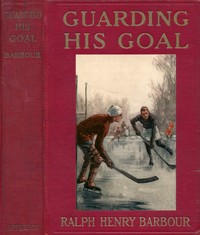
Guarding His Goal — Edition Insights
(0 User reviews)
1255
Project Gutenberg
2020
Not confirmed
Teenage boys -- Juvenile fiction; Boarding schools -- Juvenile fiction; Hockey -- Juvenile fiction
Readers of public-domain and historical texts
Project Gutenberg digital edition
en
Edition facts
Words
67,855
Reading time
296 min
Text sections
23
The catalog record for Guarding His Goal — Edition Insights provides practical reading context through 67,855 words, 4 hr 56 min estimated reading time, and 23 detected text sections.
The text analysis averages about 15.5 words per sentence, while the detected sections provide another way to judge how the source is divided.
Project Gutenberg metadata also associates the work with “Teenage boys -- Juvenile fiction,” connecting these edition facts with the source record’s subject description.
Source:
Project Gutenberg record #62590
In Ralph Henry Barbour's boarding-school hockey novel, the narrative moves between Toby Tucker's room, the rink, and Greenburg, using lost money, a marked coin, and a pair of gloves to build suspense. The story's structure alternates between athletic practice and personal dilemmas, with recurring images of locked drawers and hidden objects.
Editorial Edition Score
4.9/5
★★★★★
★★★★★
Calculated from edition completeness, EPUB availability, text structure and catalogue metadata. Not a user rating.
How this score is calculated
- Description quality20 pts
- Title & short description10 pts
- Source metadata20 pts
- Text length15 pts
- Chapters / structure15 pts
- EPUB file integrity20 pts
Total of 100 points, scaled to a 2.5-5.0 range. Editions with an empty description or a missing EPUB file are not scored.
Edition quality
Read the Text
scribed on a small white card, that met the gaze of the visitor to Number 22 Whitson. As Number 22 was the last room on the corridor, and as the single light was at the head of the stairway, the legend was none too legible after nightfall, and the boy who had paused in front of it to regain his breath after a hurried ascent of the two steep flights had difficulty in reading it. When he had deciphered it and glanced at the little cardboard box below, in which reposed a tiny scratch-pad and a stubby pencil, he smiled amusedly ere he raised his hand and rapped on the portal.
“Come in!” called a voice from beyond the door, and the visitor turned the knob and entered.
The room was small, with a ceiling that sloped with the roof, and rather shabby. There was an iron cot at one side, and a small steamer trunk peeped out from beneath it. A bureau, grained in imitation of yellow oak, was across the room and bore a few photographs in addition to such purely useful articles as brushes and a comb and a little china box holding studs and sleeve-links. The room contained two chairs, although at first glance one seemed quite sufficient for the available space: an armchair boasting the remains of an upholstered seat and a straight-backed affair whose uncompromising lines were at the moment partly hidden by a suit of blue serge. The one remaining article of furniture was a deal table such as one finds in kitchens. It was a good-sized table and it stood against the wall at the right of the window embrasure and under the gas bracket. From the bracket extended a pipe terminating at a one-burner gas stove which, on a square of zinc, adorned one end of the table. On the stove was a smoothing iron of the sort known to tailors as a goose. A second such implement was being pushed back and forth over an expanse of damp cloth in a little cloud of steam, hissing, but less alarmingly than the other sort of goose, and filling the room with a not unpleasant odor. The iron didn’t stop in its travels to and fro, but its manipulator, a well-set-up boy of fifteen with very blue eyes and red-brown hair, looked around as the visitor entered.
“Hello,” he said. “Sit down, please, and I’ll be through this in a shake.”
“No hurry.” The visitor seated himself gingerly in the dilapidated armchair and draped a pair of gray trousers across his knees. While the boy at the table deftly lifted the dampened cloth and laid it over another part of the coat he was pressing and again pushed the hot iron back and forth, the visitor’s gaze traveled about the little room in mild surprise. There were no pictures on the white walls, nothing in the shape of decoration beyond three gaudily colored posters. Two of them depicted heroic figures in football togs surmounting the word “Yardley” in big blue letters, and the third was an advertisement for an automobile, showing a car of gigantic size, inhabited by a half-dozen lilliputian men and women, perched precariously on the edge of a precipice. The boy holding the gray trousers hoped that the man at the wheel, who seemed to be admiring the view with no thought of danger, had his brakes well set! He hadn’t known that anywhere in Yardley Hall School was there a room so absolutely unattractive and mean as Number 22. To be sure, Whitson was the oldest of all the dormitories and so one naturally wouldn’t look for the modern conveniences found in Merle or Clarke or Dudley, but he had never suspected that Poverty Row, as the top floor of Whitson was factitiously called, held anything so abjectly hideous as the apartment of T. Tucker. Further reflections were cut short by his host, who, returning the iron to the stove and whisking the cloth aside, picked up the coat he had pressed, folded it knowingly and laid it on the foot of the bed. After which, plunging his hands into his trousers pockets, he faced the visitor inquiringly.
“Something you want done?” he asked briskly.
“Yes, if you can do it this evening,” was the reply. “But you look pretty busy. It’s just this pair of trousers, Tucker. I want to wear them away in the morning.”
“All right, I’ll do ’em. Cleaned or just pressed?” Toby Tucker took the garment and examined it with professional interest.
“Oh, just pressed. I don’t think they’re spotted. Are you sure you want to do them? You look sort of busy already.” His glance went to the half-dozen coats and waistcoats and trousers lying about.
The story opens not on the ice but at a dimly lit dormitory door, where a handwritten card reading "T. TUCKER Clothes Cleaned and Pressed" introduces the protagonist through his side business. This small detail—a sign and a box for orders—establishes Toby's resourcefulness and the boarding-school economy. The narrative quickly moves from the corridor to Toby's cramped room, with its sloping ceiling and shabby furniture, grounding the reader in a specific, tactile setting.
A Room of Small Objects
The room in Number 22 Whitson is a space of limited means and careful arrangement. An iron cot, a small steamer trunk, and a bureau with shallow drawers define Toby's material world. The text lingers on the contents of his pockets: sixteen cents in coppers, a crumpled dollar bill, a knife, a bone button, a skate key, a memorandum-book, a fountain pen, two pencils, a handkerchief, a roll of lead wire, the inch-long remains of a pencil, a letter from his mother, and the end of a roll of adhesive tape. This inventory is not mere description; it is a catalogue of a boy's life, where every item has a use or a story. The lost money—six dollars and a quarter in a small box hidden under clothes—becomes a crisis because it represents a tangible loss in a world where resources are scarce. The repeated searches through the same drawers, the shaking out of clothes, and the turning out of pockets create a rhythm of anxiety and futility.
Between Practice and Pocket
The narrative structure alternates between athletic scenes and personal setbacks, with the hockey rink serving as both a refuge and a stage for conflict. The chapter titles indicate a pattern: "First Practice" is followed by "The Scholarship Awards," then "T. Tucker Plays Goal." The excerpts show that even off the ice, Toby's mind is on his equipment—a skate key emerges from his trousers, and later a pair of gloves becomes a plot point. The lost money episode interrupts a planned trip to Greenburg, linking the financial subplot to the broader setting of the school town. Arnold's casual offer to charge purchases at local shops reveals an informal credit system among students, one that Toby, as a scholarship winner, feels he cannot risk. The tension between wanting to fit in and needing to be careful is a recurring undercurrent.
The Weight of a Scholarship
Toby's status as a scholarship student is mentioned explicitly only once in the excerpts, but it colors his decisions. When Arnold suggests charging items in Greenburg, Toby responds: "When you win a scholarship you have to be mighty careful, don't you?" This line, delivered with a laugh from Arnold who never won one, highlights a class distinction within the school. The scholarship is not just an honor but a constraint, a reason to avoid debt and scrutiny. The lost money—six dollars and a quarter—is a significant sum for a boy in his position, and the theft (if it is theft) threatens his ability to participate in the social life of the school. The narrative does not resolve this thread in the excerpts, leaving the reader to wonder whether the money will reappear or whether Toby will be forced to take a risk.
Recurring Images of Hiding and Seeking
Throughout the excerpts, objects are hidden, sought, and sometimes lost. The money is hidden in a bureau drawer under clothes; the box is small and easily overlooked. Toby's pockets are turned inside out, yielding a collection of odds and ends but not the missing sum. Later, a marked coin and a pair of gloves become significant, suggesting that the pattern of concealment and discovery continues. The frontispiece illustration shows Toby "a little pale, crouched and watched," a posture of vigilance that echoes the searching motions of the text. The narrative's movement between rooms—from the dormitory to the rink to Greenburg—creates a geography of hiding places: drawers, pockets, lockers. The reader is invited to notice what is visible and what is concealed, and to track the objects that move through the story.
Readers attentive to small details will find that Barbour's novel rewards careful observation of its physical world. The lost money, the marked coin, and the pair of gloves are not just props but clues to character and plot. The structure of the book, with its alternation between athletic action and domestic anxiety, creates a rhythm that mirrors Toby's own balancing act. Pay attention to what is in the pockets and what is not.
Reading about Toby’s locked drawer, I remembered my own childhood hiding place—a hollowed-out dictionary where I kept a smooth river stone. That secret weight felt like the only honest thing I owned. Too dearly bought — Story, Setting & Ideas brought back that same ache, the quiet cost of keeping something safe from prying eyes. Some stories simply know how doors stay shut.
There are no reviews for this eBook.
There are no comments for this eBook.
Reader reflection
What did you think of this book?
Answer a few questions and save a private reflection on this device.
Your progress
0
/
10
2
Was reading this book enjoyable?
3
Would you pass this book on to a friend?
4
What was the reading difficulty like?
5
Did you relate to its people, ideas, or situations?
6
Did you gain anything practical from the text?
7
How clearly were the main ideas presented?
8
How would you describe its reading pace?
9
What changed or sharpened your thinking?
10