1

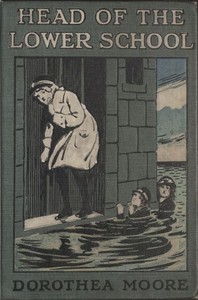
Head of the Lower School — Reading Notes
(0 User reviews)
397
Project Gutenberg
2018
Not confirmed
Girls -- Juvenile fiction; Boarding schools -- England -- Fiction; Lincolnshire (England) -- Juvenile fiction
Readers of public-domain and historical texts
Project Gutenberg digital edition
en
Edition facts
Words
65,257
Reading time
284 min
Text sections
30
The catalog record for Head of the Lower School — Reading Notes provides practical reading context through 65,257 words, 4 hr 44 min estimated reading time, and 30 detected text sections.
The text analysis averages about 16.7 words per sentence, while the detected sections provide another way to judge how the source is divided.
Project Gutenberg metadata also associates the work with “Girls -- Juvenile fiction,” connecting these edition facts with the source record’s subject description.
Source:
Project Gutenberg record #56594
Dorothea Moore's school story uses precise Lincolnshire marshland setting and layered dialogue to reveal character. The preface establishes the landscape as a character; the charade-planning scene shows how the girls' speech patterns and group dynamics drive the plot.
Editorial Edition Score
4.8/5
★★★★★
★★★★★
Calculated from edition completeness, EPUB availability, text structure and catalogue metadata. Not a user rating.
How this score is calculated
- Description quality20 pts
- Title & short description10 pts
- Source metadata20 pts
- Text length15 pts
- Chapters / structure15 pts
- EPUB file integrity20 pts
Total of 100 points, scaled to a 2.5-5.0 range. Editions with an empty description or a missing EPUB file are not scored.
Edition quality
Read the Text
Joey looked up from her refractory laces, shaking her thick fair hair out of her eyes.
"But _the_ letter might have come by the post, Gav. If it has, Mums will want to know at once, won't she?"
"'Course. I'd forgotten that letter might have come," Gavin answered more soberly. "There, leave that lace to dry hard, old girl, and you'll have a topping tag. Did the minister expect it so soon?"
"He said he just thought it might come."
"Will it come if you've failed to get the scholarship?" Kirsty asked.
Joey considered. "I don't know, but I shouldn't think they would write to everybody to tell them that they'd failed. Mr. Craigie said there were seven hundred and eighty-two candidates. Just think of all the stamps!"
The family did think, with a gasp. When they thought at all about money, it was as a thing which must be kept for boots and bread and margarine--never as a thing that you could squander recklessly on luxuries like stamps.
"No, I shouldn't think there would be a letter if you've failed," Ronnie agreed sadly. He had a right to be serious, for he was, after Joey, the person most immediately concerned with the all-important letter, which it was remotely possible that the postman might bring to Crumach to-day.
The five had always known that Father thought boys and girls should share alike where education was concerned. Joey was to have her chance at a big public school as well as Gavin and Ronnie, and Kirsty was to follow when she was old enough, as surely as little Bingo. But before Gavin had been two years at the preparatory, from which he was out to win an Eton or Winchester scholarship, the news came to the pretty house in Hertfordshire--a house which always seemed to strangers so bewilderingly full of children, dogs and cats--that Major Graham had fallen wounded into the hands of the Huns, during our last retreat in the anxious spring of 1918, and had succumbed to the brutalities of a prison camp in the land of Kultur. His private means had been sunk in an Austrian oil-mine, and were gone beyond recall; he had insured his life, and Mums was left to bring up five healthy, hungry children on the insurance money and her pension--somehow.
Father owned a little square-built stone cottage in a tiny Highland village, four miles north of Crumach. Living was comparatively cheap at Calgarloch, and they had spent the last glorious leave there all together. Mums and the family moved north, and in the rent-free cottage held a council of war to review their resources. Joey could see that picture now; Mums, very slight and fragile-looking in her widow's weeds, and the family sprawling about her, all long of leg and outgrown as to clothes, but fiercely in readiness to fight any notion on Mums' part that she might have managed for them better.
It was then Mums had explained that however economically the family lived in Calgarloch it was only possible that one child could be kept at school at a time. If--Mums stopped herself and substituted "when"--Gavin won his scholarship, Joey could go to school. Ronnie would have to wait until she left; Ronnie was nearly three years younger, so waiting would be possible. Until Gavin fought his way out into a public school the rest of the family must be content with the village school.
"I'll get that scholarship, Mums," Gavin had promised, growing hot and red; and he had kept his word. The name of Gavin Graham had headed the list of Winchester scholars at the end of last term; and Joey's chance had come.
By that time the four younger Grahams had grown used to going daily to the little village school, where the pupils at most numbered fifteen, and the master taught "the Latin" with a strong Doric accent and an absolute enthusiastic love of all learning, which could not help communicating itself to the boys and girls in his care. He taught the secular subjects untiringly, and the minister, Mr. Craigie, poured the "Shorter Catechism," and much else, into the children twice a week so sternly, that it was at first quite a surprise to the Grahams to find him the best of comrades and friends out of school.
Dorothea Moore opens Head of the Lower School with a preface that maps the Lincolnshire marshlands in careful, almost geological detail: the gleaming Wash, the dykes, the stakes along the shore, and a river that seems to hold itself back from flooding. This is not mere scene-setting; the landscape is presented as a stage for the story that follows, and the narrator insists that the school itself—Redlands College—is proud of what happened there. The voice is confiding, slightly arch, and deliberately frames the tale as something already legendary among its characters.
Landscape as Prologue
The preface does more than describe geography. Moore personifies the marsh: the river has “no banks when the tide is full” and keeps from slopping over by “an amazing steadiness of hand in which you are not wise to place implicit trust.” That phrase—not wise to place implicit trust—echoes the schoolgirls’ own suspicions about the Professor later in the excerpt. The landscape is a warning, a promise of instability beneath a calm surface. The narrator then hands the story directly to the reader: “Here it is! Gabrielle or Noreen would like to tell it, I know; but you’d better let me.” This metafictional gesture establishes a playful, proprietary tone that colours the entire narrative.
Dialogue as Engine
The charade-planning scene in Blue Dormitory showcases Moore’s ear for schoolgirl speech. The girls talk over one another, interrupt, and shift from slang to mock-formality in a single breath. Noreen’s “Shut it, you old ghoul” sits alongside Joey’s “Silly cuckoo” and Syb’s impatient “What do you want, Noreen?” The rhythm is fast, with short lines and minimal attribution; the reader must track who speaks by content and cadence. Moore also uses dialogue to advance suspicion about the Professor: Noreen’s suggestion that the charade test whether he “looks guilty and shrieks, ‘Lights!’” is both a plot device and a character note—these girls are not merely playing; they are investigating.
Voice and Hierarchy
Moore differentiates the four girls through their speech patterns. Noreen is the ringleader, decisive and ungrammatical: “it’s us that are going to.” Joey is the idea-giver, tentative but creative: “I say, why shouldn’t we do a charade on the lines of Hamlet’s player-people?” Syb is the pragmatist, cutting through enthusiasm with objections. Barbara is the excitable follower, latching onto details like “the Huns putting them into wells.” Their dynamic is reinforced by the physical setting—dressing in a hurry, tying hair-ribbons, the gong sounding—which creates a sense of pressured intimacy. The Head, Miss Conyngham, appears only briefly, but Joey’s reluctance to approach her (“Oh, I say, won’t one of you?”) hints at the power structures within the school.
Theatricality and Suspicion
The charade is not just entertainment; it is a test. The girls plan to perform a scene based on Hamlet’s play-within-a-play, hoping to catch the Professor’s reaction. Moore embeds the school’s internal drama within a literary frame: the girls are both actors and detectives. The choice of German as a charade word (“Germ” for bacteria, “Anne” for a spy) reflects wartime anxieties without naming the war directly. The narrator’s earlier promise that the school is “proud of that story” suggests that the charade—and whatever follows—will become part of Redlands’ lore. Moore uses the girls’ own theatricality to blur the line between performance and reality, a technique that gives the school story an unexpected edge.
Moore’s prose rewards attention to its small, deliberate choices: the way a landscape is personified, the rhythm of overlapping dialogue, the use of a charade to probe character. Readers who listen for these details will find a school story that is also a study in group psychology and narrative voice. The excerpts offer only a glimpse of the plot, but the authorial hand is already visible—confident, precise, and quietly mischievous.
I keep thinking about how the marshland in Head of the Lower School felt heavier than any character—silent, watchful, always present. That same quiet weight lingers in Reuben Stone's discovery — A Reader’s Guide, where the landscape seems to hold secrets before anyone speaks. Odd, how two different stories can share that hush between lines.
There are no reviews for this eBook.
There are no comments for this eBook.
Reader reflection
How did this book work for you?
Your answers remain private and are stored only in this browser.
Your progress
0
/
10
2
How did the book work for you overall?
3
How likely are you to recommend this book?
4
How easy was the book to follow?
5
Did you gain anything practical from the text?
6
What was its emotional impact?
7
Which element worked best for you?
8
Would you read this book again?
9
What changed or sharpened your thinking?
10