1

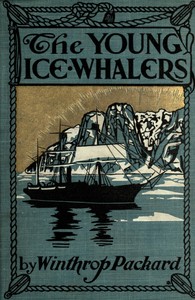
The Young Ice Whalers — Inside the Classic
(0 User reviews)
1803
Project Gutenberg
2022
Not confirmed
Arctic regions -- Juvenile fiction; Whaling -- Juvenile fiction; Inuit -- Juvenile fiction
Readers of public-domain and historical texts
Project Gutenberg digital edition
en
Edition facts
Words
88,461
Reading time
385 min
Text sections
18
For The Young Ice Whalers — Inside the Classic, the stored edition analysis reports 88,461 words, 6 hr 25 min estimated reading time, and 18 detected text sections.
The text analysis averages about 19.5 words per sentence, while the detected sections provide another way to judge how the source is divided.
Project Gutenberg metadata also associates the work with “Arctic regions -- Juvenile fiction,” connecting these edition facts with the source record’s subject description.
Source:
Project Gutenberg record #67445
An editorial note on Winthrop Packard's 1903 juvenile novel, examining its narrative voice, pacing shifts between adventure and domestic comedy, and the portrayal of Inuit characters through language and cultural detail.
Editorial Edition Score
4.9/5
★★★★★
★★★★★
Calculated from edition completeness, EPUB availability, text structure and catalogue metadata. Not a user rating.
How this score is calculated
- Description quality20 pts
- Title & short description10 pts
- Source metadata20 pts
- Text length15 pts
- Chapters / structure15 pts
- EPUB file integrity20 pts
Total of 100 points, scaled to a 2.5-5.0 range. Editions with an empty description or a missing EPUB file are not scored.
Edition quality
Read the Text
ought of his Saturdays and holidays, of the long vacation in the heat of summer; and then he saw the careworn look in his father’s face, and he held up his head and spoke swiftly.
“I’d be glad to help you in the office if I can, sir,” he said; “I’m pretty handy at figures and have a good idea of book-keeping. I’d like to do it, if you’ll only let me. A year or two of it would be good for me. Then, if things go better, it will not be too late to go to college after all. Perhaps I shall feel more like it then.” He smiled somewhat grimly, mentally noting how swiftly ideas and ideals change. College, which had seemed inevitable only a few short hours before, had not appealed to him except as a pleasant place to spend time and enjoy himself. Now he suddenly seemed to see how useful it might be to him in the future, yet that he would probably not be able to go there.
“It is a good deal of a sacrifice, my boy,” said his father, “but you really could help me there a great deal. I need some one with the force whom I can be sure of as loyal to my interests. Think it over for a day, and if you are still willing you can begin right away. It is almost worth while to be ruined financially to find one’s son so plucky about it and so loyal to the house. I shall have to let you go now; I am to have a business conference here in a few minutes, and I see the others coming down-street now. Be as cheerful as you can about this with your mother. I think it is hardest on her; but if we can all be patient for a few years, I think I can pull through and get matters in good shape again. Good-by.”
Harry left the library, put his hat on, and stepped out of doors. It was one of those days in late April that make one glad he is alive, and in New England. The grass was already green upon the lawn, the buds were swelling in the shrubbery, and a bluebird caroled as he fluttered from the bare limbs of a maple and inspected the bird-box where he planned to build his nest in spite of the scolding of the English sparrows that flocked about and threatened to mob him, but did not quite dare. Harry turned down the gravel path toward the boat-house. Beyond, the waters of the bay sparkled and ruffled in the wind, and his knockabout, new only last year, swung and curtsied at the mooring as if in recognition of her master. The lump came in Harry’s throat again. If he worked in the office, he would have little time in the long bright summer just ahead of him to sail the blue waters of the bay. Besides, perhaps he ought not to keep the knockabout. The boat was worth money, and should be given up just as much as the horses. Well, he had the boat now, and the afternoon; he would have a sail while yet he might. It would give him a chance to think over things, too, as his father had suggested, though he knew his mind was made up already. He found the skiff at the landing, rowed to the boat, hoisted mainsail and jib, then, as an afterthought, instead of towing the skiff astern he made it fast to the mooring and sailed away without it. It was one of those little decisions which mean nothing at the time, but which, such are the mysterious ways of Fate, often change the whole current of life.
Packard opens The Young Ice Whalers with a measured, almost psychological portrait of seventeen-year-old Harry Desmond, whose character is described as one that “responds easily to outside influences.” This careful framing of the protagonist’s malleability sets up a narrative voice that is more reflective than the typical adventure tale. The early chapters move deliberately, establishing family circumstances and the decision to join a whaling voyage. Once the action shifts to the Arctic, however, the prose accelerates into brisk, sensory descriptions of ice navigation and whaling operations. The contrast between these two paces—the contemplative domestic scenes and the urgent, physical sequences at sea—gives the novel an uneven but engaging rhythm.
Voice and the Shaping of Character
The narrator’s tone in the opening chapter is notably analytical. Harry is not a stock hero; his strengths and weaknesses are presented as contingent on circumstance. The line “out of whom circumstances make much that is good, or sometimes much that is ill” signals a deterministic view of character that is unusual for juvenile fiction of the period. This voice recedes once the voyage begins, replaced by a more conventional third-person observer who reports action and dialogue. The shift suggests that Packard was more interested in the psychological premise than in sustaining it, but the initial framing colors how readers interpret Harry’s later decisions.
Comic Pacing and Cultural Misunderstanding
A notable change in pace occurs in the doughnut episode, where the narrative slows to accommodate a farcical set piece. The scene relies on physical comedy—exploding doughnuts, a burned Eskimo named Pickalye contorted to cool his neck—and on linguistic humor, as when Pickalye declares “White man’s grub too much shoot.” The pacing here is leisurely, with detailed descriptions of each mishap. This contrasts sharply with the compressed, urgent prose of whaling or ice-buckling passages. The episode also reveals Packard’s method of using humor to mediate cultural difference: the Eskimo characters are bewildered by white technology, but the joke is as much on Joe’s cooking as on their misunderstanding.
Inuit Speech and Narrative Distance
Packard renders Inuit dialogue in a simplified, accented English (“No want to see him; want to eat him”). This choice creates a linguistic barrier that distances the native characters from the reader, even as they are given comic agency. The narrative voice does not adopt their perspective; instead, it observes them from outside, often through the amused eyes of Joe or Harry. The effect is a mixed portrayal: the Inuit are shown as skilled (using a seal spear to fry doughnuts) and as individuals with names and families, yet their speech patterns mark them as exotic. The pacing of these interactions is generally slower, allowing space for cultural detail, but the narrative never fully bridges the gap between observer and observed.
Readers attentive to narrative craft will notice how Packard’s voice modulates between introspection, adventure, and comedy. The novel’s structure—alternating between reflective openings, brisk action, and domestic interludes—invites consideration of how pacing shapes the reader’s engagement with both the human and the environmental challenges of the Arctic. The excerpts suggest a work that is as much about the boy’s inner development as about external exploits, though the balance tips decisively toward the latter once the ice is reached.
Re-reading the note on Packard’s boys, I remembered how the narrator’s patient, almost tender handling of cold and silence stayed with me. That same unhurried care for small oddities surfaces in Odd made even — Inside the Classic, though there the strangeness is lighter, more domestic. Both feel like old friends describing what they noticed, not what they proved.
There are no reviews for this eBook.
There are no comments for this eBook.
Reader reflection
How will you remember this book?
Save your reaction, strongest insight, and memorable passage.
Your progress
0
/
10
2
How much did you enjoy the reading experience?
3
Would you recommend this book to another reader?
4
How much effort did this book require?
5
Did this book create an emotional response?
6
How useful did the reading feel?
7
How did the pace of the book feel?
8
Did you relate to its people, ideas, or situations?
9
What is the main idea you are taking away?
10