1

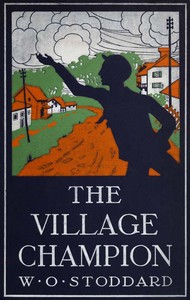
The Village Champion — Edition Insights
(0 User reviews)
1401
Project Gutenberg
2018
Not confirmed
Boys -- Juvenile fiction; New England -- Juvenile fiction; Villages -- Juvenile fiction
Readers of public-domain and historical texts
Project Gutenberg digital edition
en
Edition facts
Words
74,082
Reading time
323 min
Text sections
35
Before opening The Village Champion — Edition Insights, the edition data offers a quick orientation: 74,082 words, 5 hr 23 min estimated reading time, and 35 detected text sections.
The text analysis averages about 15.9 words per sentence, while the detected sections provide another way to judge how the source is divided.
Project Gutenberg metadata also associates the work with “Boys -- Juvenile fiction,” connecting these edition facts with the source record’s subject description.
Source:
Project Gutenberg record #56933
William O. Stoddard's 1903 novel follows Barnaby's journey from a New York City tenement to a New England village, where Zeb Fuller's wit and a series of mysteries—including a heifer in the academy and a haunted belfry—unfold through dialogue and local color.
Editorial Edition Score
4.8/5
★★★★★
★★★★★
Calculated from edition completeness, EPUB availability, text structure and catalogue metadata. Not a user rating.
How this score is calculated
- Description quality20 pts
- Title & short description10 pts
- Source metadata20 pts
- Text length15 pts
- Chapters / structure15 pts
- EPUB file integrity20 pts
Total of 100 points, scaled to a 2.5-5.0 range. Editions with an empty description or a missing EPUB file are not scored.
Edition quality
Read the Text
ght, young face, very much as if he had made up his mind to do something, and did not mean to be very long in going about it.
Such a ludicrously disreputable looking mess of a man was the large figure that now began to kick about so clumsily among the bedclothes!
He had not taken off his clothes on lying down, and every one might have wondered what need he had of extra blankets in such weather.
But now a grizzled head and a bloated face rose slowly from the pillow--one of those faces which defy any guess of within twenty years of their actual age.
“That isn’t my name, but here I am,” responded the boy in the chair.
“No more it is. Alas, for all my sins!” exclaimed the man, “but you cannot deceive your old uncle, my boy. I know what you’re up to. You mean to take advantage of my temporary indisposition and abandon me!”
“That’s it,” said the boy, curtly. “It’ll be two or three days before you get sober enough to follow me, and I’m off.”
“I deserve it, I do,” was the mournful whine of the man on the bed. “I ought never to have brought you to this.”
“I’ve seen you before,” said the boy, “when you were sick and sorry. You brought me, years and years ago, but I’m older now and I don’t mean to stay any longer.”
“What will Monsieur Prosper say when he knows it? He expects great things of you now the troupe’s broken up.”
“Glad it’s gone to pieces,” half savagely remarked the youngster. “I don’t want any more of that. What’s more, I won’t pick pockets or cheat at cards, or that sort of thing, for old Prosper or you either.”
“Oh! alas!” came from the bed, but whether in repentance or disappointment it would be hard to say.
“Now,” said the boy, in a tone of quiet determination, “I’ve been Jack Chills long enough; tell me what my real name is.”
“If you’re really my uncle, you must know, and if you won’t tell, I’ll empty the ice water all over you.”
“No; it won’t kill you, but it’s awful cold,” said the boy, as he advanced towards the bed with a large pitcher in his hand. “Come, now, I must be off before sunrise. Don’t tell me any whopper now. Out with it.”
“Oh!” burst in half-frightened accents from the helpless red-face; but then a very different look began to creep across it.
“Barnaby Vernon, my boy.”
“It was your father’s before you, and you’re coming out just like him. I reckon it’s that that fetches me now. Bar Vernon, if you make me one promise, I’ll be fair with you.”
“Now that I know my own name, I’ll promise anything,” excitedly exclaimed Barnaby.
“Well, then--quick now, listen, before I change my mind--you see that little black valise?”
“Seen it a thousand times,” said Bar.
“That’s yours, but you must promise not to open it for a year and a day. I’ll be either dead or a thousand miles from here then.”
“Most likely dead,” growled Bar, who evidently bore small affection to his big relative. “But I’ll promise. Will it tell me anything?”
“Everything; but, Barnaby, not for a year and a day! You always kept your word, just like your father.”
“I’ll keep it,” said Bar, firmly, “and now, good-bye, Major Montague, if that’s your name--only it isn’t. I can’t say I forgive you exactly, but we’ll part friends. No more acrobat and juggling and tight-rope and wonderful performances for me.”
“But what’ll you do? ’Twon’t be long before you’ll be hunting me up again.”
“Guess not,” said Bar. “My clothes are pretty good, and I’ve collected my last six months’ wages out of the money you gave me when you came in last night. There’s a receipt for it, and there’s the rest of the money. You’ll find it all right.”
“Wages? Receipt? Jack Chills!” almost screamed Major Montague.
“Exactly,” said Bar. “I’ve stopped working for nothing and being knocked down for it; good-bye, old fellow.”
So saying, Barnaby Vernon, for he somehow felt safe about so calling himself, picked up a very well-filled leather traveling bag with one hand and the mysterious little valise with the other, and started for the door.
“Jack Chills! Barnaby! Come back with that money! I’ll have you arrested! I’ll strangle you!”
“Stop that noise,” replied Bar, “or I’ll douse you all over.”
“There, then if I must!”
The novel opens in a sweltering New York City tenement, where a seventeen-year-old boy named Barnaby sits studying the sleeping figure of his father. Stoddard establishes a stark contrast between the crowded, unhealthy city and the rural New England village that will become the story's primary setting. The first chapter, titled "Barnaby Learns His Name," hints at a past shrouded in mystery—the boy has apparently not known his own surname until this moment.
From this urban opening, the narrative quickly shifts to the village of Skanigo, introducing a cast of boys and adults whose interactions drive the plot. The excerpts reveal a world of fishing expeditions, school pranks, and local legends, all rendered in Stoddard's characteristic blend of colloquial dialogue and descriptive detail.
A City Boy in a Village World
The early chapters establish Barnaby as an outsider, a city boy transplanted to rural New England. His first encounters with village life are filtered through his urban sensibilities, creating a natural tension. Stoddard uses this contrast to highlight the peculiarities of Skanigo—the local dialect, the informal social hierarchies, and the importance of practical knowledge over book learning.
Barnaby's friendship with Val and his growing rivalry with Zeb Fuller are set against a backdrop of everyday activities: hunting cows, fishing in Skanigo Lake, and navigating the local academy. The author's attention to the rhythms of village life—the way news travels, the role of the general store, the significance of the church bell—grounds the story in a specific time and place.
Zeb Fuller's Voice and Wit
Zebedee Fuller emerges as the most memorable character in the excerpts, primarily through his dialogue. When questioned about the depth of Skanigo Lake, he responds with deadpan humor: "No depth at all in winter. Bottom freezes hard and gets on top, sir." This exchange with the schoolmaster reveals Zeb's quick wit and his ability to deflect authority with apparent innocence.
His descriptions of Puff Evans's children—"the only need of clothing was to conceal their fins and scales"—and his remark about Puff's "good-natured" crops that "did their own hoeing" demonstrate a consistent pattern of humorous exaggeration. Stoddard uses Zeb's voice to inject comedy into otherwise straightforward narrative passages, making him a focal point for the reader's attention.
Mysteries and Mischief
The excerpts hint at several plot threads that unfold across the novel. The chapter titles reference a "bell mystery" that remains unsolved, a "haunted house," and a "black valise" that is eventually opened. Most intriguing is the illustration caption: "How did Zeb Fuller get that heifer into the Academy?"—a question that implies a prank involving livestock and school property.
These mysteries are woven into the fabric of everyday life rather than treated as sensational events. The characters discuss them matter-of-factly, as part of the village's ongoing gossip. Stoddard's approach suggests that the pleasure of the novel lies not in dramatic revelations but in the process of investigation and the social dynamics it reveals.
The Texture of Rural Life
Stoddard fills his narrative with specific details that create a sense of authenticity. The description of Puff Evans's squatter's cabin—"He did no manner of harm. In fact, he had actually 'improved' a few acres"—reflects a nuanced view of rural poverty. The fishing expedition on Skanigo Lake includes practical information about anchor ropes, water depth, and the changing fish population.
The author's interest in the material culture of the 1900s is evident: the "lager beer" hotels of the city, the wooden-seated chair, the rope anchor, the bell-rope taken to the Doctor's house. These objects anchor the story in a tangible world, giving weight to the characters' actions and concerns.
Readers approaching The Village Champion for the first time will find that the excerpts reward attention to dialogue and local color rather than plot mechanics. Stoddard's strength lies in the accumulation of small, telling details—a turn of phrase, a practical joke, a moment of quiet observation. The novel's mysteries are best enjoyed as occasions for character interaction rather than puzzles to be solved. Pay particular attention to Zeb Fuller's speeches and the way Barnaby's perspective shifts as he becomes part of the village.
Reading about Barnaby trading tenement noise for that village quiet made me think of my own first train ride out of the city, that strange hush of fields. The Village Champion felt less like a story and more like a porch I’d once sat on. The Little Green Goblin — Reading Companion had that same unhurried warmth, though with more mischief under its breath.
There are no reviews for this eBook.
There are no comments for this eBook.
Reader reflection
Before you leave, reflect on the book
Use these questions to collect your thoughts before moving on.
Your progress
0
/
10
2
How did the book work for you overall?
3
Would you recommend this book to another reader?
4
How easy was the book to follow?
5
Could you follow the author’s main argument?
6
Would this book work well in a reading group?
7
Do you expect to return to this book?
8
How original did the book feel?
9
What changed or sharpened your thinking?
10