1

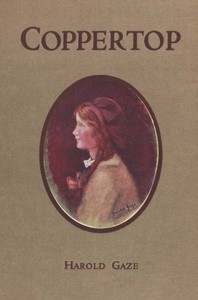
Coppertop: The Queer Adventures of a Quaint Child — A Closer Reading
(0 User reviews)
994
Project Gutenberg
2018
Not confirmed
Fantasy fiction; Australia -- Juvenile fiction; Girls -- Juvenile fiction
Readers of public-domain and historical texts
Project Gutenberg digital edition
en
Edition facts
Words
31,280
Reading time
136 min
Text sections
28
This digital edition of Coppertop: The Queer Adventures of a Quaint Child — A Closer Reading is described by source-level measurements including 31,280 words, 2 hr 16 min estimated reading time, and 28 detected text sections.
The text analysis averages about 12.7 words per sentence, while the detected sections provide another way to judge how the source is divided.
Project Gutenberg metadata also associates the work with “Fantasy fiction,” connecting these edition facts with the source record’s subject description.
Source:
Project Gutenberg record #56516
In Harold Gaze's 1918 fantasy, a girl called Coppertop leaves her colonial Australian home to navigate a world of talking animals, personified winds, and shrinking magic, where size shifts and sibling dynamics drive the adventure.
Editorial Edition Score
4.8/5
★★★★★
★★★★★
Calculated from edition completeness, EPUB availability, text structure and catalogue metadata. Not a user rating.
How this score is calculated
- Description quality20 pts
- Title & short description10 pts
- Source metadata20 pts
- Text length15 pts
- Chapters / structure15 pts
- EPUB file integrity20 pts
Total of 100 points, scaled to a 2.5-5.0 range. Editions with an empty description or a missing EPUB file are not scored.
Edition quality
Read the Text
the big four-poster and listened to the wind as it blew round the house.
A ’possum on the roof uttered a plaintive gurgling cry, which sent a little shiver down her back, and she snuggled under the bedclothes, thankful for their cosy protection.
But to-night the old bed felt less “snuggly” than usual, and she had a strange “I-wonder-what-will-happen-next” feeling, which would not allow her to sleep. It was such a night as witches love, when they fly about on broomsticks, and you feel sure-as-sure there is a black cat with green, staring eyes, hiding behind the burnt log in the chimney corner.
Even the old colonial house, with its new slated roof and the strange terracotta gargoyles--that Coppertop was certain-sure had moved several times since they were first put up there--shook and shuddered in the bitter south wind which blew down from the ranges.
“Oh, I’m just too lonesome!” sighed Coppertop, “if the old wind won’t stop whooling round the house, I simply don’t know what I’ll do.”
Celia Anagusta Sinclair--for that was her real name--was rather a lonely little girl at the best of times, as her father and mother were obliged to spend many months of the year in far-away India, and left their little ten-year-old daughter in the charge of Mrs. Grudge, the housekeeper; and it must be confessed that she and “Miss Celia” were not always the best of friends.
Mrs. Grudge could not abide a nickname, and never used the term “Coppertop” by which the child was known to everyone else; she was of the old school, stern and strict, and had come out in the early days from Home. She could not understand “these colonials,” she would say, and Coppertop’s cheeks would glow and her auburn plaits would seem to grow even more coppery, for she was an Australian bred and born, and proud of it, too, and simply hated to be called one of “these colonials.”
The old four-posted bed had come out from Home, too, but it had a very different spirit from that of dour Mrs. Grudge; it was old, and massive and beautiful, with richly carved legs--which, of course, Mrs. Grudge couldn’t boast of--and it seemed to whisper of old rose gardens, and ivy-clad towers, and quaint, sleepy, thatched cottages, and knights in armour, and May-day revels, and, most of all, of security and comfort.
“I wouldn’t care one bit if only Mummie and Daddy were here,” sighed the child; “the old wind could blow as hard as it liked. I wouldn’t care if it blew away the house, and the old clock, and Mrs. Grudge. Oh, if only it would--and left just Mummie and Daddy and me, all alone in the dear old bed, cuddling tight.”
Coppertop threw her little freckled arms round the soft, bulgy pillow, and tried to “’magine” that it really was so; but still the wind howled, and the rain pattered on the windowpane.
“Oh, I’m tired of ’magining! I wish they were really-truly here. I believe I shall hate that horrid old India soon, for keeping them away. Well, perhaps I won’t quite hate it, but I wish it were here, then they’d be here too, and so would Simla and the beautiful Taj Mahal.”
“But if India were here, where would Here be? Oh, it’s awfully muddling,” she added.
Then her face brightened up, and plunging one hand under the pillow she brought out a very crumpled letter, a letter that had been hugged and kissed till it was scarcely readable.
Screwing up her grey eyes, Coppertop read it, word by word, keeping her place with a wet finger with which she had just flicked away a tear:
I am writing this letter to you from our bungalow at Simla--the one in which you stayed two years ago--do you remember?
I am sitting on the verandah, looking out over the mountains, and thinking of you, my darling, oh, so hard, that I believe I can almost see you, dancing through the long grass in the orchard, and climbing the trees, to see if the green apples are not too hard for your strong little teeth. And, dear, you really must not eat green apples, they are not good for little girls--it is so much better to let them grow into big, rosy ones.
Daddy is lying in the deck-chair under the punkah, and the breeze from it is making his hair stand up in queer little tufts--you would laugh so to see it--and he is snoring! Snoring so loudly that I thought it was the punkah. He is sound asleep, and dreaming, I expect, of his darling little girl in far-away Australia.
The first chapter of Coppertop opens not with a call to adventure but with a child lying awake in a four-poster bed, listening to the wind and a possum's cry. The scene is domestic and distinctly Australian—the house is an old colonial with a new slated roof—yet the narrator immediately tilts toward the uncanny: the night is one “such as witches love.” This blend of familiar setting and folkloric unease sets the pattern for the whole book. Coppertop’s world is one where a possum’s gurgle can send a shiver down her spine, and where the boundary between bedtime and bizarre quest is as thin as a bedsheet.
Size as a Measure of Care
One of the book’s most persistent motifs is the physical shrinking of characters—and the emotional expansion that follows. When Coppertop’s brothers Tibbs and Kiddiwee are kissed by the Mist Maidens until they become “no larger than dragon-flies,” their sister’s reaction is not panic but a wistful tenderness: “They couldn’t nestle against her neck any more, now.” She even admits, “I suppose it’s terrifikly greedy, but I did love them being so small and cuddly.”
The shrinking is reversible—a mabola berry restores their natural size—but the moment lingers. Gaze uses size change not as a mere plot device but as a way to explore how closeness is shaped by scale. The smaller the brothers become, the more protective Coppertop feels; when they grow back, she loses that intensity of contact. The pattern recurs elsewhere: Mr. Atom, a helpful figure, is so tiny that Coppertop cannot see him at all, yet he dispenses crucial advice. In this world, diminishment often precedes intimacy or aid.
The Winds as Unreliable Guides
The table of contents lists encounters with the South Wind, East Wind, North Wind, and a Clerk of the Weather who lays a trap. These are not gentle breezes but capricious, almost bureaucratic forces. The East Wind, in particular, is shown in the illustrations as a figure of rage, and the chapter titles promise conflict: “The East Wind in a Rage.” The winds are not simply allies or enemies; they are powers to be outwitted, and their allegiances shift.
In one excerpt, Coppertop corrects her brother Tibbs about which wind they need to find—“It’s the East Wind we’ve to find now”—suggesting a precise geography of aerial beings. The Clerk of the Weather, meanwhile, is depicted in an illustration as a scheming figure, and his chapter title warns of a trap. Gaze gives the weather agency and personality, turning atmospheric phenomena into characters with motives. This is not a passive backdrop but an active, sometimes hostile, cast of players.
Jokes, Tears, and the Crocodile’s Smile
A curious episode inside a crocodile reveals Gaze’s tonal range. A bird tells a joke about a keeper and a bear’s powder, hoping to make the crocodile smile. The crocodile does not react, and the bird concludes it is dead. Coppertop remarks, “I believe the joke has killed him—it’s a very old one.” The humor is dry and self-aware, undercut by the bird’s genuine tears as it flies away.
Yet the scene quickly turns practical: Coppertop uses a sharp stone to cut a hole in the crocodile’s leathery skin, freeing her brothers. The juxtaposition is typical of the book—a moment of absurd comedy followed by decisive action. The crocodile is both a punchline and an obstacle; the bird’s grief is both comic and real. Gaze does not let the reader settle into a single mood. The adventure is punctuated by these small, strange emotional shifts, where a failed joke can feel as consequential as a narrow escape.
Coppertop rewards attention to its offhand details: the possum on the roof, the mabola berry, the spider web where Mr. Atom sits. Gaze builds a world where the smallest elements—a berry, a joke, a kiss—can alter the course of a journey. Readers may find the book’s pleasures less in its overarching plot than in these moments of precise, peculiar invention. The story moves quickly, but its best effects are quiet and strange.
I’ve always felt Coppertop’s shifting sizes echo the bewildering wonder of those two boys at the fair, their tutor’s steady hand a quiet anchor amid spectacle. Both books understand that childhood adventure is less about escape than about learning one’s own proportions against a strange, vast world. The Century World's Fair Book for Boys and Girls Being the Adventures of Harry and Philip with Their Tutor, Mr. Douglass, at the World's Columbian Exposition — Text and Context holds that same patient breath before the unknown.
There are no reviews for this eBook.
There are no comments for this eBook.
Reader reflection
What did you think of this book?
Answer a few questions and save a private reflection on this device.
Your progress
0
/
10
2
How much did you enjoy the reading experience?
3
Would you recommend this book to another reader?
4
Did the language feel accessible?
5
Did you relate to its people, ideas, or situations?
6
How distinctive were its ideas or approach?
7
How well did it match your expectations?
8
How clearly were the main ideas presented?
9
What is the main idea you are taking away?
10