1

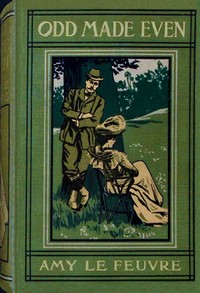
Odd made even — Inside the Classic
(0 User reviews)
716
Project Gutenberg
2025
Not confirmed
England -- Juvenile fiction; Young women -- Conduct of life -- Juvenile fiction; Man-women relationships -- Juvenile fiction; Women authors -- Juvenile fiction
Readers of public-domain and historical texts
Project Gutenberg digital edition
en
Edition facts
Words
67,594
Reading time
294 min
Text sections
7
The catalog record for Odd made even — Inside the Classic provides practical reading context through 67,594 words, 4 hr 54 min estimated reading time, and 7 detected text sections.
The text analysis averages about 13.4 words per sentence, while the detected sections provide another way to judge how the source is divided.
Project Gutenberg metadata also associates the work with “England -- Juvenile fiction,” connecting these edition facts with the source record’s subject description.
Source:
Project Gutenberg record #76138
In this sequel to 'Odd,' Betty, now a young woman, struggles with discontent and uneven moods while navigating family duties, loss, and her longing for the Red Manor. The excerpts reveal her inner turmoil through dialogue and introspection, contrasting with catalog subjects that emphasize conduct and relationships.
Editorial Edition Score
4.7/5
★★★★★
★★★★★
Calculated from edition completeness, EPUB availability, text structure and catalogue metadata. Not a user rating.
How this score is calculated
- Description quality20 pts
- Title & short description10 pts
- Source metadata20 pts
- Text length15 pts
- Chapters / structure15 pts
- EPUB file integrity20 pts
Total of 100 points, scaled to a 2.5-5.0 range. Editions with an empty description or a missing EPUB file are not scored.
Edition quality
Read the Text
fire fiercely as she spoke; now she dashed down the poker and ran out of the room. Molly looked after her with a little sigh.
"Betty is so—so uneven," she said to herself. "She is always getting upset over nothing at all. She'll be back in a minute full of remorse and repentance. It would wear me out to live as she does!"
Her fair head bent over some manuscript paper on the table before her. A dreamy look took possession of her deep blue eyes.
"Now, where was I when she interrupted me? Poor Elfrida! I must make her see Roderick once again before he dies; she must have the comfort of a last farewell!"
But Molly was not to be left in peace to the woes of her heroine. A maid came into the room.
"Mrs. Stuart would like to see you, miss."
"All right, Margaret. Has the doctor been?"
"He has just gone, miss."
Molly left the room, and made her way upstairs to her mother's bedroom.
Mrs. Stuart lay on a couch by the fire. A square table covered with papers was drawn up by her side. She was a very beautiful woman still, though threads of silver ran through her wavy brown hair, and many fine wrinkles and lines were discernible round her dark expressive eyes. She looked at her eldest daughter a little keenly.
Molly was always a fair sight to look upon—a sweet, fresh English maiden, with a sunny golden head and irreproachable features, and soft red lips that looked as if only smiles could come from them. Molly was blest with a happy, sunshiny disposition. She took life easily, and her cares and sorrows at present were bound up in the life of the heroine of her imagination. She was young enough and gay enough to like to revel in imaginary misery. She was devoted to her mother, and now bent down lovingly, and kissed her forehead.
Only Molly dared to be demonstrative with Mrs. Stuart; she was not one who liked or encouraged tokens of affection from her children.
"Are you better, mother?"
"I suppose so. I must be, after this long period of rest and convalescence. Just look at my batch of correspondence! I have been unable to touch it yet, and Dr. Forsyth actually forbade me to write a line to-day. You must give me an hour, and answer all those that are important. Where is Betty? I want her too, for I must speak to you both. Dr. Forsyth wants me to leave town at once."
Molly looked surprised.
"I will fetch Betty," she said; and, leaving her mother's room quietly, she sped up another flight of stairs, and knocked at her sister's door.
It was locked. Betty herself was standing by her window, looking down with wistful restless eyes into the dreary rain-sodden London square below her. Her heart was hot within her. Betty could not take life so easily as Molly did. It did not satisfy her; it was continually disappointing her. She looked for such great things; she had such a capacity for enjoyment; and yet the very gold seemed to turn to dust when she touched it.
Her life was in the same groove as Molly's, they shared their pleasures and friends together; yet what seemed natural and pleasant to the one, worried and irritated the other.
It was as Molly said, "over nothing at all" that Betty vexed her soul.
For three years the young girls had been enjoying London Society under their mother's wing. Their father had died when they were still in the schoolroom. They had never seen much of him, as his whole life was absorbed in politics; and it was only after their education was finished, and they had been presented at court, that mother and daughters drew nearer together. Mrs. Stuart saw that it was her duty to accompany her daughters to entertainments which otherwise would have been distasteful to her. She was herself more interested in literary clubs and soirées than in ballrooms; and philanthropic objects appealed to her more than garden-parties, regattas, and the various amusements that her daughters were supposed to require.
The opening chapter, 'A Child of Moods,' immediately establishes Betty's volatile temperament through a sharp exchange with her sister Molly. Betty declares, 'I hate everybody at this present moment,' and later reflects on her own 'uneven' nature. The catalog subjects list 'Young women -- Conduct of life' and 'Man-women relationships,' but the excerpts focus more on Betty's internal conflicts and family dynamics than on didactic lessons or romantic plots. Her discontent is voiced as a general malaise—'I'm sick of life altogether'—rather than a specific moral failing.
Betty's Voice and Mood Swings
The excerpts show Betty as prone to sudden outbursts and remorse. She pokes the fire 'fiercely,' dashes out of the room, and is described by Molly as 'always getting upset over nothing at all.' Yet Betty herself acknowledges her lack of control: 'I always say what I feel; I can't help myself!' This pattern recurs in later chapters, where she writes letters with 'flushed face and tearful eyes' and prays defiantly for a man she loves. The catalog subject 'Young women -- Conduct of life' implies a moral framework, but the text presents Betty's struggles as psychological and emotional rather than simply instructive.
Grief and News of Death
Chapter XII, 'A Thunderbolt,' centers on the sudden death of Colonel St. Clair in India. Betty receives the news and decides not to tell her mother, citing 'one of her bad days.' The episode is handled through dialogue and practical concerns—who will prepare the widow's home, which steamer she returns on. The catalog subject 'Man-women relationships' might suggest romance, but here the relationship is one of friendship and loss. Betty's reaction is subdued; she writes to Mrs. Fairfax and seeks advice from Uncle Harry. The text avoids melodrama, focusing instead on the logistics of grief.
Setting and the Red Manor
The Red Manor appears as a place of longing: Betty's 'heart was in the old thatched farmhouse.' The excerpts mention it in connection with a possible marriage and return, but the details are sparse. The catalog subject 'England -- Juvenile fiction' is broad, but the setting here is domestic and rural, contrasting with the town scenes. Betty's attachment to the Manor is emotional rather than descriptive; she prays for the man who might live there. The preface warns that the story 'will be above their heads' for younger readers, suggesting a more mature treatment of setting and sentiment than typical juvenile fiction.
Readers approaching Odd Made Even should note that the catalog subjects only partially capture the work's content. Betty's conduct is less a lesson than a portrait of uneven emotions, and the relationships depicted include friendship and grief as much as romance. The excerpts suggest a novel more concerned with inner life than with plot, and the preface confirms that the author intended it for an older audience than the earlier 'Odd.'
Reading Odd made even, I kept drifting back to the quiet suspense of Tom the telephone boy; or, The mystery of a message — Key Ideas to Explore. Betty’s restless longing feels like its own kind of mystery—a message she cannot quite decipher. Both stories live in that ache of waiting for something unnamed, where every small duty hums with a secret yearning. It made me wonder if all our discontents are just unread telegrams.
There are no reviews for this eBook.
There are no comments for this eBook.
Reader reflection
Take a moment to reflect on this book
Create a short personal record of your experience with this book.
Your progress
0
/
10
2
How much did you enjoy the reading experience?
3
Is this a title you would suggest to others?
4
Did the language feel accessible?
5
Would you start a conversation about this book?
6
Would a second reading be valuable?
7
How would you rate its originality?
8
How did the reading compare with what you expected?
9
Which lesson or insight stayed with you?
10