1

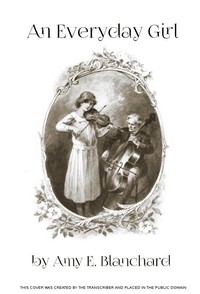
An Everyday Girl: A Story — Reading Notes
(0 User reviews)
249
Project Gutenberg
2018
Not confirmed
Orphans -- Juvenile fiction; Girls -- Juvenile fiction; Cousins -- Juvenile fiction
Readers of public-domain and historical texts
Project Gutenberg digital edition
en
Edition facts
Words
72,599
Reading time
316 min
Text sections
20
The source record for An Everyday Girl: A Story — Reading Notes measures this digital text at 72,599 words, 5 hr 16 min estimated reading time, and 20 detected text sections.
The text analysis averages about 14.3 words per sentence, while the detected sections provide another way to judge how the source is divided.
Project Gutenberg metadata also associates the work with “Orphans -- Juvenile fiction,” connecting these edition facts with the source record’s subject description.
Source:
Project Gutenberg record #56725
An editorial note on Amy Ella Blanchard's 'An Everyday Girl', focusing on the narrative voice, shifts in pace, and the use of dialogue and interior thought to depict orphan Ellen North's social navigation.
Editorial Edition Score
4.8/5
★★★★★
★★★★★
Calculated from edition completeness, EPUB availability, text structure and catalogue metadata. Not a user rating.
How this score is calculated
- Description quality20 pts
- Title & short description10 pts
- Source metadata20 pts
- Text length15 pts
- Chapters / structure15 pts
- EPUB file integrity20 pts
Total of 100 points, scaled to a 2.5-5.0 range. Editions with an empty description or a missing EPUB file are not scored.
Edition quality
Read the Text
” Mrs. Shirley looked across with a satisfied smile at Mrs. Barton, who lifted her hands and let them fall helplessly into her lap, intimating that there was nothing further to be said. Miss Orinda alone looked at Ellen, who sat with downcast eyes, clenched hands, and a heaving breast.
It was but for a moment that Miss Orinda regarded the girl; then she sprang to her feet. “Rosanne’s child shall not go to an institution!” she cried. “Take off your things, Ellen. You are going to live with me, and pray Heaven you will make a capable, useful woman.”
Ellen’s mute misery changed to an expression of intense relief. “Oh!” she breathed tremblingly.
“Well, that’s good of you, Rindy,” declared Mr. Crump, rising from his chair, “though, after all, you are the best fixed to give the girl a home. You live alone, own your own house, have a garden, and in this little place living can’t be as high as in the city.”
Orinda tossed her head and looked at him scornfully from under half-closed eyelids. She gave a little bitter laugh. “Of course,” she replied.
“Well, Susan,” said Mr. Crump, turning to his sister, “we may as well be getting on; it’s right smart of a ride, you know. Good luck to you, Rindy. Good-by, little girl. You’ve got a good home, and I hope you’ll appreciate it.”
Ellen answered never a word, but stood in silence till all went out, Mrs. Barton drawing her handsome furs about her as she entered her shining car. She nodded and smiled her farewells as the car bowled off, following the less elegant one of Mr. Crump. Miss Orinda did not stop to watch them out of sight, but shut the door hard, came back into the parlor, and stood for a moment in front of the Latrobe stove which heated the greater part of the small house.
“Well, that’s that,” she said at last. “If any one had told me this morning—— But, never mind. Maybe I’m a fool, but I’d rather be some kinds of a fool than a hide-bound, self-indulgent, cold-blooded skinflint. I rather imagine there have been worse fools in this room lately than I am. Come here, Ellen, and let’s take stock of each other, since we’re to be housemates.”
Ellen came readily. Miss Orinda held her off at arm’s length and regarded her steadily. “You’re not much like the Crumps,” she said presently. “You get your hazel eyes from your mother, but your nose and mouth from the Norths. It’s just as well, for the Crumps aren’t much for looks usually.”
“Uncle Josiah isn’t,” said Ellen in a decided voice.
Miss Orinda smiled. “No, he’d never take a beauty prize, neither would Susan. Lauretta wasn’t a particularly pretty girl; she grew up to her looks somehow; and you may, too, for you haven’t a bad beginning, though no one could call you a prize beauty either. Lauretta is about my age, a little older in fact, but doesn’t look it. If I gaumed up my skin with creams and clays, and was forever fiddling with my hair, maybe I’d look younger, but life’s too short for me to spend it messing with my old carcass, and I haven’t an eye out for the men, so there you are.”
While she was speaking Ellen was taking in her own impressions. She didn’t guess her cousin’s age; she was about forty-five, but looked older, for she used no devices for increasing her charms. She wore her dark hair straight back from her forehead, which was too high for beauty; she had somewhat small, but clear, frank gray eyes, a large nose, a straight, thin-lipped mouth, long upper lip, decided chin, was of medium height, slender, and straight. Her good points were her finely-shaped head, well set, her figure, her perfect teeth, and clear, unblemished skin. Ellen had seen the gray eyes snap and the lips compress into a hard, decided line, and concluded that some might not find it easy to get along with Cousin Orinda Crump.
But then she had delivered her from that terror which had threatened,—life in a charitable institution. Tears gushed to Ellen’s eyes as she thought of this, for she was an emotional, sensitive little body. She gave a short gasping sob. “I want to kiss you,” she faltered.
The novel opens with a striking scene: orphaned Ellen North settles into the most uncomfortable chair in the room, a physical emblem of her marginal position among her bickering relatives. The narrative voice quickly establishes a wry, observational tone, noting Ellen's survey of 'gimcracks' and her detached amusement at the adults' self-absorption. This initial pace—leisurely, almost static—mirrors Ellen's forced patience. Yet the rhythm shifts abruptly when the conversation turns to her fate, and she 'sat up very straight.' The prose tightens, and the reader is drawn into the tension of her uncertain future.
Voice and Perspective: The Everyday Girl's Interiority
Blanchard grants Ellen a distinct, often ironic inner voice. When Mr. Crump declares housekeepers don't grow 'upon every bush,' Ellen 'pictured a bush with housekeepers dangling from it.' This moment of whimsy, set against the gravity of her situation, reveals a coping mechanism and a sharp intelligence. The narrative frequently shifts between external dialogue and Ellen's unspoken reactions, creating a layered perspective. For instance, when Florence dismisses her as 'a sort of a little orphant Annie,' the text records Ellen's flaming face and the physical constraint of being 'hemmed in by a screen of palms.' The reader experiences both the sting of the insult and the practical dilemma of escape. This interplay between what is said and what is felt drives the emotional pace, alternating between social performance and private turmoil.
Pacing Through Dialogue and Social Set Pieces
The novel's pace is heavily modulated by dialogue. Early family discussions are verbose and circular, reflecting the adults' indecision. Later, scenes like the dance accelerate through rapid exchanges—Frank's teasing, Florence's pouts, Suzanne's cutting remarks. The rhythm becomes staccato, with short lines and interruptions: '“I think you are perfectly horrid,” pouted Florence. “It’s my party, and I reckon I can invite who I choose.” “So you can,” retorted Frank.' This quick-fire dialogue contrasts with the slower, descriptive passages of Ellen's observations. The dance scene also showcases a change in tempo from social maneuvering to a moment of crisis: Ellen, trapped, must dispose of the food Frank brought her. The action of opening the window and tossing out the plates is rendered in swift, physical detail, a burst of movement after the constrained stillness of the palm corner.
Recurring Details and Structural Rhythm
Certain details recur to mark shifts in Ellen's circumstances. Clothing and appearance are repeatedly noted: her 'skimpy black skirt' and 'rusty-looking stockings' give way to a 'handsome dress' and 'real rock-crystal beads' at the dance, signaling a change in fortune or patronage. The narrative also uses objects as anchors—the wax flowers under glass, the screen of palms—to ground scenes in a specific sensory environment. Structurally, the novel alternates between domestic interiors (the family discussion, the dance) and moments of solitary reflection. The chapter titles themselves suggest a rhythm of incident and consequence: 'A Family Discussion' leads to 'Ellen Begins to be Useful,' then 'Violins and Doves.' This pattern of problem, action, and interlude creates a measured pace that allows for both social comedy and genuine pathos.
Changes in Narrative Tempo
Blanchard varies sentence length to control pace. In the opening, long, descriptive sentences convey Ellen's boredom: 'She pulled down her skimpy black skirt over the length of rusty-looking stockings which covered her long legs, and gave herself up to a survey of the articles in the room.' Later, during the dance, sentences shorten to reflect tension: 'Ellen's face was flaming as the girls moved off. If only she could have escaped from her corner before those two came near enough for her to hear what they said.' The narrative also uses ellipses and interruptions to mimic the rhythm of conversation and thought. This attention to tempo keeps the reader engaged with Ellen's internal and external struggles, making the everyday feel consequential.
Readers attentive to shifts in pace will find that Blanchard uses them to underscore Ellen's growth from passive observer to active agent. The novel rewards close attention to its dialogue and descriptive details, which together build a nuanced portrait of a girl learning to navigate a world that often dismisses her. As you read, note how the rhythm of scenes—from static family councils to lively social gatherings—mirrors Ellen's own changing sense of possibility.
I remember finishing that editorial note on An Everyday Girl and feeling the quiet ache of Ellen moving through rooms where she didn't belong, tracking every word for safety. It made me think of another kind of watchfulness, something softer but just as careful—the way a creature learns to read a world that isn't quite theirs. That same tender alertness lingers in The Heart of a Dog — Key Ideas to Explore, like two old friends nodding at each other across a crowded room.
There are no reviews for this eBook.
There are no comments for this eBook.
Reader reflection
Your personal reading reflection
Build a private reading journal entry for this title.
Your progress
0
/
10
2
How much did you enjoy the reading experience?
3
How likely are you to recommend this book?
4
Did the language feel accessible?
5
Did the story or argument move comfortably?
6
Would you like to discuss this book with someone?
7
How understandable was the text?
8
Did the book offer a fresh perspective?
9
What changed or sharpened your thinking?
10