1

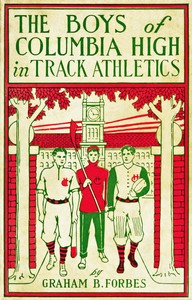
The boys of Columbia High in track athletics — Key Ideas to Explore
(0 User reviews)
1110
Project Gutenberg
2025
Not confirmed
High school students -- Juvenile fiction; Teenage boys -- Juvenile fiction; Track and field -- Juvenile fiction
Readers of public-domain and historical texts
Project Gutenberg digital edition
en
Edition facts
Words
54,958
Reading time
239 min
Text sections
30
The boys of Columbia High in track athletics — Key Ideas to Explore can be approached with a clearer sense of reading commitment from its source measurements: 54,958 words, 3 hr 59 min estimated reading time, and 30 detected text sections.
The text analysis averages about 19.8 words per sentence, while the detected sections provide another way to judge how the source is divided.
Project Gutenberg metadata also associates the work with “High school students -- Juvenile fiction,” connecting these edition facts with the source record’s subject description.
Source:
Project Gutenberg record #75171
This editorial note examines the narrative voice and pacing in Graham B. Forbes's 1913 school sports story, focusing on how the opening cross-country run establishes character dynamics and a shift from athletic action to a mystery involving a gypsy caravan.
Editorial Edition Score
4.9/5
★★★★★
★★★★★
Calculated from edition completeness, EPUB availability, text structure and catalogue metadata. Not a user rating.
How this score is calculated
- Description quality20 pts
- Title & short description10 pts
- Source metadata20 pts
- Text length15 pts
- Chapters / structure15 pts
- EPUB file integrity20 pts
Total of 100 points, scaled to a 2.5-5.0 range. Editions with an empty description or a missing EPUB file are not scored.
Edition quality
Read the Text
Every fine day, when school was not in session, boys in running costume could be met, jogging steadily along the country roads. In the fields where the schools played all their outdoor games, groups of students were to be seen engaged in practicing putting the shot, high jumping, wrestling, sprinting short distances, each and every one filled with the spirit of the hour.
Indeed, Columbia was bubbling over with excitement, since the great day was now close at hand when all these tests to prove superiority were to be brought about before a record-breaking throng.
Columbia, in the past, had been very fortunate in downing her river rivals; but the boys of Clifford and Bellport were possessed of the true grit animating all lovers of clean sport, and they always came up smiling for a new test. Forgetting the bitterness of previous defeats, they were ever ready to affirm their belief in their ability to wrest the prize from the athletes of Columbia.
And as there had come many rumors of astonishing progress being made by these rival schools, many in Columbia went about with sober faces; and even hinted that they feared it was going to be a bad year for the famous school.
Frank Allen always bore a leading part in all these athletic doings; as did his particular chum, Lanky. And they were out on this Saturday, with another well-known long-distance runner, Bones Shadduck, to get their muscles in good trim for the grind of the Marathon that was to be the crowning event of the great meet so soon to come about.
They were the hope of Columbia High. No other boys ventured to compete with these long-distance runners when they took a notion to do their best. On this occasion they were not thinking of trying to break records, but meant to cover the ground, so as to become familiar with all its features.
The course had been plainly mapped out, and in several places the runners were allowed to exercise their discretion about choosing between several methods of arriving at one of the many stations where they were to be registered. That is, if a lad thought he could make better time by crossing the country between two roads, he was given that privilege; though warned that he might get bogged, held up by a marshy stretch of ground, or even lost in the big woods, if not fully familiar with the district.
Consequently it was not likely that anyone would take advantage of this choice, but all of them were apt to stick to the main roads, where the going was good.
Seeing that his two fellow runners were growing quite curious about the explanation of his assertion, Frank laughed good-naturedly, and remarked:
“Well, just wait till I wash the dust down my throat with a good drink at this spring here, and then I’ll tell you what I meant by saying I might stick to Columbia High another year.”
“Well, I want to say right now,” remarked Bones Shadduck, as he sucked at a long scratch on his hand, which he had received from a hanging vine in the brush they had just broken through, “that this thing of cutting across country to save a little time doesn’t strike me favorably. In the race I wager I keep close to the roads, and let others take chances of getting mired, or lost, if they want to.”
Three minutes later, having refreshed themselves at the cool gurgling spring, the trio of high-school boys stood for a minute or two before starting off again on their jogging run in the direction of the next road.
“Now, Frank, keep your promise,” warned Bones.
“Yes, I’ll be badgered if I can get head or tail of what he means,” Lanky Wallace declared, shaking his head in a way he had when in doubt.
“My folks seem to have an idea that they’d rather I was a year older before I went to college,” Frank began.
“Why, that’s funny, but I’ve been hearing a lot along the same line myself at home,” broke in Lanky.
“Ditto here,” affirmed Bones Shadduck.
“And so they had me talk with Professor Tyson Parke about it,” Frank continued; “and he said that he could arrange a post-graduate course that would take up the better part of the year, and put me in fine fettle for going into the freshman class at college.”
“Great scheme!” exclaimed Bones, “and just you see if I don’t put it up to my people at home.”
The novel opens with a group of boys pausing during a practice cross-country run, their conversation immediately establishing the stakes: this is their last year at Columbia High, and they are preparing for a track meet against rivals Clifford and Bellport. The dialogue, peppered with nicknames like "Lanky" and "Bones," conveys a casual camaraderie, but the narrative quickly pivots to the physical demands of the run itself. The description of runners "limping from stone-bruises" and "utterly fagged out" grounds the athletic competition in tangible effort, while the presence of a girl named Dora Baxter introduces a romantic undercurrent that complicates Lanky's triumph.
Voice and Character Through Dialogue
The opening chapter relies heavily on dialogue to differentiate the main characters. Frank Allen speaks with measured authority, while Lanky Wallace's replies are tinged with self-deprecation and sensitivity—he "would really have cared more to hear one girl say a single word of admiration" than receive public praise. The banter among the boys, such as Ben Allison's offer to "pitch a few of the others overboard" for Lanky, feels natural to the period and setting. However, the narrative voice occasionally shifts to a more formal register, as when it notes that Lanky "never dreaming to what a strange end this trivial incident might lead him," foreshadowing a plot turn beyond athletics. This blend of colloquial speech and authorial commentary creates a tonal contrast that defines the book's style.
Pacing: From Athletic Action to Mystery
The first chapter moves briskly through the race itself, with short paragraphs tracking Lanky's progress and the reactions of onlookers. The pace slows markedly when the focus shifts to the boat trip aboard the Harrapin Belle, where Lanky's discomfort at Dora's presence is described in lingering detail. This deceleration signals a change in narrative priority: the athletic contest becomes a backdrop for interpersonal tensions. The chapter ends with a hint of mystery—the "strange end" of the boat ride—which the table of contents confirms involves a gypsy caravan and a stolen child. The rhythm thus alternates between the urgency of competition and the slower, more observational mode of a school story.
Recurring Details and Setting
The excerpts repeatedly emphasize the physical environment of the race: the "cross country run," the "tape-line," and the river where boats gather. Specific place names like "Harrapin" and "Bellport" anchor the story in a recognizable geography. The narrative also pays close attention to the boys' equipment and clothing—Lanky goes to the "dressing-room" and reappears "in his ordinary clothes"—grounding the athletic feats in everyday materiality. The gypsy caravan, introduced in chapter titles, promises to expand the setting beyond the school and track, introducing a nomadic element that contrasts with the structured world of high school athletics. These details, while not fully developed in the excerpts, suggest a layered setting where the familiar and the exotic intersect.
Readers attentive to narrative voice will notice how Forbes uses dialogue to sketch character quickly, while shifts in pacing between race sequences and quieter moments prepare the ground for a mystery plot. The excerpts offer only a partial view of the story's trajectory, but they reveal a work that balances sports action with school-life drama and hints of adventure. Pay attention to how the author handles the transition from athletic competition to the gypsy subplot—the seams between these elements may reveal much about the book's construction.
There’s something about that opening cross-country run in The Boys of Columbia High—the way the boys’ breath fogs in the cold, the quiet competitiveness before the gypsy caravan appears—that reminds me of the tender uncertainty in Guarding His Goal — Edition Insights. Both feel like snapshots of a moment when a game stops mattering, and something deeper, almost wistful, takes its place.
There are no reviews for this eBook.
There are no comments for this eBook.
Reader reflection
Before you leave, reflect on the book
Use these questions to collect your thoughts before moving on.
Your progress
0
/
10
2
Was reading this book enjoyable?
3
Is this a title you would suggest to others?
4
How easy was the book to follow?
5
How much did the book move you?
6
Would you read this book again?
7
Would this book work well in a reading group?
8
How would you rate its originality?
9
What is the main idea you are taking away?
10