1

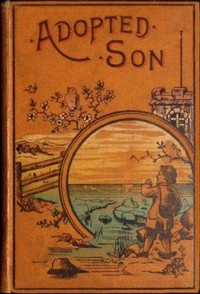
The adopted son — A Closer Reading
(0 User reviews)
62
Project Gutenberg
2023
Not confirmed
Christian life -- Juvenile fiction; Adopted children -- Juvenile fiction; Lord's prayer -- Juvenile fiction
Readers of public-domain and historical texts
Project Gutenberg digital edition
en
Edition facts
Words
26,885
Reading time
117 min
Text sections
3
The adopted son — A Closer Reading can be approached with a clearer sense of reading commitment from its source measurements: 26,885 words, 1 hr 57 min estimated reading time, and 3 detected text sections.
The text analysis averages about 22.1 words per sentence, while the detected sections provide another way to judge how the source is divided.
Project Gutenberg metadata also associates the work with “Christian life -- Juvenile fiction,” connecting these edition facts with the source record’s subject description.
Source:
Project Gutenberg record #71906
A.L.O.E. weaves each petition of the Lord's Prayer into a Victorian moral tale about an adopted boy, using recurring objects (a pocket-book, a carved stick) and movement between domestic and urban settings to dramatize temptation, repentance, and forgiveness.
Editorial Edition Score
4.6/5
★★★★★
★★★★★
Calculated from edition completeness, EPUB availability, text structure and catalogue metadata. Not a user rating.
How this score is calculated
- Description quality20 pts
- Title & short description10 pts
- Source metadata20 pts
- Text length15 pts
- Chapters / structure15 pts
- EPUB file integrity20 pts
Total of 100 points, scaled to a 2.5-5.0 range. Editions with an empty description or a missing EPUB file are not scored.
Edition quality
Read the Text
"We were by nature, my Nelly, the children of wrath. Adam, our first father, had offended the Lord, and we are born into the world with a nature like his, bearing his sinful likeness, even as Walter Binning bears the name of his father. Man was not only a stranger to, but a rebel against God—he had no right to expect anything but punishment and pain from the hand of his offended Maker."
"And yet the Lord adopted him, and made him His son!"
"Yes, that mercy beyond all we could ask for or hope, was one of the blessings purchased for us by the death of the Saviour. It was as though the Lord Jesus had laid His pierced hand upon the sinner, and had led him to the feet of His Father, and that the Almighty, for the sake of his crucified Son, had deigned to receive the unworthy sinner, and make him His own child for ever!"
"Then if we are God's children," exclaimed Nelly, "we must all be brothers and sisters to one another."
"It is so," replied Viner earnestly, "though is our selfishness and pride we too often forget it. Those who love their Father in heaven will love His children on earth also, and form one blessed family of love."
"I never thought before," said Nelly, thoughtfully, "when I repeated the Lord's Prayer, why I should say 'Our Father,' instead of 'My Father;' but now I will try to remember every time, that I am one of a great family of love!"
Few more words passed between Viner and his daughter, until Nelly suddenly exclaimed, "Who is that stranger-boy coming this way with a bundle hanging by a stick over his shoulder, who looks up at the name over every shop, and seems so tired and sad? Father, do you think that this can be Walter?"
It was Walter indeed, the convict's son, who now received from Viner such a kindly welcome as the true Christian gives to the unfortunate.
Walter appeared, from his height, to be a boy of about ten years of age, but the expression of his sharpened careworn features made him look much older; it was not the expression of a child. There was at first a restlessness in his manner, as of one ready to take either offence or alarm, which gave Nelly a curious impression that he was like some wild creature that had been hunted. He usually fixed his eyes on the ground, and when he raised them, it was not with the straightforward look of a boy who has nothing to conceal or to fear. Poor outcast! The remembrance of his father's shame hung like a heavy cloud over him; the first fresh flow of youthful feelings had been checked at the spring, he was inclined to suspect others, and to feel himself suspected.
He could not, however, resist the influence of the unaffected kindliness which he met with from Viner and his little daughter. The best food at the simple meal was placed on his plate, there was consideration for his feelings, and attention to his comfort in everything that was said or done. His chilled heart began to warm under the power of kindness, gradually his manner appeared less shy, he became less silent and sad, and before the evening was over, was ready to smile, and even laugh at the playful words of Nelly.
The hour arrived for evening prayer. Everything else was laid aside, and the large Bible, the treasure of many generations, on whose blank page many family names were written—some so pale with age that they could scarcely be read—was reverently placed upon the table. To evening meeting for prayer Walter had, till now, been entirely a stranger. He was not altogether ignorant on the subject of religion; in the strange unsettled life which he had led in London with his father, he had met with a variety of characters, and gathered up knowledge upon many different subjects, but there was nothing clear, nothing defined, nothing holy. Yet it was with no irreverent manner that Walter listened to the Word of God, or the prayer from the lips of his benefactor. The conduct of Viner insensibly connected in his mind kindness and goodness with piety; and gratitude towards man seemed likely to be the first step to raise him towards gratitude to a higher Being.
The story opens not with its title character but with a shop interior: the baker's wife Mrs. Winter, precise in dress and counter, hands biscuits to a little girl named Nelly Viner. The child announces that her 'new brother' is coming home, and the reader is immediately placed inside a world of small transactions—sweet biscuits, captain's biscuits—where moral weight attaches to everyday objects. A.L.O.E. builds the narrative around the Lord's Prayer, devoting a chapter to each petition, and the excerpts show how she uses physical details (a pocket-book, a carved walking-stick, a bundle on a stick) to embody abstract spiritual struggles. The structure is both didactic and novelistic: each chapter illustrates a phrase of the prayer through a crisis or decision faced by the adopted son, Walter, whose past as a convict's son shadows his present.
Objects as Moral Anchors
The excerpts repeatedly fix attention on tangible things that carry ethical significance. When Walter finds the lost pocket-book, the narrator notes his hesitation: 'Hastily, he thrust the book into his bosom, colouring with shame, all alone as he was, at having harboured for one moment the thought of theft.' The pocket-book is not merely a plot device; it is a test of character, and its return triggers a chain of self-examination. Later, the miser’s curved stick, hung on nails in the hall, prompts Walter to think of carving similar items to earn money: 'I think that I might cut out something like that.' The stick shifts from a sign of the miser’s stinginess to a seed of honest industry. Even the biscuits in the opening scene—'sweet biscuits, three for a penny'—mark a rare treat, contrasting with the daily bread that the Lord’s Prayer petitions for. These objects are never decorative; they are the hinges on which moral decisions turn.
Movement Between Thresholds
The narrative moves through a series of thresholds: shop counters, doorways, staircases, and lodging-house rooms. Walter’s journey to return the pocket-book takes him from the shop ‘to the lodging of the owner of the note,’ and the description of that lodging emphasizes its meanness: ‘small, uncomfortable, and mean,’ with a ‘slip-shop, untidy girl’ answering the ring. The contrast between the clean, ordered shop of Mrs. Winter and the dusty, ill-lighted room of the miser is a spatial rendering of moral states. Walter’s own movement—‘he took down his hat from a peg in the wall, and hastened’—is a physical enactment of his decision to act honestly. The story repeatedly places characters at thresholds: Nelly at the shop door, Walter at the miser’s staircase, the convict father somewhere outside the domestic circle. These crossings mark moments of choice, and the setting itself becomes a map of spiritual geography.
The Weight of a Name
Walter’s identity is defined by what he is not called. He is ‘the adopted son,’ never fully named in the chapter headings, and his biological father is a convict whose name he has been ‘ashamed at bearing.’ In his moment of repentance after nearly stealing, Walter cries out: ‘I have blushed for my unhappy father, have been ashamed at bearing his name, have presumed to think that in his place my conduct would have been better.’ The name is a burden he carries, and the Lord’s Prayer—beginning with ‘Our Father’—offers a counter-identity. The story’s title itself, The Adopted Son, points to this double filiation: Walter is adopted into a Christian household and, through prayer, into a divine family. The excerpts show him struggling to reconcile his shame about his biological father with the call to forgive and pray for him. The name ‘Binning’ is almost never spoken; it is a ghost that haunts the margins of the text.
Repetition and the Rhythm of Prayer
The book’s structure mirrors the repetitive, petitionary form of the Lord’s Prayer. Each chapter takes one phrase as its title and its moral theme. In the excerpts, this pattern is visible in the way characters echo the prayer’s language: Walter’s internal monologue includes ‘Oh! May God forgive me’ and ‘have mercy upon him, O gracious Lord!’—phrases that recall the petitions for forgiveness and deliverance. The narrative itself moves in a rhythm of temptation, fall, and restoration, repeated across different situations. The miser’s counting of money—‘two sovereigns, a half-crown—four and six’—is a secular parody of prayerful repetition, a litany of greed. Against this, Walter’s resolution to work with his hands (‘I shall have plenty of time in the long winter evenings’) offers a humble, patient counterpoint. The book does not simply teach the prayer; it performs its structure in the unfolding of events.
Readers will find that the novel’s interest lies less in plot twists than in the careful calibration of moral pressure through setting and object. The shop, the lodging, the pocket-book, the stick—each is a node in a network of spiritual meaning. A.L.O.E. expects her audience to recognize the Lord’s Prayer as a familiar text, and she uses that familiarity to create expectation and resonance. Pay attention to the spaces between dialogue: the descriptions of rooms, the placement of objects, the movement of characters from one threshold to another. These are where the book’s real work is done.
I kept thinking of that adopted boy’s carved stick while turning pages elsewhere, how small objects hold repentance. It reminded me of the quiet way The bonfire — Text and Context lingers on its own emblem of ash and memory. Both stories feel less like lessons and more like remembered weather—warm, weighty, and slow to leave.
There are no reviews for this eBook.
There are no comments for this eBook.
Reader reflection
Record your reading impressions
A brief reflection can help important ideas stay with you longer.
Your progress
0
/
10
2
How much did you enjoy the reading experience?
3
Would you encourage someone else to read it?
4
Did the language feel accessible?
5
How personally connected did you feel to the book?
6
Did this book create an emotional response?
7
Which element worked best for you?
8
Could you apply anything you learned?
9
What changed or sharpened your thinking?
10