1

Rival ocean divers — Reading Notes
(0 User reviews)
3829
Project Gutenberg
2025
Not confirmed
Sea stories; Treasure troves -- Juvenile fiction; Action and adventure fiction
Readers of public-domain and historical texts
Project Gutenberg digital edition
en
Edition facts
Words
46,791
Reading time
204 min
Text sections
32
For Rival ocean divers — Reading Notes, the stored edition analysis reports 46,791 words, 3 hr 24 min estimated reading time, and 32 detected text sections.
The text analysis averages about 13.5 words per sentence, while the detected sections provide another way to judge how the source is divided.
Project Gutenberg metadata also associates the work with “Sea stories,” connecting these edition facts with the source record’s subject description.
Source:
Project Gutenberg record #76085
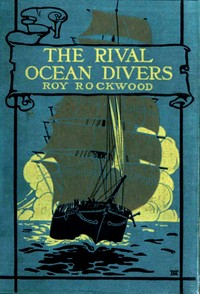
In this 1905 adventure, young Dave Fearless and his father, ex-sea captain Amos Fearless, compete with the rival Hankers to recover a sunken treasure in the Pacific. The story, based on a 1898 U.S. government deep-sea expedition, blends diving technology, marine life, and survival perils.
Editorial Edition Score
4.8/5
★★★★★
★★★★★
Calculated from edition completeness, EPUB availability, text structure and catalogue metadata. Not a user rating.
How this score is calculated
- Description quality20 pts
- Title & short description10 pts
- Source metadata20 pts
- Text length15 pts
- Chapters / structure15 pts
- EPUB file integrity20 pts
Total of 100 points, scaled to a 2.5-5.0 range. Editions with an empty description or a missing EPUB file are not scored.
Edition quality
Read the Text
Hardly had Bart answered when Dave squared off again. Bart struck out feebly and Dave warded off the blow with ease.
Then Dave's left fist shot out, fairly and squarely, and the rich youth received a blow under the chin which lifted him off his feet and sent him backward with a loud splash into the waters of Long Island Sound.
"My! but wasn't that a clever blow!"
"Dave is too many for him, even if Bart is larger."
So the cries ran on as all rushed to the edge of the dock.
Bart Hankers had disappeared, but he soon came up, spluttering and floundering around in a fashion to make many of those present laugh.
The water at the dock was not extra deep, and his head had become covered with black mud from the bottom.
"You--you--rascal!" he cried, when he could speak. "I'll--I'll have you locked up for that!"
"Locked up!" cried several. "What for? It was a fair fight."
"Dave had no right to knock him into the water," put in Hank Shores.
Bart Hankers' rowboat was close at hand and into this the rich boy climbed slowly and painfully, for he was still partly dazed by the crack under the chin.
His wet and muddy appearance made many in the crowd laugh.
"I say, Bart, you look as if you were dressed for the ball!" cried one boy.
"Now's the time to call on your best girl, Bart. You're in good shape for hugging her," added another.
"You fellows shut up!" growled the rich youth, shaking his fist at them. "If you don't I'll make it hot for the lot of you."
"About as hot as you made it for Dave Fearless, eh?" was the reply, and a shout of derision went up.
Then one of the boys began to throw some fish bait at Bart, and in a minute half a dozen youths were at it and Bart was struck in several places.
"Oh, I must get away from here," he muttered and then cried to Hank Shores: "Row me over to Purry's dock, will you, Shores?"
"I will," replied Shores, and leaping into the rowboat, took up the oars. Soon the craft was out of reach of those left behind. But before Bart got out of hearing he heard the village lads give a hurrah for Dave Fearless.
"All right, Dave Fearless," he muttered, under his breath. "You're on top this time, but I reckon my father and I will win in the long run."
"He played you foul, Bart," said Shores, soothingly. He was little better than a sneak himself.
"He wouldn't have been able to do it only I--er--I sprained my arm at rowing yesterday. That's why I got you to row for me," answered Bart. But what he said about his arm was a falsehood.
Half an hour later Bart Hankers entered his elegant home at the end of the main street of the village and sneaked up to the bathroom, where he washed up and changed his wet clothing for a dry suit. Then he went downstairs and to the library, where his father sat, reading the stock reports in a New York paper.
"Father, the mystery is solved," he said, as he closed the door carefully, that nobody might hear what he had to say but his parent.
Lemuel Hankers, a thin, yellow-skinned man of fifty, looked at his son curiously.
"What mystery, Bart?" he asked.
"The mystery of the missing Washington fortune."
"You don't mean it!" And the man leaped from his chair in astonishment.
"What have you learned?"
"I know where the _Happy Hour_ went down."
"Where did you get your information?"
"From the Fearlesses."
"They do. Quite by accident I overheard Dave and his father talking."
"Indeed! Tell me the particulars," went on Lemuel Hankers.
Without a blush Bart related all he had overheard while eavesdropping at the window of the Fearless cottage. Hankers senior listened with close attention.
"It is a shame that we should have missed this information when it came in," he muttered. "We might already be on the way to recover the fortune."
"We ought to try and get that chart," said Bart.
"We won't want the chart. I can get the same news from the government that Amos Fearless has got."
"Let us go in search of the sunken treasure, dad. It certainly belongs to us."
"Of course it does, Bart. Yes, if this news is true, I will go after the missing million."
"But you will have to take expert divers along, and all that sort of thing."
From its opening lines, Rival Ocean Divers establishes a clear tension between two families—the Fearlesses and the Hankers—over a million-dollar treasure at the bottom of the sea. The dialogue between Dave and his father, Amos, is direct and expository, laying out the stakes without delay: “A million at the bottom of the sea, father?” “That is what I said, Dave.” This blunt exchange sets the tone for a narrative that prioritizes action over introspection.
The preface reveals that author Roy Rockwood drew on the official report of a 1898 U.S. government deep-sea expedition, promising readers both a treasure hunt and “a few of the marvels of deep-sea life.” The story originally appeared as a serial in a weekly before being expanded for book publication in 1905.
Rivalry and Immediate Peril
The conflict between the Fearlesses and the Hankers is established early as a driving force. Dave learns that Lemuel Hankers “always did claim the Washington fortune,” creating a competitive backdrop. Yet the excerpts focus less on legal claims and more on physical survival. In one sequence, the characters are stranded in a rowboat after escaping savages, facing exhaustion, thirst, and a hurricane. The narrative voice remains matter-of-fact: “Dave was all but exhausted, and at last dropped his oar and sank in a heap on the seat.”
The storm scene is typical of the book’s structure: a rapid succession of dangers—savages, lack of water, darkness, a hurricane—with little pause for reflection. The characters react instinctively, and the prose keeps pace with the action. The rowboat’s collision with a tree limb and the discovery of land come as abrupt relief, but the threat of savages lingers: “I’d rather meet the savages than drown in this storm,” says Captain Broadbeam.
Voice and Structural Patterns
The dialogue is functional, often serving to advance the plot or convey information. Characters speak in short, declarative sentences: “We must take what comes,” “We are in a pickle,” “Hurrah! Here’s land!” This style keeps the narrative moving and suits the serialized origin, where each chapter ends with a hook. The chapter titles themselves—such as “Punishing a Sneak,” “An Ocean Monster,” “Struck by Lightning”—promise immediate action.
The author frequently uses exclamation points and dashes to heighten urgency: “Don’t—don’t hurt me!” and “A tree limb—and here’s another!” The point of view stays close to Dave, but the narration occasionally shifts to other characters like Captain Broadbeam or Doctor Barrell, providing different perspectives on the same crisis. The structure of the excerpts shows a pattern of danger, escape, and new danger, with little downtime between episodes.
Setting and Scientific Underpinnings
The Pacific Ocean is both setting and antagonist. The characters are constantly at its mercy—drifting, storm-tossed, and threatened by “demons of the deep” and “fire fish.” The preface explicitly ties the story to a 1898 U.S. government expedition that tested a new diving bell and deep-sea sounding machine, and collected specimens of marine life. This scientific grounding gives the adventure a veneer of authenticity, even as the plot veers into melodrama.
Recurring details include the Swallow, the characters’ ship, which is frequently lost and sought; rowboats as precarious refuges; and the constant need for water and rest. The setting shifts from island to open ocean to ship, but the ocean itself remains a constant, unpredictable presence. The author’s descriptions are functional rather than lyrical, focusing on immediate threats: “the mad plunging and pitching of the rowboat,” “a shower of arrows,” “the wind began to blow a regular hurricane.”
Readers approaching Rival Ocean Divers should expect a fast-paced, episodic narrative where each chapter introduces a new hazard. The treasure hunt is the nominal goal, but the real engine of the story is survival against natural and human foes. The book’s value lies in its period detail—the early diving technology, the Pacific setting, and the serialized cliffhanger structure—rather than in character depth or thematic complexity. Approach it as a historical artifact of early twentieth-century adventure fiction for boys.
That old diving story left me thinking about how loyalty gets tested when people want the same prize. It reminded me of another quiet book, Little Hickory; or, Ragged Rob's young republic — Edition Insights, where building something small and honest matters more than winning. Both feel like remembering a summer afternoon—simple, yet somehow staying with you.
There are no reviews for this eBook.
There are no comments for this eBook.
Reader reflection
Record your reading impressions
A brief reflection can help important ideas stay with you longer.
Your progress
0
/
10
2
How did the book work for you overall?
3
Would you pass this book on to a friend?
4
What was the reading difficulty like?
5
How clearly were the main ideas presented?
6
How would you describe its reading pace?
7
Did anything about the book feel genuinely new?
8
Did you relate to its people, ideas, or situations?
9
In one sentence, what did you learn?
10