1

The Sea Monarch — Key Ideas to Explore
(0 User reviews)
1296
Project Gutenberg
2018
Not confirmed
Sea stories; Pirates -- Juvenile fiction; Warships -- Great Britain -- Juvenile fiction
Readers of public-domain and historical texts
Project Gutenberg digital edition
en
Edition facts
Words
55,911
Reading time
244 min
Text sections
8
The Sea Monarch — Key Ideas to Explore can be approached with a clearer sense of reading commitment from its source measurements: 55,911 words, 4 hr 4 min estimated reading time, and 8 detected text sections.
The text analysis averages about 17.6 words per sentence, while the detected sections provide another way to judge how the source is divided.
Project Gutenberg metadata also associates the work with “Sea stories,” connecting these edition facts with the source record’s subject description.
Source:
Project Gutenberg record #57989
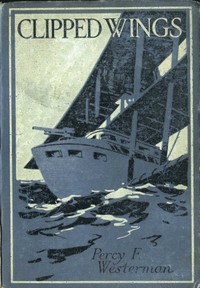
In Percy F. Westerman's 1911 serial, the super-cruiser Olive Branch, armed with devastating ZZ-rays, aims to enforce peace by terror. The narrative follows Gerald Tregarthen's initiation into the ship's secrets, a scientist's desertion, and a harrowing night run through a British squadron's fire, all while the captain is bound by a vow not to fire on British vessels.
Editorial Edition Score
4.7/5
★★★★★
★★★★★
Calculated from edition completeness, EPUB availability, text structure and catalogue metadata. Not a user rating.
How this score is calculated
- Description quality20 pts
- Title & short description10 pts
- Source metadata20 pts
- Text length15 pts
- Chapters / structure15 pts
- EPUB file integrity20 pts
Total of 100 points, scaled to a 2.5-5.0 range. Editions with an empty description or a missing EPUB file are not scored.
Edition quality
Read the Text
There was the sound of a hasty scuffling; then appeared the head and shoulders of the owner of the _Playmate_
The mast snapped off close to the deck, and a block, hurtling through the air, struck Gerald a terrific blow over the head.
Staggering to the door he threw it open. To his great surprise he saw a burly sentry standing without.
In spite of his strenuous resistance they hauled the deserter out of the empty tank, and then unceremoniously bundled him into the gig.
"Look here, Mr. Schneider, you've come to the wrong box with your sneaking complaints. So clear out!"
Bending over the instrument was a young officer, his head practically covered with a metal cap fitted with receivers.
The man staggered, clapped his hand to his shoulder, and fell to the deck, the weapon slipping from his grasp.
Schneider cleared the rail, and leapt into the sea.
The doomed vessel was instantly swept out of existence. The massive outlines of the cruiser seemed to melt into a hundred thousand fragments.
As night fell the searchlights played with unceasing vigilance upon the harbour. Suddenly Captain Brookes turned to Gerald. "Does my compact forbid me using the Z-rays?" he asked.
A party of natives appeared on the beach regarding the cruiser with obvious amazement. In their hands they carried long slender spears, which they brandished menacingly.
Like a terrier let loose amidst a swarm of rats the submarine dashed towards the canoes.
A terrific detonation shook the ground, and a thick cloud of smoke obscured the view of the pinnacle. In an agony of fear the natives threw themselves face downwards in the dust.
Seated up to his waist in water was the aviator, clad in an inflated rubber suit. The engine was lost to view, the tips of the twin propellers just projected above the surface.
"Good shot!" yelled several of the officers on the _Olive Branch_. For a full ten seconds the monoplane held on its course, then, lurching like a wounded bird, it swooped swiftly downwards.
The searchlight revealed a huge circular turret with a pair of monster guns. Slowly the submarine swung round, the light travelling the length of the huge mass of weed-encrusted iron and steel.
The four men threw themselves on the astonished foreigners, and a desperate conflict ensued.
"In view of possible events I must ask you to take up your quarters beneath the armoured deck," said Captain Brookes.
An admiral's pinnace was approaching the shattered _Olive Branch_. Gerald hastened on deck to receive the distinguished officer.
BY PERCY F. WESTERMAN
Author of: "A Lad of Grit," "The Quest of the Golden Hope," etc., etc.
_ILLUSTRATED BY E. S. HODGSON_
THE MYSTERIOUS CASE OF THE "ZIETAN"
IT was a scorching afternoon in the month of August. The slanting rays of the sun beat powerfully upon the tranquil waters of Portsmouth Harbour, while the white ensigns of the numerous warships fluttered idly in the almost motionless air.
Swinging easily at her moorings to the first of the young flood lay the torpedo-boat destroyer _Calder_, presenting a very different appearance from its trim state of a few days before. Engine-room defects had occasioned her return to harbour, and as these were of a somewhat serious nature, the opportunity was taken to place the destroyer into dockyard hands for at least two months. The commissioned officers had obtained permission to go on leave, while the _Calder_, in the charge of a gunner, was to be put into dock the following day.
_Ting-ting! Ting-ting! Ting-ting! Ting-ting!_ Eight bells had hardly sounded ere two men appeared on deck, scrambling agilely through the small hatchway that did duty for the ward-room companion. The first was the tall, lean-featured lieutenant-commander. The other, Sub-Lieutenant Gerald Tregarthen, needs a slightly longer introduction.
He was almost the same height as the commander, or a fraction under 5ft. 11 ins. in his socks, and was broad in proportion. His features, tanned by constant exposure to sun, wind, and spray, were clear-cut, almost boyish in expression, while at times there was a roguish light in his deep blue eyes.
Yet beneath the apparently boyish exterior lurked the spirit of a man. When occasion arose those merry lips would compress themselves into a thin, straight line, the powerful chin would be thrust aggressively forward, and a dangerous glint in his eyes would betoken that resolution, coolness, and daring which are the indispensable characteristics of a successful naval officer.
His service career, in spite of its comparative shortness, had been one continued success, yet success had not been gained without sheer hard work. With a "first" in gunnery, torpedo, and navigation, he found himself at an early age well up on the list for promotion.
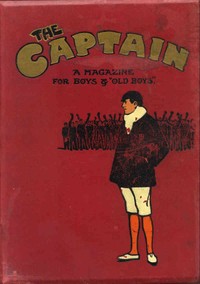
The Olive Branch is no ordinary warship. Armed with the ZZ-rays—an irresistible charge of electricity that can destroy a hostile ship at will—she is commanded by Captain Brookes, a man who believes he can make war so terrible that no nation will dare declare it. The story, serialized in The Captain magazine in 1911, follows Gerald Tregarthen as he is drawn into this paradoxical vessel's mission. The excerpts reveal a tension between the ship's peace-through-terror philosophy and the practical realities of command, especially when the captain is bound by a vow never to fire on a British ship.
The Paradox of the Peacemaker
Captain Brookes's ambition is to end war by making it unthinkably destructive. Yet the Olive Branch is a warship, cleared for action, with every man at his post. In the one-sided engagement excerpt, the cruiser runs the gauntlet of four British cruisers, receiving their fire without returning it. The captain stands 'as rigid as a marble statue,' steering by 'supernatural instinct' through blinding rain and spray. The narrative voice emphasizes the mental strain: Gerald wonders whether the temptation to touch the deadly levers might overcome the captain's iron nerve. This scene crystallizes the central paradox—a weapon of ultimate power used only defensively, a peacemaker that must absorb punishment without striking back.
The Scientist and the Deserter
Schneider, the ship's scientist, deserts, taking important plans with him. He is found on a German tramp steamer and brought back, an act that brands the Olive Branch as a pirate. The excerpts show Schneider's capture: 'In spite of his strenuous resistance they hauled the deserter out of the empty tank, and then unceremoniously bundled him into the gig.' Later, Schneider clears the rail and leaps into the sea. The tension between the ship's high-minded mission and the brutal reality of enforcing loyalty is evident. The scientist's betrayal and the subsequent pursuit introduce a note of moral ambiguity: the ship that would end war operates through coercion and secrecy.
Sensory Details of Naval Combat
The excerpts are rich with precise, sensory descriptions of naval action. A 6-inch shell striking the Olive Branch's bow explodes with a 'deafening report,' the flash throwing the ship's outlines into strong relief. A heavy missile lands on the conning-tower base, shaking it to its foundations. The sound of a shell screaming overhead, the cascade of spray from a near-miss, and the luminosity of churned-up spray betraying the ship's position—all these details create a vivid, immediate experience. The narrative avoids glorification; instead, it focuses on the physical and psychological impact of being under fire without the ability to retaliate. Gerald closes his eyes involuntarily, yet holds his post.
Readers should attend to the recurring motif of restraint versus power. Captain Brookes's vow not to fire on British vessels is a self-imposed limitation that defines the action. The ZZ-rays, though never fully described in the excerpts, function as a narrative device that raises questions about the ethics of overwhelming force. The story's serial origins in The Captain magazine suggest an episodic structure; the excerpts hint at a larger arc involving war between Chile and Peru, a minefield, and a trapped submarine. The tension between the ideal of universal peace and the messy realities of loyalty, desertion, and combat gives the work its particular edge.
There’s something almost unbearable about the Olive Branch—peace enforced by terror, a vow binding a captain’s hands. I kept thinking of Midshipman Merrill — Background and Themes afterward, how those old sea stories always leave a young man alone with a heavy choice. That night run through the squadron’s fire still lingers, quiet and unsettling, like a memory I didn’t quite live through.
There are no reviews for this eBook.
There are no comments for this eBook.
Reader reflection
Before you leave, reflect on the book
Use these questions to collect your thoughts before moving on.
Your progress
0
/
10
2
What was your overall reaction to the book?
3
Would you pass this book on to a friend?
4
What was the reading difficulty like?
5
What did you think about the pace?
6
Did anything about the book feel genuinely new?
7
Would a second reading be valuable?
8
How strongly did the book affect you emotionally?
9
Which lesson or insight stayed with you?
10