1

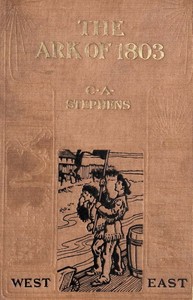
The Ark of 1803: A Story of Louisiana Purchase Times — A Reader’s Guide
(0 User reviews)
631
Project Gutenberg
2020
Not confirmed
Adventure and adventurers -- Juvenile fiction; Frontier and pioneer life -- United States -- Juvenile fiction; River boats -- Juvenile fiction
Readers of public-domain and historical texts
Project Gutenberg digital edition
en
Edition facts
Words
54,790
Reading time
239 min
Text sections
17
This digital edition of The Ark of 1803: A Story of Louisiana Purchase Times — A Reader’s Guide is described by source-level measurements including 54,790 words, 3 hr 59 min estimated reading time, and 17 detected text sections.
The text analysis averages about 17.1 words per sentence, while the detected sections provide another way to judge how the source is divided.
Project Gutenberg metadata also associates the work with “Adventure and adventurers -- Juvenile fiction,” connecting these edition facts with the source record’s subject description.
Source:
Project Gutenberg record #61226
A 1904 juvenile adventure following a group of young arksmen navigating the Mississippi River in 1803, marked by episodic perils, period-authentic rivercraft, and a narrative that shifts between schoolhouse pranks and frontier hazards.
Editorial Edition Score
4.8/5
★★★★★
★★★★★
Calculated from edition completeness, EPUB availability, text structure and catalogue metadata. Not a user rating.
How this score is calculated
- Description quality20 pts
- Title & short description10 pts
- Source metadata20 pts
- Text length15 pts
- Chapters / structure15 pts
- EPUB file integrity20 pts
Total of 100 points, scaled to a 2.5-5.0 range. Editions with an empty description or a missing EPUB file are not scored.
Edition quality
Read the Text
PAGE THE MASTER’S HOLIDAY 1
THE ARK IS LAUNCHED 26
JIMMY LEAVES FISH CREEK 51
JIMMY SAVES A STRANGER 68
UNCLE AMASA’S NEWS 84
A DANGEROUS “GOBBLER” 106
------------------------------------------------------------------------
LIST OF ILLUSTRATIONS
PAGE “HEY, WHAT? FORGIVE THEM!” 22
“YOU WILL SURELY COME BACK THEN?” 91
“HERE’S YOUR TURKEY GOBBLER!” 128
A “KEEL” FROM ST. LOUIS CAME ALONGSIDE 170
“GUESS WHO HE IS! GUESS!” 202
“HOW GOT YE BY THE FORT?” 268
IN ITS PLACE ROSE THE STARS AND STRIPES 293
“NAPOLEON IS HERE! VIVE NAPOLEON!” 319
“THEY ARE GOING TO CALL AT OUR LANDING!” 334
------------------------------------------------------------------------
“He’s taking holidays enough. I guess he can give us one,” said Moses Ayer, signing his name laboriously uphill.
“One licking more likely,” said Lewis Hoyt. He grinned as he took the big smooth-faced chip from Moses and added his signature. “Here, Molly, it’s your turn. Remember, you want to leave room for all the others that can possibly squeeze on.”
“If I couldn’t write smaller than that I wouldn’t sign,” retorted Molly Royce over his shoulder. “He’s got to stand treat and that’s all there is to it.”
While the three signers were busy at the master’s table, a little cloud of turkey feathers broke suddenly over a group of boys and girls who were gathered round the fireplace of the big schoolhouse. Jimmy Claiborne had thrown a handful of the feathers he was plucking at Louis Gist.
Louis, who was busy with another turkey, dropped it and sprang at Jimmy. Jimmy dodged among the others. The benches were overturned. In a moment a skirmish had broken out and the school was a mass of dodging figures, laughs and screams.
“Stop that racket,” cried Moses Ayer, pounding on the master’s table. “Listen here!—Jimmy Claiborne, you and Louis stop your fussing and come and sign this petition. Quit fooling. He may be banging at the door any minute.”
“Louis says Marion Royce don’t want me to go on the ark,” shouted Jimmy, “and I want to know if it’s true.”
“Come and sign,” yelled Moses. “The ark won’t be starting for a month and this petition goes into effect to-day. Quit your squabbling and come here.”
“I tell you you _won’t_ go to New Orleans on the ark,” screamed Louis Gist, swinging his turkey round his head as he charged with it.
“Never mind New Orleans, I tell you,” cried Moses, reaching after Jimmy as Jimmy dodged the turkey swung at him. “Look out what you’re doing!” He caught at the turkey to ward it off, tripped over a puncheon, and went over, dragging the turkey and its holder with him.
Lewis Hoyt was still grinning. He caught the passing Jimmy by a fringe of his buckskin and drew him to the master’s desk.
“Sign here, if you’ve got sense enough,” he said. “You look as if you’d been rolling in a torn feather bed. If I were Marion Royce I’d leave you two muddle-heads behind even if I had to fill your places with girls.”
“I guess Marion would be mighty glad to fill one of their places with a girl,” gasped Moses Ayer, emerging from the little boys who had promptly fallen over him when he tripped.
Everyone laughed and looked at Milly Ayer. She blushed and bent over her book. She was one of the older girls who had sat quietly in the back rows, paying no attention to the younger ones about the fire.
“Don’t mind him, Milly, he’s only your brother,” said Louis Gist. Now that Jimmy Claiborne was captured he could return to finish plucking his turkey at the fireside. “Won’t we have a grand barbecue, if the old rascal doesn’t come!”
“We’ll have it even if he does come,” insisted Moses Ayer. “I guess an old toper that can stay away from his school four days at a time hasn’t much right to keep us from having a holiday. I guess he’s pretty lucky to be allowed to teach here at all.”
Lewis Hoyt, who was patiently guiding Jimmy Claiborne’s hand through the evolution of his long name, looked up.
“You can depend on it, Master Hempstead wouldn’t be here in Fish Creek teaching us if he wasn’t addicted to the bowl. He’s a scholar, and some day you’ll regret you didn’t appreciate what he’s tried to teach you.”
“Lewis is preaching again,” cried Moses. “What’s Master Hempstead taught us except the way to the Marietta tavern?”
“Who needs to go to Marietta since the Claibornes bought their new still,—except to hide himself?” asked Louis Gist.
The Ark of 1803 opens not on the river but in a schoolroom, where a petition for a holiday is being signed on a chip of wood. The scene is crowded with turkey feathers, overturned benches, and a skirmish between Jimmy Claiborne and Louis Gist. This domestic chaos gives way to a voyage narrative that is equally episodic: the ark is launched, and the story moves from one river hazard to the next—tornado, landslide, and encounters with boatmen and Indians. The structure is a string of set pieces, each chapter a discrete incident, held together by the downstream journey.
From Schoolroom to Riverbank
The first chapter establishes a pattern of abrupt scene shifts. The schoolroom petition, with its laboriously signed names and turkey-feather fights, is a self-contained vignette. Then, without transition, the ark is launched and the setting becomes the river. This leap from domestic to wilderness is characteristic of the book’s method: each chapter introduces a new location or threat, often with little connective tissue. The narrative relies on the forward motion of the voyage rather than causal plot links.
Recurring Images of Craft and Cargo
The text is attentive to the material details of river travel. Arks, keels, barges, flatboats, pirogues, and a full-rigged brig are named and described. At New Madrid, the variety of vessels is catalogued: “keels and barges from Pittsburgh, the full-rigged brig from Marietta, four arks from Vincennes, flatboats from far up the Wabash.” The cargo is equally specific—live turkeys in wooden cages, sugar, milk from cows on board. These details ground the adventure in the practical logistics of 1803 river commerce.
Peril as a Structural Device
Each chapter introduces a new danger: a tornado, a landslide, a cave robbery, a “gobbler,” a head, and a visit from Indians. The perils are discrete and resolved within their chapters, creating a rhythm of threat and relief. The tornado chapter, for instance, ends with the arksmen thankful to have escaped, and the next day they pass Island No. 10. The landslide chapter similarly concludes with the voyage continuing. This episodic structure means the book can be read in segments, each offering a complete mini-adventure.
Historical Interjections and Authorial Voice
The narrator occasionally steps back from the action to provide historical context. In the landslide chapter, a paragraph explains that “the Louisiana Purchase marked the close of an era” and that the Mississippi Valley was “virtually French territory.” These interjections are brief but pointed, framing the personal story within a larger geopolitical shift. The authorial voice is didactic but not heavy-handed, using the voyage as a vehicle for period detail without letting the history overwhelm the narrative.
The Ark of 1803 rewards readers who enjoy a series of self-contained episodes rather than a tightly woven plot. Pay attention to the recurring motifs of rivercraft and the abrupt transitions between scenes; they are the book’s structural signature. The historical asides, though few, add texture to what is otherwise a straightforward adventure tale. Approach each chapter as a separate incident, and the journey will feel less like a novel and more like a logbook of hazards encountered and overcome.
That old Ark of 1803 story stayed with me for its quiet feeling of boys growing up between school pranks and real river danger—the way adventure never quite leaves you. It reminded me of how Frank Merriwell's Endurance; or, A Square Shooter — Story, Setting & Ideas carries that same patient, unforced sense of character being tested. Both feel less like plots and more like remembered afternoons.
There are no reviews for this eBook.
There are no comments for this eBook.
Reader reflection
What was your reading experience?
Capture what you thought, learned, and would like to remember.
Your progress
0
/
10
2
Was reading this book enjoyable?
3
How likely are you to recommend this book?
4
How much effort did this book require?
5
Did the story or argument move comfortably?
6
How personally connected did you feel to the book?
7
Did any part of the book stay with you emotionally?
8
Could you see yourself revisiting this book?
9
What did this book teach you most?
10