1

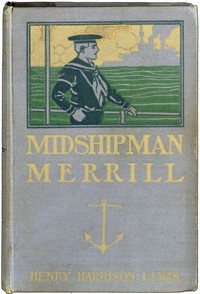
Midshipman Merrill — Background and Themes
(0 User reviews)
102
Project Gutenberg
2020
Not confirmed
Sea stories; United States Naval Academy -- Juvenile fiction; Military cadets -- Juvenile fiction
Readers of public-domain and historical texts
Project Gutenberg digital edition
en
Edition facts
Words
53,941
Reading time
235 min
Text sections
53
The source record for Midshipman Merrill — Background and Themes measures this digital text at 53,941 words, 3 hr 55 min estimated reading time, and 53 detected text sections.
The text analysis averages about 21.8 words per sentence, while the detected sections provide another way to judge how the source is divided.
Project Gutenberg metadata also associates the work with “Sea stories,” connecting these edition facts with the source record’s subject description.
Source:
Project Gutenberg record #63590
This editorial note examines the structure, recurring images, and scene transitions in Henry Harrison Lewis's Midshipman Merrill, focusing on how the narrative moves from coastal adventure to academy intrigue through physical contests, accusations, and honor tests.
Editorial Edition Score
4.8/5
★★★★★
★★★★★
Calculated from edition completeness, EPUB availability, text structure and catalogue metadata. Not a user rating.
How this score is calculated
- Description quality20 pts
- Title & short description10 pts
- Source metadata20 pts
- Text length15 pts
- Chapters / structure15 pts
- EPUB file integrity20 pts
Total of 100 points, scaled to a 2.5-5.0 range. Editions with an empty description or a missing EPUB file are not scored.
Edition quality
Read the Text
THE WRECK OF THE TOY.
“There comes that sea cub of Beacon Cliff, mates, so let us clip his claws.”
“So say I, mates, for he’s too blue blooded to associate with us, if he is only a fisher lad.”
“It’s the living in that old rookery, Cliff Castle, that has turned his head and made him so conceited.”
“No, he’s been high-toned ever since he saved that schooner from being wrecked in Hopeless Haven; but I say let us take him down a peg or two, mates.”
“Me, too;” and all of a group of five lads joined in with their leader to set upon a youth who was just running for the shore in a trim little surf-skiff with a leg-of-mutton sail.
The scene was at a small seaport upon the rugged, though beautiful coast of Maine, and the lads, a wild lot of reckless spirits, half-sailors, half-landsmen, stood in front of an old-fashioned tavern fronting the water, and from whence they had sighted the surf-skiff running swiftly in toward the wharf, and had recognized its occupant, a lad of sixteen.
He was neatly dressed in duck pants and a sailor shirt with wide collar, in each corner of which was embroidered an anchor in blue silk.
A blue tarpaulin sat jauntily upon his head, giving him something of a rakish look, and a sash encircled his slender waist.
But in spite of his rather picturesque attire, he had a face of rare manliness for one so young, a face that was bronzed by exposure, strong in character and stamped with resolution and daring beyond his years.
He ran his little skiff in cleverly alongside the wharf, lowered sail, and carefully taking up a toy ship, stepped ashore and started toward the tavern.
The toy was a miniature ship, fully rigged and under sail, an exquisite specimen of workmanship, for from keel to truck there was nothing missing, and every rope and sail, even to a tiny flag, the Stars and Stripes, was in place.
He had nearly reached the group of youths, who had threatened to lower his pride a peg or two, when a seaman met him and called out:
“Ho, lad, who built that craft you have there?”
“I did, sir,” was the modest reply.
“Well, if you did you are a born sailor, that is all, for I never saw a cleaner built craft, or a better rigged one. Are you a deep water sailor, my lad?”
“I have been to sea, sir; but I am only a coaster now.”
“And what are you going to do with that pretty toy?”
“I am going to ask landlord Rich of the tavern to buy it of me, sir.”
“Why do you sell it?”
The lad’s face flushed, and after a moment he said:
“Well, sir, my mother is ill, and I wish to have the doctor go and see her, and sell the ship to get the money to pay him and buy medicines with.”
“Well, lad, in spite of your fancy rig, your heart lies in the right place, I see; but what do you want for the craft?”
“It ought to be worth fifteen dollars, sir.”
“It is worth more, and I wish I had the money to buy it; but if the landlord don’t buy it, I’ll see what I can do.”
“I thank you, sir,” and the lad was going on, when the group of youths, who had heard all that had passed, laughed rudely, while one said: “Let me see your boat, sea cub?”
The lad’s face flushed, but he knew that the speaker was the son of a rich shipping merchant of the town, and was a spendthrift, who might pay him a fancy price for his toy, if he wished to do so, and he, therefore, handed the ship to him without reply.
It was the same youth who had suggested to the others to tease the lad, and looking critically at the ship, he said:
“It looks fairly well to a landsman, but whoever saw such a rig on a ship?”
“And the hull has no shape to it,” said another.
“Just look at the rake of the masts.”
“And the cut of her bow.”
“Whoever saw such a stern on anything but a mudscow.”
“If you do not wish to purchase the boat, Scott Clemmons, give it back to me,” said Mark Merrill, suppressing his anger.
“I’ll buy her, if she can stand a cyclone, sea cub,” said Scott Clemmons insolently.
“Let’s see if she can, Scott,” another said.
“All right, Birney, hold out your arm.”
The opening chapter of Midshipman Merrill introduces a pattern of physical confrontation and social rivalry that recurs throughout the novel. A group of five lads on Beacon Cliff plot to “clip his claws,” targeting a youth who has just saved a schooner in Hopeless Haven. The scene establishes a coastal setting where the protagonist’s skill and reputation provoke envy. The narrative quickly shifts from this seaside conflict to the structured world of the Naval Academy, where similar tensions play out in gymnasium challenges and honor disputes. The movement between these two environments—the open coast and the disciplined academy—shapes the story’s rhythm.
From Beacon Cliff to the Gymnasium
The novel’s first scene, set on Beacon Cliff, introduces a group of lads who resent the protagonist’s success. They call him a “sea cub” and plan to humble him. This outdoor, informal setting contrasts sharply with the later gymnasium scenes at the Naval Academy, where cadets engage in structured physical contests. The shift from a rocky shore to a regulated training space mirrors the protagonist’s own transition from a fisher lad to a midshipman. The gymnasium becomes a stage for repeated confrontations: Mark Merrill is challenged to walk on his hands, a feat that leads to accusations of theft. The commandant later notes that such dishonor is “a stigma too serious to be lightly thought of,” highlighting how the academy’s code intensifies the stakes of personal rivalry.
Recurring Images of Hands and Coins
Hands and coins appear as recurring motifs that link physical action to questions of trust. In the opening, the lads speak of “clipping his claws,” a metaphor for disabling the protagonist. Later, the hand-walking challenge becomes a test of both skill and integrity. A “luck coin” is slipped into Merrill’s pocket, and when it falls out, he is accused of theft. The coin, a small object, triggers a chain of accusations and investigations. The commandant’s inquiry focuses on who saw the coin being planted, and witnesses confirm that Breslin “stole it from him and slipped it into my pocket.” These details tie the physical act of passing an object to the moral question of honor, a central concern in the academy setting.
The Structure of Accusation and Defense
The narrative repeatedly builds scenes around a pattern of accusation, witness testimony, and defense. In Chapter XXVIII, Merrill reports the gymnasium incident to the officer of the day, then to the commandant, accompanied by three cadets who vouch for him. The commandant listens with “the deepest interest,” and the scene unfolds as a formal inquiry. This structure—a public challenge, a hidden plot, a revelation of truth—recurs in earlier chapters such as “A Double Accusation” and “The Telltale Coin.” The story does not rely on courtroom drama but on the cadets’ own code of honor and the commandant’s authority. The pattern emphasizes how reputation is built or destroyed through witnessed actions and spoken testimony.
Movement Between Shore and Ship
The chapter titles trace a journey from coastal life to academy training and finally to sea. Early chapters like “The Wreck of the Toy” and “The Boy Pilot” take place near the shore, while later ones such as “The First Cruise” and “A Life on the Ocean Wave” move aboard ship. This progression is not linear; the narrative returns to shore for confrontations and investigations. The setting of “Spook Hall” and the “rookery, Cliff Castle” suggest a gothic, isolated coastal home that contrasts with the regimented academy. The movement between these spaces—cliff, academy, ship—creates a sense of expanding horizons, but also of recurring threats. The sea is both a place of rescue (saving a schooner) and danger (the cry “Man Overboard!”), reinforcing the protagonist’s dual role as skilled sailor and disciplined cadet.
Readers attentive to the novel’s structure will notice how each physical contest—whether on the beach or in the gymnasium—serves as a test of character. The recurring images of hands, coins, and accusations tie the action together without requiring knowledge of the full plot. The story moves briskly between settings, and the cadets’ dialogue often carries the weight of exposition. This edition invites a close look at how Lewis uses these repeated elements to build a world where honor is constantly at stake.
There's something about the way Midshipman Merrill moves from ocean swells to stuffy wardrooms, always testing honor through small physical trials, that reminds me of Frank Merriwell's Chase; Or, Exciting Times Afloat — Background and Themes. Both feel like old letters from a friend who loved the sea more than the rules. I keep thinking about those transitions—how a scrape or an accusation changes everything.
There are no reviews for this eBook.
There are no comments for this eBook.
Reader reflection
How will you remember this book?
Save your reaction, strongest insight, and memorable passage.
Your progress
0
/
10
2
How much did you enjoy the reading experience?
3
Would you pass this book on to a friend?
4
What was the reading difficulty like?
5
How distinctive were its ideas or approach?
6
Could you follow the author’s main argument?
7
What did you think about the pace?
8
Did the book give you something worth debating?
9
What changed or sharpened your thinking?
10