1

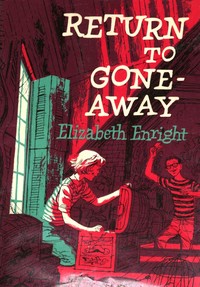
Return to Gone-Away — Edition Insights
(0 User reviews)
280
Project Gutenberg
2022
Not confirmed
Vacations -- Juvenile fiction; Family -- Juvenile fiction; Cousins -- Juvenile fiction
Readers of public-domain and historical texts
Project Gutenberg digital edition
en
Edition facts
Words
43,562
Reading time
190 min
Text sections
5
This digital edition of Return to Gone-Away — Edition Insights is described by source-level measurements including 43,562 words, 3 hr 10 min estimated reading time, and 5 detected text sections.
The text analysis averages about 13.0 words per sentence, while the detected sections provide another way to judge how the source is divided.
Project Gutenberg metadata also associates the work with “Vacations -- Juvenile fiction,” connecting these edition facts with the source record’s subject description.
Source:
Project Gutenberg record #67199
Portia and her family return to the Villa Caprice, where she and her cousin Julian explore attics, trunks, and hidden rooms, uncovering family secrets and the mystery of a lost safe.
Editorial Edition Score
4.7/5
★★★★★
★★★★★
Calculated from edition completeness, EPUB availability, text structure and catalogue metadata. Not a user rating.
How this score is calculated
- Description quality20 pts
- Title & short description10 pts
- Source metadata20 pts
- Text length15 pts
- Chapters / structure15 pts
- EPUB file integrity20 pts
Total of 100 points, scaled to a 2.5-5.0 range. Editions with an empty description or a missing EPUB file are not scored.
Edition quality
Read the Text
There was a commotion of greetings and embraces. "Julian, you've grown a year's worth," said Mr. Blake.
Julian would soon be thirteen: a tall, skinny boy with orange-red crew-cut hair, freckles, glasses, and large eager-looking front teeth. One would not have guessed from his appearance that he was his school's best athlete, wonderfully coordinated. In addition to his skill at sports, he was of a scientific turn of mind, and an ardent amateur naturalist. It was his pursuit of an uncommon butterfly the summer before that had led him and Portia into the great swamp of Gone-Away, and indirectly to the battered resort houses where they had first made the acquaintance of Mrs. Cheever and her brother.
"How are they? Aunt Minnehaha and Uncle Pin?" was the first question Portia asked.
"They're O.K., they're fine," Julian said. "You should see Uncle Pin on ice skates! He's a wizard!"
Uncle Jake, in the lead, drew up beside a blue station wagon and opened the door.
"You have a new car!" exclaimed Portia accusingly. She had been very fond of the old one, which she had known since her babyhood.
"We had to," Uncle Jake said. "The other one got arthritis."
"_Car_-thritis, you mean," corrected Julian, who was partial to puns.
"Anyway, it's only new from our point of view, not from the dealer's," Uncle Jake said. "It was already three years old when we bought it."
The station wagon proved to be very comfortable and more spacious than the old car. A pair of ice skates, a box of dog biscuit, one mitten, and some library books lent a homely air to the interior.
"It _smells_ just like the old one," Foster remarked approvingly. "I mean it smells exciting."
They drove through Creston and out into open country; then through the village of Attica, where Uncle Jake's newspaper, _The Attica Eagle_, was published; and on again through countryside: bare, leafless, neutral-colored.
"Winter's never going to end." Portia sighed.
"I have news for you: it's ended already," Julian told her. "Tonight you'll hear the peepers, and you'll know. And down near the brook the skunk cabbages are poking out their snouts already. Those things don't just kid around; they mean _spring_!"
The road lay between woods; presently they came to a driveway marked by the Jarmans' mailbox, and they turned in.
"Almost there!" cried Foster. "I'm hungry." Feeling happy often made him hungry; he had noticed it before.
"Well, I had a sort of premonition," Aunt Hilda said. "So I made some peanut-butter cookies and a batch of brownies and an angel cake."
"Man!" said Foster, from his heart.
They rounded a bend in the drive, and there in the midst of its winter lawns was the Jarmans' pleasant house.
It was wonderful to be there again, the Blakes thought. Indoors, a fire was snapping in the living-room fireplace. The dog Katy (who was Gulliver's mother) rushed to greet them, pleasure showing in her charcoal-colored face. Othello, another of her sons, took the cue from his mother and demonstrated his enthusiasm by a volley of friendly barks. Thistle, the family cat, was another story. He came into the room with a who-cares look on his face, strolled off under the piano, skirted the bookcase, disappeared under the couch for a while, and then, only inadvertently it seemed, fetched up by Portia, rubbing his sides against her legs and beginning to purr.
"Oh, you old fraud," Portia scolded, and she picked up the big warm cat and cuddled him in her arms. "Oh, you old faker. Listen to him purr, Mother," she said. "He sounds just like the Frigidaire at home."
Foster was hopping first on one foot, then on the other, in front of Aunt Hilda. It was his peculiar way of reminding her about the cookies and brownies; more polite, he thought, than asking right out loud. It worked, too.
"Yes, of course," said Aunt Hilda, standing up. "Come along, everyone who's hungry. Refreshments in the kitchen!"
Portia, lagging behind the others, said to Julian: "Do you think it's too late to go and see them?"
"Aunt Minnehaha and Uncle Pin? No, it's still a long way off till supper. Let's just eat a little something to keep our strength up, and then we'll go."
Julian's idea of a little something to keep his strength up was as many brownies and cookies as he could put away before his mother said "No!" Portia was nearly as bad. But the process did not take very long after all, and soon, well-muffled against the raw March wind, they were trudging along the familiar route to Gone-Away.
_Return to Gone-Away_
Return to Gone-Away opens with a burst of physical energy: Portia Blake, her brother Foster, and their dog Gulliver all jump, hug, and bark around their father upon learning that the Villa Caprice is now theirs. This kinetic introduction sets the tone for a story where discovery is often tactile and messy—from the moth-eaten fur that rises in clouds of black thistledown to the clatter of crockery in an attic storeroom. The narrative moves between the family’s new house and the abandoned resort of Gone-Away Lake, and the excerpts show a keen attention to the textures of old things: petticoats, gloves, shoes in flannel bags, and a dressmaker’s dummy standing sentry. These objects are not mere props; they are clues to the past that the children actively handle, shake, and sort through.
A House of Many Rooms
The Villa Caprice is introduced as a place of abundance: “We could each have two apiece if we wanted,” Mrs. Blake says of the rooms. Portia immediately claims the round turret room, and the family begins to imagine curtains in yellow or pale green. But the house is also a repository of the past. In the attic, trunks hold petticoats “embroidered and ruffled and ribboned and ruched,” vast nightgowns with lace collars, and stockings with embroidered clocks. The children’s exploration is framed as a compromise: Portia wants to open trunks, while Julian searches for a safe. The attic itself is described with sensory precision—a “good dry attic smell,” the sound of rain on the roof, and the leaning secretary “like the Tower of Pisa.” These details anchor the fantastical elements in a tangible, lived-in world.
Objects That Resist and Reveal
The excerpts repeatedly show objects that are not passive. When Portia opens a trunk of furs, the moths have “hardened themselves long ago to the defenses laid down against them”; the fur rises in clouds, tickling her nose and settling on her arms. She exclaims, “I bet this is exactly how Pandora felt!”—a rare explicit literary reference that underscores the theme of curiosity and consequence. Later, a trunk of shoes yields “little pointy shoes” in flannel bags. The children’s interactions are physical and often comic: Julian wears a pith helmet that “sat down on his ears like a soup tureen.” The narrative does not rush past these moments; it dwells on the resistance of old things—the clasps that must be forced, the smell of camphor, the shock of unexpected fur.
Movement Between Inside and Out
The story shifts between the house and the outdoors, but the excerpts emphasize interior spaces. The attic is a “storeroom” that seems larger now that furniture has been removed; the trunks are “grouped together in a surrounding of pitchers and basins.” The children move through these spaces with purpose: Portia “clattered and clanged, arranging a path amongst the crockery,” while Julian “snooped about under the eaves, opening the doors of washstands.” Even the rain outside is felt as sound and comfort: “coziness and comfort in the sound of rain on the roof.” The house itself becomes a character, with its turret, fireplace, and the mysterious safe that Mrs. Blake says her great-uncle Grover kept in the attic. The search for the safe propels the plot, but the real discovery is in the handling of the past.
The Weight of Family History
The children are not just playing; they are uncovering layers of family history. The trunks belong to Mrs. Brace-Gideon, and Portia wonders, “Do you suppose Mrs. Brace-Gideon ever threw anything away?” Julian replies, “I’m glad she didn’t. I like finding things.” This exchange hints at a theme of preservation and curiosity that runs through the book. The objects are not random; they are specific to a previous generation—petticoats, gloves with pearl buttons, shoes in flannel bags. The narrative treats these items with respect, even when they are moth-eaten or boring. The children’s task is to sort, to open, to discover, and in doing so, they connect with the people who lived before them. The safe remains elusive, but the process of searching yields its own rewards.
The excerpts from Return to Gone-Away offer a glimpse into a story where the past is not a distant memory but a physical presence to be touched, smelled, and sorted. Readers who enjoy detailed descriptions of old houses and the slow revelation of family secrets will find much to appreciate. The narrative rewards patience: the safe may not be found in these pages, but the journey through attics and trunks is rich with sensory detail. Pay attention to the objects—they carry the story as much as the characters do.
That rainy afternoon, I lingered over Portia and Julian prying open the old safe in the Villa Caprice’s attic, the dust and mothball smells almost tangible. Finding those buried letters felt like uncovering a smaller, quieter world inside the house’s silence. Later, restless, I picked up The house on the cliff — Edition Insights and felt that same hush of secrets waiting behind a door.
There are no reviews for this eBook.
There are no comments for this eBook.
Reader reflection
What did you think of this book?
Answer a few questions and save a private reflection on this device.
Your progress
0
/
10
2
What was your overall reaction to the book?
3
Would you encourage someone else to read it?
4
How demanding did the text feel?
5
Which element worked best for you?
6
How clearly were the main ideas presented?
7
Did the book give you something worth debating?
8
How strongly did the book affect you emotionally?
9
What changed or sharpened your thinking?
10