1

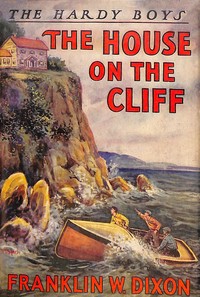
The house on the cliff — Edition Insights
(0 User reviews)
29
Project Gutenberg
2023
Not confirmed
Brothers -- Juvenile fiction; Mystery and detective stories; Hardy Boys (Fictitious characters) -- Juvenile fiction
Readers of public-domain and historical texts
Project Gutenberg digital edition
en
Edition facts
Words
45,469
Reading time
198 min
Text sections
27
The catalog record for The house on the cliff — Edition Insights provides practical reading context through 45,469 words, 3 hr 18 min estimated reading time, and 27 detected text sections.
The text analysis averages about 13.0 words per sentence, while the detected sections provide another way to judge how the source is divided.
Project Gutenberg metadata also associates the work with “Brothers -- Juvenile fiction,” connecting these edition facts with the source record’s subject description.
Source:
Project Gutenberg record #69988
An editorial note on the language, narrative voice, and pacing in the second Hardy Boys mystery, where Frank and Joe investigate a haunted house and a smuggling ring on Barmet Bay.
Editorial Edition Score
4.8/5
★★★★★
★★★★★
Calculated from edition completeness, EPUB availability, text structure and catalogue metadata. Not a user rating.
How this score is calculated
- Description quality20 pts
- Title & short description10 pts
- Source metadata20 pts
- Text length15 pts
- Chapters / structure15 pts
- EPUB file integrity20 pts
Total of 100 points, scaled to a 2.5-5.0 range. Editions with an empty description or a missing EPUB file are not scored.
Edition quality
Read the Text
behind a cloud and the sky gradually became darker.
Frank glanced up. Although the sky had been bright and clear when the party left Bayport, clouds had gathered in the east and it was plain that a storm was gathering.
“Looks as if we’ll have to go into the Polucca place whether we want to or not,” he called out to the others. “It’s going to rain.”
In a little while they came to the lane that led to the haunted house. In spite of the fact that it was overgrown with weeds and bushes, the boys were able to drive down the faintly defined roadway until at last a rusty iron gate barred their progress.
Frank, who was in the lead, got off his machine and kicked the gate open, the rusty chains clanking dismally as they fell from the staples. Then the party went on into the grounds.
Under the lowering sky that heralded the approaching storm, the grounds of the Polucca place were far from inviting. Dank, tall grass grew beneath the unkempt trees, and thistles and weeds sprouted up in the very center of the roadway. A rising wind stirred among the branches of the trees and the waving grasses rustled mournfully.
“Creepy sort of a place,” muttered Jerry.
“Wait till you see the house,” Chet advised.
Not one of them could restrain a slight shiver of apprehension when at last they came in view of the old stone building. It was framed in a mass of trees, bushes, and weeds that threatened to engulf it from all sides. Weeds obscured the front door. Bushes grew up level with the sills of the vacant downstairs windows. Trees on either side and beyond the house extended trailing branches down over the roof. A shutter hung by one hinge from an upstairs window, and banged with every passing gust of wind.
A deathlike silence hung over the old building. Under the black clouds that now filled the entire sky it was imbued with an atmosphere of gloom and terror.
“Come on!” said Frank. “Now that we’re here we may as well go through the place.”
“Haven’t seen any ghosts yet,” laughed Chet, with an effort at being light-hearted. But in spite of himself, his tone seemed forced.
They left the motorcycles beneath a tree and advanced toward the old stone building. The front door was almost off its hinges, and it swung creakingly open at Frank’s touch.
Frank stepped boldly into the hallway. The interior of the house was veiled in gloom, for the rear windows were boarded up, but the lads could see that everything was deep in dust. A staircase was before them, leading to the upper stories of the building. To the left, was a closed door.
“This must be the parlor,” said Frank, as he flung the door open.
The room was empty. A stone fireplace was at one side, and as the boys came into the room a rat scuttled out of the fireplace and raced across the floor, disappearing through a hole in the wall. The sound made every one jump, for the boys’ nerves were at a tension on account of the forbidding atmosphere.
“Just a rat!” said Frank.
His voice had the effect of calming the others.
They stood hesitantly in the middle of the deserted parlor. Joe went over to the window and looked out, but the view from the front window of the Polucca place was so lonely and gruesome, in its aspect of tangled trees and weeds and undergrowth under the lowering darkness of the sky, that he came back.
“Where shall we go next?” said Chet.
“Nothing much to see around here,” said Frank, disappointed. “It’s just an ordinary, dirty, old, deserted house. Let’s explore upstairs, anyway—”
At that moment there was a startling interruption.
A weird shriek, quavering as if with terror, rang out from the upper part of the haunted house!
That shriek was the most fearful and uncanny sound the boys had ever heard. There was a diabolical malignance about it, like the scream of some blood-thirsty animal, yet there was no mistaking the fact that it was uttered by a human being.
As the quavering notes died away, the bare walls of the old house flung back the echoes so that the shriek seemed to be repeated again and again, but on a smaller scale.
The boys stared at one another, aghast. For a moment they were dumbfounded. Then Jerry muttered:
“I’m getting out of here!” and with that, he started for the door.
“Me too!” declared Biff Hooper, and Chet Morton followed him as he rushed for the doorway.
The second Hardy Boys mystery opens with a leisurely Saturday ride: three motorcycles, five boys, and a meandering conversation about where to go. The prose moves at the same unhurried pace, pausing to note the heat, the breeze, and the boys’ banter. But once the brothers decide to visit the “haunted” Polucca place, the narrative tightens. The early chapters shift between outdoor action—a storm, a chase in the bay—and tense indoor scenes of interrogation. The voice is brisk and declarative, with dialogue carrying much of the plot. Frank and Joe speak in short, purposeful sentences; adults like Chief Collig and Detective Smuff are given comic, hesitant lines that slow the pace and reveal their reluctance.
Dialogue as a Driver of Pace
The story’s rhythm is set by its dialogue. In the opening chapter, the boys’ exchange is casual and meandering: “Where do we go from here?” “I don’t much care where we go, as long as we keep on going.” This relaxed pace mirrors a Saturday outing. But when Frank and Joe confront Chief Collig, the dialogue becomes pointed and rapid. Frank’s threat to go to the newspapers is delivered in a single, unbroken sentence that accelerates the scene. The chief’s stammering replies—“Now, now,” “Who said anythin’ about being afraid?”—create a staccato effect that underscores his nervousness. The contrast between the boys’ confident, clipped speech and the adults’ evasive, longer lines is a consistent structural device. It not only characterizes the protagonists as capable but also controls the tempo, slowing down when adults resist and quickening when the boys press for action.
Repetition and Comic Timing
A notable feature of the narrative voice is its use of repetition for comic effect. When Chief Collig and Detective Smuff return from the Polucca place, they echo each other: “So Smuff and me, we came away.” “Yes,” agreed Smuff profoundly, “we came away.” The repetition of “we came away” and the adverb “profoundly” create a deadpan humor that undercuts the official investigation. Similarly, the chief’s earlier line—“Smuff and me, we’ll go up there first thing to-morrow morning”—is mirrored later when he says “Smuff and me, we came away.” This verbal tic becomes a running gag, but it also serves a narrative purpose: it marks the passage of time and the failure of the investigation in a compact, memorable way. The prose elsewhere is lean, so these repeated phrases stand out, giving the reader a sense of the characters’ limitations without lengthy description.
Shifts from Action to Deduction
The pacing alternates between physical action and deductive reasoning. Early chapters feature a storm, a chase in the bay, and a rescue—scenes with short paragraphs and active verbs. But after the boys are bound and gagged, the narrative slows for a stretch of deduction. Frank and Joe piece together clues in dialogue: “There’s some connection between this smuggling outfit and the house on the cliff.” “Do you mean you think there is a secret harbor in there?” These exchanges are longer, with each hypothesis building on the last. The prose becomes more analytical, using phrases like “perhaps,” “it sounds reasonable,” and “that explains why.” This shift mirrors the boys’ process of moving from confusion to clarity. The reader is invited to follow the logic, and the tempo adjusts accordingly—quick during chases, deliberate during reasoning. The result is a rhythm that keeps the mystery engaging without sacrificing momentum.
Readers may notice how the author uses the boys’ dialogue not just to advance the plot but to set the story’s emotional temperature. When Frank and Joe speak, the pace quickens; when they listen to adults, it drags. This asymmetry is a deliberate choice that keeps the young protagonists in control of the narrative energy. Pay attention to how often the brothers interrupt or redirect conversations—it is a subtle but persistent marker of their agency in a world of hesitant authorities.
I remember the edit note for The House on the Cliff, dwelling on how Frank and Joe's steady pacing mirrors a careful tide. It made me think of an old reading companion for Dick and Larry, where that same unhurried friendship between boys—one braver, one quieter—carries the whole tale without shouting. Dick and Larry: Freshmen — Reading Companion holds that gentle, shared breath, much like a harbor at dusk.
There are no reviews for this eBook.
There are no comments for this eBook.
Reader reflection
Record your reading impressions
A brief reflection can help important ideas stay with you longer.
Your progress
0
/
10
2
What was your overall reaction to the book?
3
Would you recommend this book to another reader?
4
What was the reading difficulty like?
5
How clearly were the main ideas presented?
6
How would you rate its originality?
7
What was the strongest part of the book?
8
Would this book work well in a reading group?
9
What did this book teach you most?
10