1

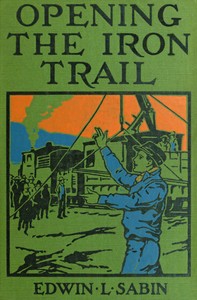
Opening the iron trail — A Closer Reading
(0 User reviews)
1329
Project Gutenberg
2024
Not confirmed
Central Pacific Railroad Company -- Juvenile fiction; Union Pacific Railroad Company -- Juvenile fiction; Promontory Point (Utah : Cape) -- Juvenile fiction
Readers of public-domain and historical texts
Project Gutenberg digital edition
en
Edition facts
Words
72,238
Reading time
315 min
Text sections
28
This digital edition of Opening the iron trail — A Closer Reading is described by source-level measurements including 72,238 words, 5 hr 15 min estimated reading time, and 28 detected text sections.
The text analysis averages about 13.1 words per sentence, while the detected sections provide another way to judge how the source is divided.
Project Gutenberg metadata also associates the work with “Central Pacific Railroad Company -- Juvenile fiction,” connecting these edition facts with the source record’s subject description.
Source:
Project Gutenberg record #73521
Sabin's 1919 semi-centennial novel follows Terry Richards and George Stanton as young workers on the Union Pacific, blending historical railroad construction with a boy's adventure. The catalog subjects emphasize the Central Pacific and Promontory Point, but the excerpts focus almost entirely on Union Pacific grading camps, Irish laborers, and the rapid growth of Cheyenne.
Editorial Edition Score
4.8/5
★★★★★
★★★★★
Calculated from edition completeness, EPUB availability, text structure and catalogue metadata. Not a user rating.
How this score is calculated
- Description quality20 pts
- Title & short description10 pts
- Source metadata20 pts
- Text length15 pts
- Chapters / structure15 pts
- EPUB file integrity20 pts
Total of 100 points, scaled to a 2.5-5.0 range. Editions with an empty description or a missing EPUB file are not scored.
Edition quality
Read the Text
mie’s emptied truck was tipped aside, to give clearance. Then Jimmie pelted rearward, for iron ammunition, and Terry had another breather.
That was a great system by which at the rate of a mile and a half to two miles and a half and sometimes three miles a day the rails for the Iron Horse were being laid to the land of the setting sun.
Beyond end o’ track the graded roadbed stretched straight into the west as far as eye could see, with a graders’ camp of sodded dug-outs and dingy tents breaking the distance. At the tapering-off place the ploughs and scrapers were busy, building the roadbed. Next there came the shovel and pick squads, leveling the roadbed. Next, between end o’ track and shovel squads, there were the tie-layers--seizing the ties from the piles, throwing them upon the roadbed, tamping them and straightening them and constantly asking for more, while six-horse and six-mule wagons toiled up and down, hauling all kinds of material to the “front.”
Already the row of ties laid yesterday and this very morning extended like a rippling stream for three miles, inviting the rails.
At end o’ track itself there were the track-builders--the rail-layers, the gaugers, the spikers, the bolters, the ballasters. And upon the new track there were the boarding-train and the construction-train.
The boarding-train, for the track-gang, held the advance. It was a long train of box-cars fitted up with bunks and dining tables and kitchen--with hammocks slung underneath to the cross-rods and beds made up on top, for the over-flow; and with one car used as an office by General “Jack” Casement and his brother, Dan Casement, who were building the road for the U. P.
The construction-train of flat-cars and caboose plied back and forth between end o’ track and the last supply depot, twenty miles back. These supply depots, linked by construction-trains, were located every twenty miles, on the plains beside the track, back to North Platte, the supply base.
From its depot the train for end o’ track brought up rails, ties, spikes, fish-plate joints--everything. It backed in until its caboose almost touched the rear car of the boarding-train. Overboard went the loads from the flat-cars; with a shrill whistle, away for another outfit of track stuff puffed the construction-train; with answering whistle the boarding-train (Terry’s father at the throttle) followed, a short distance, to clear the path for the rail-trucks.
The rail-truck, Terry’s or Jimmie Muldoon’s, according to whose turn, loaded at the farthest pile. Then up track it scampered, to the very end, where two lines of track-layers, five on a side, were waiting. Each squad grabbed a rail, man after man, and hustled it forward at a run; dropped it so skillfully that the rear end fell into the last fish-plate. They forced the end down, and held the rail straight.
“Down!” signaled the squad bosses. The gaugers had measured the width between the pair of rails: four feet eight and one-half inches. The spikers and bolters sprang with spikes and bolts and sledges. “Whang! Whang! Whangity-whang!” pealed the sledges--a rhythmic chorus. By the time that the first spikes had been driven two more rails were in position. Now and again the little car was shoved forward a few yards, on the new track, to keep up with the work.
A pair of rails were laid--“Down! Down!”--every thirty seconds! Two hundred pairs of rails were reckoned to the mile; there were ten spikes to each rail, three sledge blows to each spike. A pair of rails were laid and spiked fast every minute, which meant a mile of track in three hours and a third--or say three and a half. In fifteen minutes the fish-plate joints had been bolted and everything made taut.
It was a clock-work job, at top speed, with maybe 1,000 miles yet to go in this race to beat the Central Pacific.
The Central Pacific was the road being built eastward from Sacramento of California. The Government had ordered the Union Pacific to meet it and join end o’ track with it, somewhere west of the Rocky Mountains. That would make a railroad clear across continent between the Missouri River and the Pacific Ocean!
The Union Pacific had much the longer trail: 1,000 miles across the plains and the Rockies and as much farther as it could get. The Central Pacific had started in to build only about 150 miles, and then as much farther as it could get, east from the California border.
The C. P. had commenced first. By the time the U. P. had built eleven miles of track, the C. P. had completed over fifty. But while the Central was completing 100 miles, the Union Pacific had completed 300.
Sabin's 1919 semi-centennial story opens not with the golden spike at Promontory Point, but with the gritty labor of Union Pacific grading camps in the Rocky Mountains. The excerpts show Terry and George riding with a cavalry escort, passing gangs of Irish workers who sing “Drill, my paddies, drill!” and wield shovels beside stacked guns—a detail that signals the constant threat of Native American attacks. The narrative voice is brisk and colloquial, peppering dialogue with dialect (“’Tis another town started”) and period slang (“Great Cæsar’s ghost!”).
The catalog subjects list the Central Pacific and Promontory Point, yet the excerpts devote no space to Chinese laborers or the final joining ceremony. Instead, they dwell on the Union Pacific's westward push, the “Magic City of the Plains” Cheyenne springing up in two months, and the race between Irish “three-dollar-a-day Christians” and Chinese “a-dollar-a-day haythen.” This imbalance suggests the book may ultimately reach Promontory Point, but its early chapters are firmly anchored in the Union Pacific's perspective.
The Union Pacific's Viewpoint Dominates
The catalog subjects list both the Central Pacific and Union Pacific, but the excerpts are overwhelmingly from the Union Pacific side. Terry and George are “U. Pay.” men—a pun on the railroad's nickname—and their journey begins at the Union Pacific line in the Rockies. The Central Pacific appears only as a distant rumor: “About two months ago they were on the east side of the Sierra Nevada Mountains,” George reports, and a gang boss mentions “10,000 Chinese coolies.” The Chinese workers are never seen; they are a statistic, a rival. The narrative's geography—Sherman Summit, Cheyenne, Julesburg—is entirely Union Pacific territory. Promontory Point, the catalog's third subject, does not appear in these excerpts at all. Readers expecting a balanced account of both railroads will find instead a story rooted in the Union Pacific's camps, with the Central Pacific as an offstage competitor.
Speed, Danger, and the Race Against Winter
The excerpts emphasize the frantic pace of construction. The author's preface notes that the Union Pacific laid 425 miles in one year and 7.75 miles in a single day. This urgency permeates the fiction: graders work “till the snows stop us,” powder is awaited for blasting, and the construction train is always “drawing nearer.” The threat of winter is real—the pass may close—and the men race against it. Danger comes not only from weather but from “Injuns” who “corral the graders and crews and run off stock.” The stacked guns beside the shovels are a constant reminder. Yet the tone remains buoyant, with Terry shouting the work song “Drill, you tarriers, drill!” as he rides past. The book treats the railroad's speed as a source of pride, not a cause for concern, aligning with the preface's boast that “these records have never been beaten.”
Cheyenne as a Barometer of Boomtown Growth
One of the most vivid passages describes Terry's first sight of Cheyenne from Sherman Summit: a “bunch of whity dots and rusty roofs” on the plain, 25 miles away. Corporal Williams explains that the town is two months old, with a thousand people, a town government, a daily paper, and lots selling for $2000 that cost $150. The excerpt calls Cheyenne the “Magic City of the Plains” and a “hummer.” This boomtown energy contrasts with the earlier mention of Julesburg, a “tough” town that the rails have left behind. The catalog subject “Promontory Point” might suggest the climax is the joining of the rails, but the excerpts suggest the real drama is the transformation of the landscape—towns springing up overnight, graders pushing through wilderness, and the constant movement of men and materials. Cheyenne is a microcosm of the entire project: raw, fast, and chaotic.
The excerpts offer a narrow but energetic slice of the novel: the Union Pacific's grading camps in 1868, seen through the eyes of two boys. Readers should not expect a comprehensive history of the transcontinental railroad; the Central Pacific and Promontory Point may appear later, but the early chapters are firmly focused on Irish laborers, boomtowns, and the race against winter. The book's value lies in its period details—the work songs, the slang, the sense of speed—rather than in plot or character depth. Approach it as a period adventure that captures the excitement of railroad construction from a distinctly Union Pacific point of view.
Some stories whisper long after the pages close. Opening the Iron Trail never lets me forget the dust and grime of Cheyenne’s grading camps, the weight of a shovel in young hands. It sits quietly beside Reuben Stone's discovery — A Reader’s Guide, two companions sharing that same patient ache of boys growing into their own footprints. A gentle friendship, that one.
There are no reviews for this eBook.
There are no comments for this eBook.
Reader reflection
What was your reading experience?
Capture what you thought, learned, and would like to remember.
Your progress
0
/
10
2
What was your overall reaction to the book?
3
Would you encourage someone else to read it?
4
What was the reading difficulty like?
5
How distinctive were its ideas or approach?
6
Did the book meet your expectations?
7
How valuable was this book for your own interests?
8
How personally connected did you feel to the book?
9
What did this book teach you most?
10