1

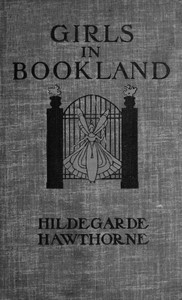
Girls in Bookland — A Reader’s Guide
(0 User reviews)
594
Project Gutenberg
2020
Not confirmed
Fantasy fiction; Fairies -- Juvenile fiction; Books and reading -- Juvenile fiction
Readers of public-domain and historical texts
Project Gutenberg digital edition
en
Edition facts
Words
61,291
Reading time
267 min
Text sections
20
This digital edition of Girls in Bookland — A Reader’s Guide is described by source-level measurements including 61,291 words, 4 hr 27 min estimated reading time, and 20 detected text sections.
The text analysis averages about 15.7 words per sentence, while the detected sections provide another way to judge how the source is divided.
Project Gutenberg metadata also associates the work with “Fantasy fiction,” connecting these edition facts with the source record’s subject description.
Source:
Project Gutenberg record #62976
Two sisters, Rose and Ruth, enter a fairy-assisted portal into storybook worlds, interacting with characters from Little Women, Robin Hood, and Guinevere's castle. The narrative blends direct participation with literary homage, though the excerpts reveal more about the framing device than the full range of visited tales.
Editorial Edition Score
4.9/5
★★★★★
★★★★★
Calculated from edition completeness, EPUB availability, text structure and catalogue metadata. Not a user rating.
How this score is calculated
- Description quality20 pts
- Title & short description10 pts
- Source metadata20 pts
- Text length15 pts
- Chapters / structure15 pts
- EPUB file integrity20 pts
Total of 100 points, scaled to a 2.5-5.0 range. Editions with an empty description or a missing EPUB file are not scored.
Edition quality
Read the Text
ays the most unexpected thing that happened.
“And a snow-storm,” thought Rose, “isn’t so unexpected as a princess.”
She turned her head and looked into the big pleasant room. The fireplace had a fine blaze in it, and lying on the Navajo blanket that covered the floor right before it, busily reading, was Rose’s younger sister, Ruth.
“Oh, Ruth, stop reading and come and look out. It’s getting blizzarder every minute.”
Ruth grunted, turned a page, and remarked:
“Wait just a bit, till I finish this chapter.”
Rose looked out once more, just in time to see a man ride round the corner of the barn and disappear into the flying snow.
“There goes Jim to round up the cows,” she exclaimed. “I guess the other boys have gone too. Probably we are going to have a sockdolager of a storm.”
“Marmie said you mustn’t say sockdolager,” chided Ruth, abandoning her book and joining Rose at the window. “Oh, I wish we could go riding too. But I guess we won’t any more now, till spring. Don’t you hate to think of winter coming, Rose? We can’t go out at all most of the time, or just round the inclosure, and that’s no fun, and we sha’n’t have anything to do, and we sha’n’t see a living soul for months. That’s what Marmie said. I wish we had some other little girls to play with. Books are nice, but they aren’t alive and real—O-o-o see how hard it’s snowing now! I can’t see the barn any more.”
The two little girls leaned close together, looking out at the storm that grew more furious as the moments passed. It shook the house, it blotted out the landscape, it even hid the haystack giants. It made them feel very small and lonely and far from everybody. The nearest ranch was five miles away. That didn’t seem much in summer, but now—why, no one would care to ride there now, and as for the two themselves, they knew they would not get far from home for months to come.
Presently it began to grow dark, and the sisters returned to the fire, curling up close together on the long seat with its thick cushions that stood in front of the hearth.
Rose was a good deal taller than her sister, though they were only a year apart. Her hair was thick and hung in two long red braids, a real golden red, and her eyes were golden too, with brown shadows. There were freckles on her nose, which turned up just a little. Rose was forever imagining and pretending, and wondering whether she might not be lucky enough to stumble on a fairy or a gnome, or find a charm or a wishing cup; and Ruth would listen to the wonderings, and follow her sister about, hoping that Rose really might have an adventure, and that she would be in it too.
Ruth was a slender, vivid, dark little thing, with hair that tumbled round her head in curls, and big, black eyes that opened wide when she sat listening to Rose’s make-believes. She liked to read better than anything, and even when they went off on long rides she would tuck in a book somewhere, and find a chance to read it while they stopped for a rest or to water the ponies or to chat with the Dillinghams, on the next ranch.
“Think of all the little girls there are in the world, hundreds and hundreds and millions, and we don’t know any of them,” continued Rose, lugubriously. “Wouldn’t it be grand if we had a magic carpet, and could sit on it and wish we were anywhere and be there in the shake of a cat’s hind leg.”
“What’s that?” asked Ruth.
“Oh, nothing. It’s just what Jim says when he means a little bit of a time.”
“Where would we go, Rose?”
“Perhaps to a big school, where lots and lots of girls were playing together. Or to a fairy island, where all the nicest boys and girls in the world lived, and went on picnics and had parties. Or maybe we’d go to a nice big house where there were two other girls as old as we are, and they were wishing, like us, that they had some little friends to play with—that would be nicest of all, I think.”
Ruth sighed deliciously, picturing the joy of it.
“I don’t suppose you can _possibly_ find such a carpet,” she murmured.
“N-no—I suppose they are all in Persia or Arabia. Or perhaps they are all worn out by this time.”
Hildegarde Hawthorne’s Girls in Bookland opens with a direct address to readers, proposing that inside the everyday world lies another, accessible through books. The preface promises that within this inner world, readers can “be and do anything,” from hunting lions to knowing fairies. The story then introduces sisters Rose and Ruth, who, with the help of a fairy, literally step into the pages of classic works. The excerpts show them entering Sherwood Forest, where they assist Robin Hood in outwitting the sheriff, and later visiting Guinevere’s castle. The framing device—a fairy granting access to book-worlds—is the primary mechanism, but the excerpts do not reveal how many or which other books are visited beyond these two episodes.
The Fairy Portal and the Sisters’ Role
The narrative hinges on a fairy who enables Rose and Ruth to step into books, but the excerpts offer little detail about this fairy’s origin or rules. In the Sherwood Forest episode, the girls are active participants: they help Maid Marian win a torch race and later carry the prize bow, drawing the sheriff’s anger. Their actions directly affect the plot—Robin Hood’s men rescue them, and the girls are praised as “heroines.” The sisters are not passive observers; they are integrated into the story, sharing meals with Robin’s band and receiving a toast. However, the excerpts do not clarify whether the fairy appears in every chapter or if the girls can choose which books to enter. The transition back to reality is abrupt: after the toast, the forest “quivered, wavered, fell away,” and the girls are home, hearing Marmie call to supper. This suggests each adventure is self-contained, but the overall structure remains unclear from the provided text.
Literary References and Adaptation Style
Hawthorne adapts well-known stories rather than reproducing them verbatim. In the Robin Hood segment, the sheriff’s son is a minor addition, waving a salute to the girls, and Maid Marian is a prominent character, laughing and walking with the sisters. The dialogue is modernized: Ruth remarks, “But what a horrid father he’s got,” a casual tone that contrasts with the medieval setting. The descriptions emphasize sensory details—the “cool green forest,” “lovely smell of growing things,” and the feast with “huge pasties and flagons of mead.” The excerpts do not indicate whether other visited books (like Little Women or Through the Looking-Glass, mentioned in the table of contents) receive similar treatment. The adaptation style appears to prioritize adventure and camaraderie over fidelity to the original texts, but without full chapters, the extent of alteration cannot be assessed.
Narrative Voice and Reader Address
The narrator frequently addresses the reader directly, using phrases like “let me tell you” and “wouldn’t it be thrilling?” This conversational tone aligns with the preface’s invitation to enter the world of books. In the Sherwood Forest scene, the narrator comments on the girls’ feelings: “They felt important, too, let me tell you.” The voice is omniscient but informal, occasionally using exclamations (“What an appetite every one had!”). The excerpts do not reveal whether this narrative style persists throughout the entire book or if it shifts in later chapters. The direct address creates a sense of shared adventure, positioning the reader alongside Rose and Ruth. However, the provided text does not show how the narrator handles transitions between different book-worlds or whether the fairy’s role is explained further.
The excerpts from Girls in Bookland demonstrate a playful, participatory approach to classic literature, but they leave many questions unanswered. The fairy’s mechanics, the full list of books visited, and the sisters’ character development are not fully revealed. Readers approaching this book should expect a series of episodic adventures rather than a continuous plot, with each chapter likely offering a new literary encounter. The preface’s promise of boundless possibility sets high expectations, but the excerpts only confirm two such journeys. The book may appeal to those interested in early twentieth-century children’s fantasy that blends reading with imaginative play.
Some books linger like a half-remembered dream, the way Rose and Ruth’s wanderings through storybook worlds stayed with me. It’s that feeling of carrying a quiet question afterward, about what we take from tales. Five thousand pounds — Key Ideas to Explore touched something similar, though more like a gentle echo than a grand adventure.
There are no reviews for this eBook.
There are no comments for this eBook.
Reader reflection
Your personal reading reflection
Build a private reading journal entry for this title.
Your progress
0
/
10
2
Did this book hold your interest?
3
How likely are you to recommend this book?
4
How much effort did this book require?
5
Did this book create an emotional response?
6
Would this book work well in a reading group?
7
Would you read this book again?
8
Did the book meet your expectations?
9
What did this book teach you most?
10