1

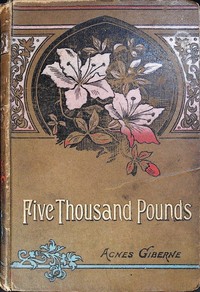
Five thousand pounds — Key Ideas to Explore
(0 User reviews)
316
Project Gutenberg
2023
Not confirmed
Conduct of life -- Juvenile fiction; England -- Juvenile fiction; Families -- Juvenile fiction; Wills -- Juvenile fiction
Readers of public-domain and historical texts
Project Gutenberg digital edition
en
Edition facts
Words
29,404
Reading time
128 min
Text sections
3
For Five thousand pounds — Key Ideas to Explore, the stored edition analysis reports 29,404 words, 2 hr 8 min estimated reading time, and 3 detected text sections.
The text analysis averages about 14.9 words per sentence, while the detected sections provide another way to judge how the source is divided.
Project Gutenberg metadata also associates the work with “Conduct of life -- Juvenile fiction,” connecting these edition facts with the source record’s subject description.
Source:
Project Gutenberg record #71192
Phœbe, a fourteen-year-old girl, narrates the upheaval when her family inherits £5,000. The story traces the shift from a contented cottage life to the pressures of new wealth, focusing on tensions between prudent grandmother and impulsive father, and the arrival of the dubious Mr. Simmons.
Editorial Edition Score
4.6/5
★★★★★
★★★★★
Calculated from edition completeness, EPUB availability, text structure and catalogue metadata. Not a user rating.
How this score is calculated
- Description quality20 pts
- Title & short description10 pts
- Source metadata20 pts
- Text length15 pts
- Chapters / structure15 pts
- EPUB file integrity20 pts
Total of 100 points, scaled to a 2.5-5.0 range. Editions with an empty description or a missing EPUB file are not scored.
Edition quality
Read the Text
UP to the age of fourteen I think I spent as happy a life as any child in any cottage home in England. There is many a cottage which is no "home" at all, in the true sense of the word, notwithstanding those pretty words of poetry about—
"The cottage homes of England, By thousands in her plains;"
It stood on a bit of country road, with three or four other cottages, close outside a biggish town. We had a large pond in front, and lots of trees beyond and on both sides of the pond; and the shadows of the trees used to look very pretty on a summer evening, when the light from the sun came creeping through them with a red glow like firelight. The water would catch the glow, till it was all one sheet of brightness, and the trees seemed bending down to look at their own likenesses below, for every branch and twig and leaf might be seen there, pictured.
Sometimes a breeze would ruffle the surface, and then there were little wavelets, with red on one side and grey on the other, and the pictured branches and leaves had a snaky sort of movement in and out of one another. And if a duck swam across, leaving its little track, that made another break in the smooth picture.
I used to stand and watch these things, and wonder at the ripples and the brightness. Sometimes I asked father the "why" of this or that, for I was an inquisitive child, but he always said, "Don't know, my girl," and went off to his pipe; so it was not of much use to ask him. If I put the same questions to mother, she commonly said, "How can I tell? Don't bother!" and that shut me up.
And if I went to grannie, she would say, "Because God made it so, Phœbe." This was all right and true, but I would have liked to understand a little more about the beautiful things which God has made. I used to wonder then, and I often wonder now, how it is that people care so little to look into such matters.
Well, but I must go on about my home, the only home I ever knew in childish years.
It was a pretty cottage. Clematis grew over one side, and in front there was a rose-tree, which used to flower all the summer through and on almost into the winter. The roses were small and white, but how they did cluster! People often stopped to remark on them. We had a nice piece of flower-garden in front, stuffed full of sweet-williams and pinks, and such plain old-fashioned plants: none the less pretty for being old-fashioned, however. At the back there was a tiny strip of kitchen-garden too. The front door had a porch, and honeysuckle grew thickly all over it, with long trailing pieces, which had to be lifted and put aside when we went out or in.
Grannie had lived in this cottage all through her married life, and when her husband died she lived on there still, with her only boy,—my father,—working for him, and making him work for her.
Father's work was in the building firm of Johnstone & Co. We thought Mr. Johnstone a very grand person in our little town, because he was so rich, and wore such a thick gold watch-chain, and had such a big red stone in the ring on his little finger. But I dare say he would not have been thought so much of elsewhere. He was not a gentleman, and he very seldom spoke a kind word to any of his men, as I am sure he would have done if he had been a true gentleman.
Father was not a skilled workman, but he had good wages nevertheless, for he was steady and trustworthy.
He was always kind to us children. I never knew him anything else in those days. Sometimes he would speak up sharp in a passing way, but he never knocked us about or stormed at us, as I have seen men do with their children.
He was not a religious sort of man. He went to Church most Sundays, in the afternoon, to please grannie, and sat and nodded through the sermon. He would have done a good deal to please her, though he wouldn't do one thing which she wanted, and that was to leave his bed early enough for the morning Service—no, not even for her sake.
The story opens with Phœbe’s detailed memory of her cottage home—the pond reflecting trees, the white rose cluster, and her unanswered questions about nature. This sensory grounding establishes a world of modest sufficiency, where the family’s happiness is tied to place and routine. The inheritance of five thousand pounds is announced abruptly: “IN THE MIDDLE OF THE DAY FATHER CAME BACK.” From that moment, the narrative tension pivots on how each family member responds to the prospect of wealth.
Phœbe’s voice is direct and observant, often noting discrepancies between what people say and what they do. The grandmother, a former servant, recognizes the danger of easy credit and the character of Mr. Simmons, while the father dismisses her warnings. The excerpts show a clear pattern: the grandmother’s physical distress (“a sort of fainty feeling”) mirrors her moral unease, while the father’s laughter at the idea of the money running out signals a fundamental blindness.
A Home Measured in Details
The opening chapter lingers on the cottage’s particulars: the pond with its “snaky sort of movement” of reflected branches, the clematis and white roses, the “sweet-williams and pinks.” These details are not decorative; they establish what is at stake. Phœbe’s curiosity about why ripples form or why the water catches the glow is met with “Don’t know” or “Don’t bother,” contrasting with her grandmother’s simple faith: “Because God made it so.” This early pattern—inquisitive child, indifferent parents, wise grandmother—recurs throughout the excerpts.
The cottage is described as a “home” in the true sense, unlike many cottages that are not. This distinction matters because the inheritance threatens to replace a genuine home with a new house and “nothing to do.” The grandmother’s grief at leaving the old home is physical: “I’ve never felt right and like myself since that was settled.” The narrative thus sets up a tension between the tangible, loved place and the abstract promise of money.
The Grammar of Unease
Phœbe’s narration often registers discomfort through small, precise observations. When Mr. Simmons visits, she notes his “grey eyes that had a sharp trick of seeing everything and yet that never looked anybody straight in the face.” The grandmother’s judgment is equally specific: she “laughed when mother called him so; for grannie had been in good service when she was young, and she knew well enough the difference between a gentleman and not a gentleman.”
The father’s language reveals his naivety: he calls the interest “a mere song, just a few pounds and odd shillings.” The grandmother’s response—“Mr. Simmons is a bad man”—is repeated for emphasis, and the father’s retort (“That’s charity, isn’t it?”) shows his defensive dismissal. The excerpts build a pattern of warnings ignored: the grandmother’s faintness, her direct speech, and her knowledge of the world are all set against the father’s careless optimism.
Money as a Testing Lens
The inheritance acts as a catalyst that reveals character. The mother’s repeated question “Has the money come?” shows her eagerness, while the grandmother’s concern is for the family’s moral direction: “It is seeing how things are tending, and knowing I can do nought to stop what is wrong.” The father’s willingness to borrow against the expected sum—paying “fifteen or twenty per cent” interest—suggests a pattern of living beyond means even before the money arrives.
The excerpts do not reveal whether the money ever comes, or what happens to the family. But the structure is clear: the inheritance is less a windfall than a test. The grandmother’s warning about making “a big hole in your five thousand pounds, before ever it comes to you” foreshadows the central conflict. The story, as far as the excerpts show, is about the gap between the promise of wealth and the reality of its management.
Readers attentive to the grandmother’s perspective will find a steady counterpoint to the father’s enthusiasm. Phœbe’s narrative voice—curious, observant, and slightly anxious—invites the reader to notice what the adults around her miss. The excerpts suggest a story less about the money itself than about the different ways people imagine the future. The cottage, with its pond and roses, remains the emotional center against which all change is measured.
That rainy afternoon, Phœbe’s fretful voice lingered with me long after I closed the book—how money quietly rearranged her cottage’s warmth into something colder. I set it down, reached for a worn volume on my shelf, and was surprised to find Betty at St. Benedick's — Reading Notes beside it. Her school-day worries felt softer, almost nostalgic, like a breath after Phœbe’s storm.
There are no reviews for this eBook.
There are no comments for this eBook.
Reader reflection
What was your reading experience?
Capture what you thought, learned, and would like to remember.
Your progress
0
/
10
2
Was reading this book enjoyable?
3
How likely are you to recommend this book?
4
How easy was the book to follow?
5
How clear did the writing feel?
6
What did you think about the pace?
7
Would a second reading be valuable?
8
How strong was your personal connection to the text?
9
What did this book teach you most?
10