1

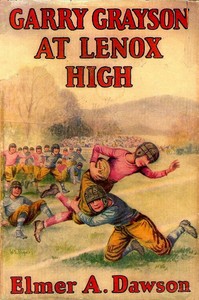
Garry Grayson at Lenox High — A Reader’s Guide
(0 User reviews)
1709
Project Gutenberg
2025
Not confirmed
Teenage boys -- Juvenile fiction; High schools -- Juvenile fiction; Football stories
Readers of public-domain and historical texts
Project Gutenberg digital edition
en
Edition facts
Words
46,611
Reading time
203 min
Text sections
26
Garry Grayson at Lenox High — A Reader’s Guide can be approached with a clearer sense of reading commitment from its source measurements: 46,611 words, 3 hr 23 min estimated reading time, and 26 detected text sections.
The text analysis averages about 14.2 words per sentence, while the detected sections provide another way to judge how the source is divided.
Project Gutenberg metadata also associates the work with “Teenage boys -- Juvenile fiction,” connecting these edition facts with the source record’s subject description.
Source:
Project Gutenberg record #75746
This editorial note examines how the opening, middle, and later excerpts of Garry Grayson at Lenox High guide a first reading, focusing on the football tryout setup, the scrimmage dynamics, and the team's internal tensions.
Editorial Edition Score
4.8/5
★★★★★
★★★★★
Calculated from edition completeness, EPUB availability, text structure and catalogue metadata. Not a user rating.
How this score is calculated
- Description quality20 pts
- Title & short description10 pts
- Source metadata20 pts
- Text length15 pts
- Chapters / structure15 pts
- EPUB file integrity20 pts
Total of 100 points, scaled to a 2.5-5.0 range. Editions with an empty description or a missing EPUB file are not scored.
Edition quality
Read the Text
Danter had at one time expressed it, that there was "between being big frogs in a little puddle and little frogs in a big puddle."
But despite the cold water thrown on his hopes by his chums, Rooster Long still held tenaciously to his ambition.
"I don't see why we can't make a try for the team, anyway," he persisted, with a long face. "Just because we're freshmen doesn't say we have to be dumbbells and sit back and take just whatever is handed to us."
"Of course not," Garry agreed, with a touch of irony. "There's nothing to prevent our making a noise and trying to draw the attention of the upper classes to our humble position at the foot of the throne. Though, of course, there's just a chance," he admitted, his eyes kindling, "that our victories over Cherry and Webster may give us Hill Streeters a little boost even with the high and mighty Lenox fellows."
"Gee, I sure would like to be on that team!" said Rooster, with a yearning shake of his head. "They're just one degree below the college teams."
"Come out of your trance!" admonished Bill Sherwood. "We won't have a look in."
"I'm afraid you're right," agreed Garry. "If we get even as far as the scrub this year we'll be lucky. Maybe they'll let us be doormats for the regulars."
"Gee, you fellows are about as cheerful as a funeral!" cried Rooster, giving a vicious kick to an unoffending stone. "You give me the jim-jams. I've got to do something to get my mind off my troubles."
Bill Sherwood laughed lazily.
"Nothing to get so het up about, Rooster," he drawled. "We won't be the only freshmen at Lenox High this fall, you know. There will be plenty of others biting their nails on the sidelines and telling any one who will listen that they could do a mighty sight better than those boobs of regulars."
"They say that misery loves company, but that doesn't cut any ice with me," and Rooster frowned mightily. "I'd rather dodge Lenox altogether than to stand on the sidelines and watch the other fellows play."
"He's getting wild," observed the grinning Garry. He yawned and raised his arms above his head in a luxurious stretch. "What do you say we go in for a swim, Bill? That may help cool him off."
"Just what I was going to suggest, nothing else but," replied Bill, rising with alacrity. "Come on, let's jump into our bathing suits."
This formality was accomplished in a very short time, and the boys were soon out of the house and making a dash through the woods toward the shimmering waters of Bass Lake.
The Sherwood bungalow boasted a private dock from which the lads often went fishing and swimming. Bill had a canoe and also a cranky little motorboat that usually spoke out of its turn.
"It goes when you think the motor's dead," Bill had said, when describing the eccentric craft to his chums, "and it stops without the sign of a reason just when everything seems in fine working order. The only thing that has any effect on it is a good talking to, for it knows its master's voice."
He threw out his chest pompously as he spoke, but doubled up promptly when Garry poked him in the stomach.
"What do you think I am, a punching bag?" he demanded in an injured tone.
"Oh, did I hit you?" asked Garry in mock contrition. "My hand must have slipped."
At the moment the boys had no use for either craft, for on that particular afternoon they intended to be in the water and not on it.
They sat for a time on the edge of the dock, basking enjoyably in the sun, knowing that the warmer they got the more enjoyable would be the plunge into the cool waters of the lake.
It was a pretty sheet of water, with numerous miniature bays and jutting points to break the monotony of the shore line. There were many summer bungalows like the Sherwoods' cuddled among the trees near the shore of the lake, and on the north side was a fairly pretentious hotel.
On such a bright afternoon the lake was bound to be studded with the boats of pleasure seekers. Canoes slipped with graceful, gliding motion from one inlet to another, while motorboats of all descriptions chugged busily over the gleaming surface.
"All this will soon be over," remarked Garry, with a shade of regret in his voice. "I hate to see winter come."
"But before winter comes fall, and in the fall comes football," chanted Bill.
Rooster Long gave his chum an injured look.
The opening chapter of Garry Grayson at Lenox High establishes a clear dramatic question: can Garry and his friends from Hill Street grammar school make the Lenox High football team? The dialogue among Garry, Rooster Long, Bill Sherwood, and others reveals their self-doubt and ambition. Garry's remark that they have “not a Chinaman's chance” sets up an underdog narrative. The setting—a porch where boys gather and talk—grounds the story in everyday teenage life. The chapter title “Straight for the Rocks” hints at impending danger, but the immediate focus is on the characters' hopes and fears about high school sports.
The Tryout Setup
The early chapters introduce the football tryout as a central plot driver. Garry and his friends worry about competition from upperclassmen, but they also boast about their own skills. The text uses nicknames like “Rooster” and “Big Bill” to create a familiar, friendly tone. The boys' conversation mixes confidence and anxiety, as when Nick Danter claims some freshmen “could give the high school fellows a pretty nifty tussle.” This dialogue establishes the stakes without revealing outcomes. The excerpts show that the author, writing as Elmer A. Dawson, builds tension through the characters' own assessments rather than through external narration.
The Scrimmage Dynamics
A later excerpt describes a practice game between the “regulars” (upperclassmen) and the “scrubs” (freshmen). The scrubs, led by Garry, take an early lead, scoring a field goal and a touchdown. The regulars fight back, and the game becomes “fast and furious.” The narration focuses on specific plays: drop-kicks, plunges, and gains measured in yards. Coach Garwin's “inscrutable” expression and his secret pleasure at the scrubs' performance add a layer of adult perspective. The excerpt ends with the scrubs leading 10-3, but the regulars scoring a touchdown to close the gap. This section shows how the author uses detailed play-by-play to create suspense and showcase the characters' skills.
Team Tensions and Rivalries
Throughout the excerpts, the boys' interactions reveal personal rivalries. Nick Danter wants to win “to make that boob sore,” referring to Sandy Podder. The regulars' quarterback Wynn “passed among his men, spurring them on,” while Garry warns his teammates not to get “too chesty.” These moments highlight the social dynamics within the team. The author uses dialogue to show how the freshmen bond against the upperclassmen. The scrubs' exultation after holding the regulars down is described with grins and jokes, contrasting with the regulars' glum silence. This emotional contrast deepens the reader's investment in the underdog story.
The Coach's Role and Narrative Strategy
Coach Garwin is a quiet but significant presence. His “sleepy-lidded eyes” betray little emotion, yet he is “secretly elated” by the scrubs' performance. The narrator notes that he is “not averse to seeing the regulars take their medicine.” This indirect characterization suggests that the coach values competition and development over immediate victory. The excerpts do not reveal his ultimate decision about the team roster, leaving the reader to wonder. The author uses the coach as a lens to comment on the game's significance without breaking the boys' perspective. This narrative strategy keeps the focus on the players' experiences while hinting at larger themes of growth and merit.
Readers approaching Garry Grayson at Lenox High for the first time will find that the excerpts offer a clear entry point into the story's central conflict. The opening dialogue establishes the characters and their goals, the scrimmage scenes provide action and tension, and the coach's reactions add depth. Pay attention to how the author balances team dynamics with individual moments—this pattern likely continues throughout the book.
There’s something tender about watching Garry earn his place slowly, through grit rather than glory. It reminded me of another quiet striver, Tom, piecing together a mystery one careful clue at a time. Their patience feels like an old friend’s hand on my shoulder, whispering that some things are worth the waiting. Tom the telephone boy; or, The mystery of a message — Key Ideas to Explore holds that same unhurried heartbeat.
There are no reviews for this eBook.
There are no comments for this eBook.
Reader reflection
What was your reading experience?
Capture what you thought, learned, and would like to remember.
Your progress
0
/
10
2
How did the book work for you overall?
3
Would you encourage someone else to read it?
4
How easy was the book to follow?
5
Did any part of the book stay with you emotionally?
6
Did it raise ideas you would like to talk about?
7
How clearly were the main ideas presented?
8
What did you appreciate most?
9
What did this book teach you most?
10