1

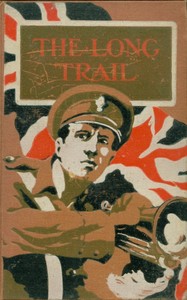
The long trail: A story of African adventure — Inside the Classic
(0 User reviews)
1499
Project Gutenberg
2022
Not confirmed
Adventure stories; Africa -- Juvenile fiction; Black people -- Africa -- Juvenile fiction
Readers of public-domain and historical texts
Project Gutenberg digital edition
en
Edition facts
Words
64,557
Reading time
281 min
Text sections
6
For The long trail: A story of African adventure — Inside the Classic, the stored edition analysis reports 64,557 words, 4 hr 41 min estimated reading time, and 6 detected text sections.
The text analysis averages about 15.8 words per sentence, while the detected sections provide another way to judge how the source is divided.
Project Gutenberg metadata also associates the work with “Adventure stories,” connecting these edition facts with the source record’s subject description.
Source:
Project Gutenberg record #68440
Herbert Strang's 1919 adventure follows two white men and their Hausa porters through northern Nigeria, with a narrative structured around marches, camps, and sudden attacks. The excerpts reveal a pattern of movement between ruined villages, caves, and forts, punctuated by encounters with lions, crocodiles, and the Tubu raiders.
Editorial Edition Score
4.7/5
★★★★★
★★★★★
Calculated from edition completeness, EPUB availability, text structure and catalogue metadata. Not a user rating.
How this score is calculated
- Description quality20 pts
- Title & short description10 pts
- Source metadata20 pts
- Text length15 pts
- Chapters / structure15 pts
- EPUB file integrity20 pts
Total of 100 points, scaled to a 2.5-5.0 range. Editions with an empty description or a missing EPUB file are not scored.
Edition quality
Read the Text
They were marching wearily. Since early morning, almost without stopping, they had been trudging their toilsome way over parched and barren land, only once discovering a water-hole at which they were able to slake their burning thirst.
For the greater part of the day the sun had beat upon them fiercely; but the sky was now overclouded, and a keen north-east wind had sprung up--the harmattan of the desert--blowing full in their faces, stinging their skins and filling mouths and ears and nostrils with the particles of fine grey dust which it swept along in its desolating course.
The jaded carriers, who were wont to enliven the march with song and chatter, were now silent. The two Englishmen in advance, bending forward to keep the grit out of their eyes, tramped along, side by side, with an air of dejection and fatigue.
"We are down on our luck, old man," said Hugh Royce presently, turning his back upon the wind. "The village can't be far away, if Drysdale's map is correct; but we can't go on much farther without a long rest."
"It's rank bad luck, as you say," replied Tom Challis. "It's not as if we had been over-marching; we've really taken it pretty easy; but we didn't reckon with sickness. These Hausas look as strong as horses, but I doubt whether half of them will be able to lift their loads to-morrow."
"When we get to the village, we'll let them slack for a day or two, and dose them well. I'll tell John; it will encourage them to stick it a little longer."
He beckoned up a strapping negro, the head-man of the company, upon whom a former employer had bestowed the name John in place of his own--a succession of clicks and gurgles which white men found unpronounceable. Telling him the decision just come to, the leader of the expedition ordered him to acquaint the men with it, and urge them to persevere a little longer.
The weary, willing carriers perked up a little at the prospect of a holiday, and began to talk to one another of how much they would eat. It did not matter, they agreed, if they made themselves ill, for the little balls out of the white men's bottles would soon set them to rights again.
Hugh Royce was one of those hardy persons whom wealth does not spoil. Inheriting, at the age of twenty-three, a large fortune from an uncle, he resolved to realise his dearest ambition--to travel into some little-known region of the world, not for mere sport, but to study its animals and birds, and add something to the general stock of knowledge.
A chance meeting with a friend of his, named Drysdale, who had just returned from a sporting expedition in Nigeria, led him to choose that country as a promising field of discovery.
Being sociably inclined, he wanted a companion. Drysdale himself could not join him, but he happened to mention that traces of tin had recently been found near one of the tributaries of the River Yo. This led Royce to think of his school-fellow, Tom Challis, a mining engineer who was not getting on so fast as he would have liked. He went to Challis and proposed that they should go together, Challis to prospect for tin, while he himself pursued his studies in natural history.
"If things look well," he said, "we'll start a tin mine, and go half-shares."
"That's hardly fair to you, as you're going to stand all expenses," replied Challis. "I shall be satisfied with a quarter."
"You're too modest, Tom. Well, I want your company, so I'll agree to a third, nothing less. So that's settled."
Royce purchased a quantity of tinned goods; medical stores; prints, mirrors, and beads for trading with the natives; rifles and ammunition; a tent and other necessaries; and they left Southampton one February day for the Gold Coast. Here they engaged a staff of experienced Hausa carriers--called "boys," whatever their age might be--and started for the interior.
That was several weeks ago, and they were now approaching the tin-bearing region marked on the map with which Drysdale had provided his friend.
About an hour after the promise of a rest had stimulated the carriers, they were further encouraged by striking a native track, which indicated the proximity of a village. Tired as they were, they quickened their pace, and another half-hour's march brought them to cultivated fields of millet and ground-nuts.
The white men, walking ahead of the party, looked forward eagerly for the conical roofs of the village huts, which they expected to see rising above the crops in the distance, and were surprised to find that nothing of the sort was in sight.
The narrative of The Long Trail is built around a series of marches, each beginning with a departure from a camp or village and ending at a new location that becomes the site of the next crisis. The opening chapter, 'The Ruined Village,' establishes this pattern: a party of eighteen men—two white men in khaki and sun helmets, sixteen Hausa porters—marches wearily through rocky, bush-covered country near Lake Chad. The text emphasizes the physical strain of the journey, noting they have been marching since early morning 'almost without stopping.' This focus on movement and exhaustion recurs throughout the excerpts, with each chapter title—'The Northward Trail,' 'The Broken Bridge,' 'In Hot Pursuit'—reinforcing the primacy of the trail itself.
Movement as Structure
The chapter titles in the table of contents read like a route map: 'The Ruined Village,' 'The Fight at Dawn,' 'The Northward Trail,' 'The Broken Bridge,' 'In Hot Pursuit,' 'A Strategic Retreat,' 'The Forward March.' Each title signals a shift in location or a phase of travel. The narrative rarely lingers; even when the characters pause, as in 'Training an Army,' the scene is framed as preparation for the next movement. The white man Challis tells the chief, 'I want you to send messengers to all the friendly villages round about,' a request that sets the stage for a gathering of forces and a subsequent march. The story's rhythm is one of advance, setback, and renewed advance, with the landscape—rocky bush, caves, rivers—serving as both obstacle and arena.
Recurring Images: Lions, Guns, and the 'Marvellous'
Two episodes involving lions appear in the excerpts, and both hinge on the white men's rifles. In the first, Challis kills a lion and a lioness; the chief exclaims, 'Never have I seen such a marvellous deed!' In the second, the villagers' eagerness to help is directly attributed to this feat: 'A man who, unaided, could kill two lions was surely a very wonderful person.' The word 'marvellous' recurs, and the narrator notes that Challis does not correct the chief's belief that the lioness was killed by a deliberate shot—it was 'really a miss.' This small detail reveals a pattern: the white characters' technological advantage is consistently presented as almost magical, and the narrative does not always clarify the gap between perception and reality.
The Unreliable Narrator's Gloss
The narrator frequently offers explanatory asides that reveal a colonial perspective. When the villagers change their attitude after the lion hunt, the narrator comments, 'as the way of negroes is.' Later, describing the chief's warriors, the text notes they are 'splendid specimens of muscular humanity' but also 'wholly undisciplined.' The narrator's voice is that of an outsider observing 'these wild, untutored children of nature.' These asides are not neutral; they frame the African characters as both physically impressive and culturally lacking, a duality that underpins the story's premise of white-led 'training.' The reader is given access to Challis's internal calculations—'he did not quite know how to deal with these ignorant natives'—but never to the interior thoughts of the Hausa or Tubu characters.
Scenes of Instruction and Their Limits
Chapter XIX, 'Training an Army,' is the most extended scene in the excerpts that does not involve immediate physical danger. Here, Challis attempts to impose order on the chief's eighty fighting-men. The narrator describes the warriors' appearance in detail: 'Some were almost naked, others wore a sort of shawl folded about them as a Scots shepherd folds his plaid.' Challis's plan is to 'make Boy Scouts of some of them,' a telling comparison that links the African fighters to a British youth organization. Yet the chapter also shows the limits of this instruction: the chief is 'astonished as much as disappointed' when Challis refuses to march immediately, and the negotiation is marked by the chief's 'sullen' responses. The scene ends with Challis sending for reinforcements from other villages, suggesting that the training is only a preliminary step in a larger, still-unfolding strategy.
Readers should attend to the way the story uses physical movement—marches, pursuits, retreats—to organize its episodes. The excerpts offer no resolution; the final chapters in the table of contents ('The Last Fight,' 'The End of Goruba,' 'The Great Reward') promise a climax that is not sampled here. The narrative's reliance on a white protagonist's perspective and its occasional editorializing about African characters are consistent with its 1919 publication context. The value of this edition lies in observing how a popular adventure formula structures suspense through constant motion and the promise of an ever-receding destination.
Sometimes I think of Strang's old chronicle—men moving through forgotten forts, each step shadowed by what came before—and it reminds me of another quiet volume on my shelf, The Emigrant — Edition Insights. Both carry that ache of leaving, of ground that holds no memory of you. One is loud with danger; the other, hushed. Yet both understand how a journey can hollow a person out, then slowly fill them with strange silence.
There are no reviews for this eBook.
There are no comments for this eBook.
Reader reflection
What was your reading experience?
Capture what you thought, learned, and would like to remember.
Your progress
0
/
10
2
Was reading this book enjoyable?
3
Would you pass this book on to a friend?
4
How easy was the book to follow?
5
Did the book deliver what you hoped for?
6
How personally connected did you feel to the book?
7
Did anything about the book feel genuinely new?
8
How useful were the ideas in this book?
9
In one sentence, what did you learn?
10