1

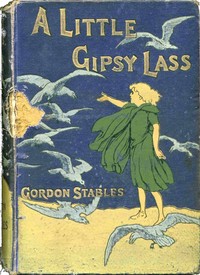
A little gipsy lass — Reading Companion
(0 User reviews)
1534
Project Gutenberg
2023
Not confirmed
Adventure stories; Romanies -- Juvenile fiction; Great Britain -- Juvenile fiction
Readers of public-domain and historical texts
Project Gutenberg digital edition
en
Edition facts
Words
73,411
Reading time
320 min
Text sections
9
Before opening A little gipsy lass — Reading Companion, the edition data offers a quick orientation: 73,411 words, 5 hr 20 min estimated reading time, and 9 detected text sections.
The text analysis averages about 18.3 words per sentence, while the detected sections provide another way to judge how the source is divided.
Project Gutenberg metadata also associates the work with “Adventure stories,” connecting these edition facts with the source record’s subject description.
Source:
Project Gutenberg record #71755
Gordon Stables' 1907 adventure follows Lotty Lee, a gipsy girl with mysterious memories, from moorland camps to sea voyages, blending sentiment, peril, and a hint of lost identity.
Editorial Edition Score
4.7/5
★★★★★
★★★★★
Calculated from edition completeness, EPUB availability, text structure and catalogue metadata. Not a user rating.
How this score is calculated
- Description quality20 pts
- Title & short description10 pts
- Source metadata20 pts
- Text length15 pts
- Chapters / structure15 pts
- EPUB file integrity20 pts
Total of 100 points, scaled to a 2.5-5.0 range. Editions with an empty description or a missing EPUB file are not scored.
Edition quality
Read the Text
The young man stood on the deserted platform of the small, north-country station, just where the train had left him, on that bright August evening. Yonder she was speeding east-wards against the breeze.
Against the breeze, and along towards the cliffs that o'erhung the wild, wide sea, the end of the last carriage gilded with the rays of the setting sun, the smoke streaming backwards and losing itself over the brown-green woods that stretched away and away till lost in a haze at the foot of the hills.
He hailed a solitary porter.
'This isn't a very inviting station of yours, Tom, is it?'
'An awful good guess at my name, sir,' said the man, saluting.
'Your name is Tom, then?'
'No, sir--George,' he smiled. 'But any name does; and as for the station, weel, it's good enough in its way. We only tak' up or pit doon by signal. But you'll be English, sir?'
'That's it, George; that's just it. I'm only English. But, so far, I am in luck; because I understand your talk, and I thought everybody here ran about raw, with kilts on and speaking in Scotch.'
'So they do, sir, mostly; but I've been far south myself. No, sir, no left-luggage room here; but if you're going to the inn I'll carry your portmanteau, though ye'll no' find much accommodation there for a gentleman like yourself. Besides, it's the nicht of the fair, and they'll be dancin' and singin' in the road till midnicht.'
'But,' said the stranger, 'I'm bound for Loggiemouth, if I can only find the way. I'm going to a gipsy encampment there--Nat Lee's or Biffins'. You know Nat Lee?'
'Well, and curly-headed Lotty too. But, man, you'll have ill findin' your road over the moor the nicht. It's three good Scotch miles, and your portmanteau's no' a small weight--a hundred and twenty pounds if an ounce.'
This young man, with the sunny hair, square shoulders, and bravely chiselled English face, seized the bag with his left hand and held it high above his head, much to the admiration of the honest porter.
'You're a fine lad, sir,' said the latter. 'An English athlete, no doubt. Weel, we all love strength hereabouts, and Loggiemouth itself can boast of bonny men.'
'Here!' cried the stranger abruptly, as he looked to the west and the sun that was sinking like a great blood-orange in the purple mist of the woodlands, 'take that portmanteau, George, in your own charge. I suppose you live somewhere?'
'I'll lock it up in the lamp-room, sir. It'll be safe enough there.'
'Well, thanks; and to-morrow I'll either stride over for it myself or send some one. Now, you'll direct me to the camp, won't you?'
'Ay, ay, sir, and you've a good stick and a stout heart, so nothing can come o'er ye. But what way did nobody meet you, sir?'
'Nat Lee said he would send some one, but--hallo! who is this?'
She ran along the platform hurriedly but smiling--a little nervously perhaps, blinking somewhat moreover, for the sun's last beams lit up her face and eke her yellow hair. Her colour seemed to rise as she advanced. Blushing? No. Lotty Lee was barely twelve.
'Oh, please, sir, are you Mr Blake?'
'Me? I'm only Lotty Lee, and that's nobody. But father sent me to meet you, and lead you home to our pitch across the Whinny Moor. You couldn't find the way by yourself, never, never, _never_!'
'Good-night, sir.--Good-night, Miss Lotty,' cried the porter, throwing the portmanteau on his shoulder and marching off with it.
'Well,' said the young fellow, 'I have a sweet little guide anyhow; but are you sure that even you can find the way yourself, Lotty?'
'Oh yes, Mr Blake, please.'
Hers was a light, musical, almost bird-like laugh.
She tossed back her head a little, and all those impossible little crumply curls caught by the evening breeze went dancing round her brow and ears.
'If you have any--any big thing, I will carry it for you, sir.'
It was his turn to laugh now. 'Why, Lotty,' he said, 'I shouldn't wonder if I had to carry you before we get to camp.'
'Come,' she answered, with an uneasy glance at the west. She took his hand as if he'd been a blind man. 'Father said I was to lead you, sir.'
'But I don't think he meant it in so literal a sense, Lotty. I think I can see for quite half an hour yet.'
The story opens with a young man left on a deserted north-country station platform on a bright August evening, but the narrative quickly shifts to Lotty Lee, a gipsy lass who enters a cottage "without ceremony." From the start, Stables establishes a world where moorland wildness meets domestic interiors, and where Lotty's past is veiled in mystery. The excerpts reveal a child who has "come through grief enough" yet keeps mirth close to sorrow. Her conversations with a woman she calls "mammy" hint at a forgotten history: Lotty feels strangely familiar with harps, pianos, and drawing-rooms, though she dismisses this as coming from "reading books of romance and stupidity." The reader is thus positioned to watch for clues about her true origins, even as the narrative moves from gipsy camps to a ship called the Nor'lan' Star.
A Child of Two Worlds
Lotty Lee is presented as a character who straddles gipsy life and a more refined world she cannot fully explain. When asked if she was "always, always a little gipsy lass," she answers slowly, then adds that in rich ladies' houses, she felt familiar with objects she should not know. This self-awareness—coupled with her dismissal of such feelings as products of romantic stories—creates a tension between what she believes and what the reader suspects. Stables uses this ambiguity to drive curiosity: Lotty's dream after hearing a lullaby, in which she feels she has heard the song before, deepens the mystery. The narrative does not resolve this early, leaving the first-time reader to wonder whether her past holds a secret that will surface later.
Voice and Sentiment in Dialogue
The dialogue between Lotty and Mrs. Paterson (called "mammy") reveals Stables' method of building character through speech. Lotty's language mixes childish directness with an almost adult perceptiveness: "I wish you were my mother. But I never had a mother, never, never, never." The repetition and the sudden shift to calling her "mammy" show a child hungry for affection. Mrs. Paterson's responses are measured, often checking herself mid-sentence—"it is not the first time that'—"—which hints at knowledge she withholds. The lullaby, printed in full with Scots dialect, adds a layer of folk sentiment. Stables invites the reader to attend to what is not said, as much as to the events themselves.
Structure: From Moorland to Sea
The chapter titles trace a journey from inland wilds to maritime adventure. Early chapters like "In Gipsy Camp and Caravan" and "A Day in the Wilds" give way to "Blown Out to Sea" and "On Board the 'Nor'lan' Star." The excerpts show Lotty aboard a ship, where she asks to be sung to sleep, and later she is safely back in England. This shift in setting is abrupt in the excerpts, but the table of contents suggests a pattern: Lotty moves between environments, each bringing new characters and perils. The wreck of the Cumberland (Chapter XXI) and a stowaway episode (Chapter XXV) indicate that the sea sections are not mere interludes but central to the plot. A first-time reader should note how the moorland and maritime worlds reflect Lotty's dual nature.
Recurring Details and Their Weight
Several small details recur across the excerpts, inviting attention. The lullaby appears twice—once sung, once referenced in a chapter title—and Lotty's dream about it suggests a memory not fully accessible. The phrase "I want to dream that dream again" (Chapter XV) echoes her earlier wish. The illustration list includes a scene where Lotty cries "Father, father, she cried, 'I cannot, will not do this'"—a moment of high emotion that likely ties to her identity. Also, the repeated motif of the "crooked sixpence" (Chapter XXVI) hints at a token or clue. These details are not explained in the excerpts, but they form a web of clues that reward careful reading. The author expects the reader to piece together Lotty's story from such fragments.
As you read, pay attention to what Lotty herself does not know. Her dreams, her unexplained familiarity with objects, and the half-finished sentences of the adults around her all point toward a revelation that the narrative withholds until later chapters. The book rewards a reader who tracks these hints across moorland, caravan, and shipboard scenes. Stables writes in a style that blends sentiment with adventure, and the emotional weight of Lotty's search for belonging is as important as the external events.
Lotty's lost memories on the moor reminded me of something quieter—how a story can leave its mark without ever fully explaining itself. Clipped Wings — Story, Setting & Ideas sits with me the same way, a soft ache of identity and leaving, like a song you half-remember but can’t place.
There are no reviews for this eBook.
There are no comments for this eBook.
Reader reflection
Take a moment to reflect on this book
Create a short personal record of your experience with this book.
Your progress
0
/
10
2
What was your overall reaction to the book?
3
How likely are you to recommend this book?
4
How easy was the book to follow?
5
Did the story or argument move comfortably?
6
How clearly were the main ideas presented?
7
How original did the book feel?
8
What was its emotional impact?
9
In one sentence, what did you learn?
10