1

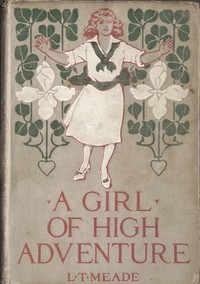
A Girl of High Adventure — Background and Themes
(0 User reviews)
1521
Project Gutenberg
2020
Not confirmed
Orphans -- Juvenile fiction; Girls -- Juvenile fiction; Families -- Juvenile fiction
Readers of public-domain and historical texts
Project Gutenberg digital edition
en
Edition facts
Words
86,896
Reading time
378 min
Text sections
9
A Girl of High Adventure — Background and Themes can be approached with a clearer sense of reading commitment from its source measurements: 86,896 words, 6 hr 18 min estimated reading time, and 9 detected text sections.
The text analysis averages about 14.2 words per sentence, while the detected sections provide another way to judge how the source is divided.
Project Gutenberg metadata also associates the work with “Orphans -- Juvenile fiction,” connecting these edition facts with the source record’s subject description.
Source:
Project Gutenberg record #61995
An editorial note on L.T. Meade's 'A Girl of High Adventure,' focusing on its shifting narrative pace and voice as Marguerite St. Juste moves between English rectories, French schools, and Irish estates.
Editorial Edition Score
4.8/5
★★★★★
★★★★★
Calculated from edition completeness, EPUB availability, text structure and catalogue metadata. Not a user rating.
How this score is calculated
- Description quality20 pts
- Title & short description10 pts
- Source metadata20 pts
- Text length15 pts
- Chapters / structure15 pts
- EPUB file integrity20 pts
Total of 100 points, scaled to a 2.5-5.0 range. Editions with an empty description or a missing EPUB file are not scored.
Edition quality
Read the Text
THE CHILD WHO WON HEARTS.
Marguerite St. Juste was Irish on her mother's side, who was born of the Desmonds of Desmondstown in the County Kerry. Marguerite's father was a French Comte, whose grandfather had been one of the victims of the guillotine.
Little Marguerite lived with an uncle, who was really only that relation by marriage; his name was the Reverend John Mansfield. He had a large living in a large town about fifty miles from London, and he adopted Marguerite shortly after the death of her parents. This tragedy happened when she was very young, almost a baby. She did not in the least remember her father, whose dancing black eyes and merry ways had endeared him to all who knew him. Nor did she recall a single fact with regard to her mother--one of those famous Desmonds, who had joined the rebels in the great insurrection of '97, and whose people still lived and prospered and were gay and merry of the merry on their somewhat tattered and worn-out country estate.
Marguerite adored "Uncle Jack," as she called her supposed uncle. She had a knack of turning this grave and esteemed gentleman, so to speak, round her little finger. It was the Rev. John and his wife Priscilla who taught little Marguerite all she knew. She adored her uncle; she did not like his wife. A sterner or stricter woman than Priscilla Mansfield it would be hard to find. Her husband, it is true, considered her admirable, for she discovered whenever his parishioners tried to impose upon him, and kept the women of his parish well up to the mark.
Mrs. Mansfield was really a good woman, but her goodness was of a kind which must surely try such a nature as little Marguerite's, or Margot's, as her uncle called her. Mrs. Mansfield did her duty, it is true, but her good husband's parishioners dreaded her although they obeyed her. Her husband praised her, but wondered in his heart of hearts why more people did not love her. In especial he could not understand why little Margot objected to her. As a matter of fact, if it were not for Uncle Jack, this small girl would have found her life intolerably dull. She had managed, nobody quite knew how, to get into the very centre of the heart of the grave, patient-looking clergyman and, because of this fact which she knew and he knew, she got on quite well, otherwise--but little Margot did not dare to think of otherwise. Was she not herself a mixture of both Irish and French, and could there be any two nations more sure to produce a child like Margot--a child full of life and fearlessness, of fun and daring?
She longed inexpressibly for companionship, but young people were not permitted to visit at the Rectory. She dreamed long dreams of her father's people in the Château St. Juste, an old place near Arles, in South France, and of her mother's people at Desmondstown--an old estate gone almost to rack and ruin, for where was the money to keep it up?
Mr. Mansfield was well aware of the state to which both families had been reduced, but when his little darling, as he called Margot, liked to talk about her father's and mother's people, he invariably encouraged her; that is, provided her aunt was not present. Mrs. Mansfield snapped up the child whenever her own people were talked of. She assured her that both families had gone to the dogs and did not even remember her existence.
"You ought to be very thankful to have an uncle and aunt like myself and your Uncle John," said the good woman. "If my John was not what he is, you would be nothing more nor less than a miserable little beggar. See that you obey us both and do your best to return the great kindnesses that we show you."
Little Margot St. Juste found it quite easy to respond to her uncle's kindness, but her aunt's was a totally different matter. Mrs. Mansfield's kindness consisted of "Don't, don't, _don't_," repeated with increasing energy from morning to night.
"Don't attempt to stand on the hearth-rug, you bad child." "Don't look so silly; get your seam and begin to sew." "Don't stare at me out of those eyes of yours; you make me quite sick when you do, and above all things don't make a fool of your poor, overworked uncle. He has no right to teach you Latin and Greek. Such languages are not meant for women and I shall tell him so, if you don't do it yourself. Do you hear me?"
The narrative voice of A Girl of High Adventure shifts markedly as Marguerite St. Juste crosses from England to Ireland and back. Early chapters adopt a measured, explanatory tone—the orphaned heroine is introduced through her uncle's household and a French school run by La Princesse. But once Margot (as she is later called) reaches Desmondstown, the prose quickens. Sentences grow shorter, dialogue becomes more frequent, and the narrator peppers the text with Irish idioms: avick, colleen, shillelagh. The change is not merely scenic; it reflects a deliberate modulation of pace that mirrors the heroine's own liberation from restraint.
From Measured Exposition to Brisk Dialogue
The opening chapters proceed at a deliberate, almost tutorial pace. The narrator explains Marguerite's lineage—Irish mother, French father—and her adoption by the Reverend John Mansfield. Descriptions are full and sentences balanced. But once the action moves to Ireland, the rhythm alters. In the excerpt where Malachi trains the horse Starlight, the prose becomes staccato: “There now, old boy,” said Malachi, “you'll have your feed of the whitest of white oats, and be ready for another try over that wide ditch to-morrow.” The narrator steps back, letting dialogue and action carry the scene. This shift is not accidental; it signals a change in the story's emotional temperature, from the constrained world of English respectability to the freer, more volatile atmosphere of the Irish estate.
The Interplay of Formal and Colloquial Registers
Meade juxtaposes formal narration with colloquial speech, especially in the Irish sections. The narrator maintains a polished, third-person omniscient voice, but characters speak in dialect: “Wherever does the avick get the money, Madam?” asks The Desmond. This contrast creates a layered texture. The formal frame lends the story a sense of reliability, while the dialect infuses it with local color and immediacy. Notably, the narrator occasionally adopts Irish terms herself, as when she refers to “the bit colleen” or describes a horse as “a thoroughbred from Donegal.” These lexical choices blur the line between narrator and character, drawing the reader deeper into the setting without abandoning the story's overarching composure.
Pace as a Marker of Emotional Tension
Pace accelerates during moments of conflict or decision. When Reparation (Tilly) contemplates revealing Margot's secrets, the narrative quickens: “She dreaded the thought beyond words. What was grand-dad going to do when he was left to the complete wiles of the little Comtesse?” Short, breathless clauses mirror her anxiety. Conversely, peaceful scenes—such as Margot and Fergus gardening—unfold in longer, more leisurely sentences. This rhythmic variation is not merely decorative; it cues the reader to shifts in mood and stakes. Meade uses pace to underscore the heroine's internal struggles, particularly the tension between her French upbringing and Irish heritage, without ever resorting to explicit commentary.
Readers attentive to shifts in tempo will find that Meade's prose rewards close attention. The alternation between measured exposition and brisk, dialogue-driven scenes is not accidental but structural. It invites the reader to track Margot's emotional journey through the very cadence of the sentences. This edition preserves those rhythms, allowing a fresh encounter with a narrative that moves as restlessly as its heroine.
I’ve always loved how Marguerite’s story shifts with the rooms she occupies—each home a different beat in her heart. That same quiet restlessness lives in The Hungry Tiger of Oz, where a journey isn’t about escape but about finding where one belongs. Such gentle companions on a shelf. The Hungry Tiger of Oz — A Reader’s Guide holds that warmth well.
There are no reviews for this eBook.
There are no comments for this eBook.
Reader reflection
How will you remember this book?
Save your reaction, strongest insight, and memorable passage.
Your progress
0
/
10
2
Was reading this book enjoyable?
3
Would you recommend this book to another reader?
4
Did the language feel accessible?
5
What did you appreciate most?
6
How well did it match your expectations?
7
Could you see yourself revisiting this book?
8
Would you like to discuss this book with someone?
9
What did this book teach you most?
10