1

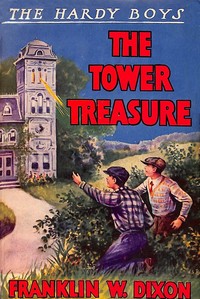
The tower treasure — Context and Discussion
(0 User reviews)
2788
Project Gutenberg
2023
Not confirmed
Brothers -- Juvenile fiction; Mystery and detective stories; Hardy Boys (Fictitious characters) -- Juvenile fiction
Readers of public-domain and historical texts
Project Gutenberg digital edition
en
Edition facts
Words
45,029
Reading time
196 min
Text sections
25
For The tower treasure — Context and Discussion, the stored edition analysis reports 45,029 words, 3 hr 16 min estimated reading time, and 25 detected text sections.
The text analysis averages about 12.3 words per sentence, while the detected sections provide another way to judge how the source is divided.
Project Gutenberg metadata also associates the work with “Brothers -- Juvenile fiction,” connecting these edition facts with the source record’s subject description.
Source:
Project Gutenberg record #70083
An editorial note on Franklin W. Dixon's first Hardy Boys novel, focusing on the brisk narrative pace, the boys' confident dialogue, and the shift from action to domestic suspense as the mystery deepens.
Editorial Edition Score
4.8/5
★★★★★
★★★★★
Calculated from edition completeness, EPUB availability, text structure and catalogue metadata. Not a user rating.
How this score is calculated
- Description quality20 pts
- Title & short description10 pts
- Source metadata20 pts
- Text length15 pts
- Chapters / structure15 pts
- EPUB file integrity20 pts
Total of 100 points, scaled to a 2.5-5.0 range. Editions with an empty description or a missing EPUB file are not scored.
Edition quality
Read the Text
These were the Hardy boys, sons of Fenton Hardy, an internationally famous detective who had made a name for himself in the years he had spent on the New York police force and who was now, at the age of forty, handling his own practice. The Hardy family lived in Bayport, a city of about fifty thousand inhabitants, located on Barmet Bay, three miles in from the Atlantic, and here the Hardy boys attended high school and dreamed of the days when they, too, should be detectives like their father.
As they sped along the narrow shore road, with the waves breaking on the rocks far below, they discussed their chances of winning over their parents to agreement with their ambition to follow in the footsteps of their father. Like most boys, they speculated frequently on the occupation they should follow when they grew up, and it had always seemed to them that nothing offered so many possibilities of adventure and excitement as the career of a detective.
"But whenever we mention it to dad he just laughs at us," said Joe Hardy. "Tells us to wait until we're through school and then we can think about being detectives."
"Well, at least he's more encouraging than mother," remarked Frank. "She comes out plump and plain and says she wants one of us to be a doctor and the other a lawyer."
"What a fine lawyer either of us would make!" sniffed Joe. "Or a doctor, either! We were both cut out to be detectives and dad knows it."
"As I was saying, the help we gave him in that forgery case proves it. He didn't say much, but I'll bet he's been thinking a lot."
"Of course we didn't actually _do_ very much in that case," Joe pointed out.
"But we suggested something that led to a clue, didn't we? That's as much a part of detective work as anything else. Dad himself admitted he would never have thought of examining the city tax receipts for that forged signature. It was just a lucky idea on our part, but it proved to him that we can use our heads for something more than to hang our hats on."
"Oh, I guess he's convinced all right. Once we get out of school he'll probably give his permission. Why, this is a good sign right now, isn't it? He asked us to deliver these papers for him in Willowville. He's letting us help him."
"I'd rather get in on a real, good mystery," said Frank. "It's all right to help dad, but if there's no more excitement in it than delivering papers I'd rather start in studying to be a lawyer and be done with it."
"Never mind, Frank," comforted his brother. "We may get a mystery all of our own to solve some day."
"If we do we'll show that Fenton Hardy's sons are worthy of his name. Oh boy, but what wouldn't I give to be as famous as dad! Why, some of the biggest cases in the country are turned over to him. That forgery case, for instance. Fifty thousand dollars had been stolen right from under the noses of the city officials and all the auditors and city detectives and private detectives they called in had to admit that it was too deep for them."
"Then they called in dad and he cleared it up in three days. Once he got suspicious of that slick bookkeeper whom nobody had been suspecting at all, it was all over but the shouting. Got a confession out of him and everything."
"It was smooth work. I'm glad our suggestion helped him. The case certainly got a lot of attention in the papers."
"And here _we_ are," said Joe, "plugging along the shore road on a measly little errand to deliver some legal papers at Willowville. I'd rather be on the track of some diamond thieves or smugglers--or something."
"Well, we have to be satisfied, I suppose," replied Frank, leaning farther over the handlebars. "Perhaps dad may give us a chance on a real case some time."
"Some time! I want to be on a real case _now_!"
The motorcycles roared along the narrow road that skirted the bay. An embankment of tumbled rocks and boulders sloped steeply to the water below, and on the other side of the road was a steep cliff. The roadway itself was narrow, although it was wide enough to permit two cars to meet and pass, and it wound about in frequent curves and turnings. It was a road that was not often traveled, for Willowville was only a small village and this shore road was an offshoot of the main highways to the north and the west.
The first Hardy Boys novel opens with a declaration of ambition: Frank and Joe, speeding along a shore road on motorcycles, discuss becoming detectives like their father. The dialogue is direct and assured—"Why shouldn't we?"—and the narration matches their energy, describing the "sunshine of a morning in spring" and the waves breaking below. This brisk, confident voice sets the tone for a story that moves quickly through stolen roadsters, hold-ups, and tower searches.
Speed and Dialogue in the Opening
The opening chapter establishes a rhythm of action and talk. The brothers' exchange about their future is interwoven with the physical details of their ride: the narrow shore road, the motorcycles, the holiday from school. The prose is efficient, giving just enough setting to ground the dialogue. Frank is described as "tall, dark" with "straight, black hair and brown eyes," while Joe is "pink-cheeked, with fair, curly hair and blue eyes"—a contrast that extends to their temperaments. The boys' confidence in their father, Fenton Hardy, is stated plainly: "Isn't he one of the most famous detectives in the country?" This early passage establishes a pattern of quick scene-setting followed by purposeful conversation, a structure that carries through the excerpts.
Shifts in Pace and Domestic Interiors
Later chapters slow the tempo. When Frank visits Callie Shaw and the Robinsons, the action gives way to longer, quieter scenes. The dialogue becomes more hesitant: "I've given up thinking of it," Tessie declares, and Mrs. Robinson asks Frank to promise news. The setting shifts from shore roads to a "squalid and distant part of the city," and the narrative dwells on the emotional weight of the Tower Mansion mystery. Callie's plea—"you and Joe simply must do it!"—is delivered with an urgency that contrasts with the earlier banter. This variation in pace, from motorcycle chases to tense domestic conversations, gives the story a layered rhythm.
Suspense Through Delayed Revelation
Fenton Hardy's return is handled with deliberate restraint. The boys learn of his arrival through a servant; he is "careworn and travel-stained" and sleeps through breakfast and lunch. The narrative withholds information, focusing on the brothers' impatience: "I wonder where on earth he came from?" The reader shares their frustration. This technique—building suspense by delaying the detective's report—is used again when the boys must return to school without answers. The prose mirrors their restlessness, with short sentences and repeated references to time: "All afternoon they were tormented." The mystery is advanced not by action but by the absence of it.
Readers attentive to narrative voice will notice how Dixon modulates between the boys' breezy confidence and the strained politeness of the Robinson household. The story's engine is not just the puzzle of the tower treasure but the contrast between the Hardy brothers' assured world and the uncertainty that surrounds them. The excerpts suggest a novel that values both speed and stillness.
The rain kept tapping against the window while I reread the Hardy boys’ confident chatter, that brisk shift from river chases to quiet hallway tension. It made me think how suspense works best in ordinary places—schoolyards, living rooms. Later, drying my hands, I pulled down Garry Grayson's football rivals — Background and Themes and found the same trick: a fumbled pass hiding something heavier than a game.
There are no reviews for this eBook.
There are no comments for this eBook.
Reader reflection
Take a moment to reflect on this book
Create a short personal record of your experience with this book.
Your progress
0
/
10
2
How much did you enjoy the reading experience?
3
Would you pass this book on to a friend?
4
How demanding did the text feel?
5
Did the book give you something worth debating?
6
How much did the book move you?
7
Would a second reading be valuable?
8
How would you describe its reading pace?
9
What is the main idea you are taking away?
10