1

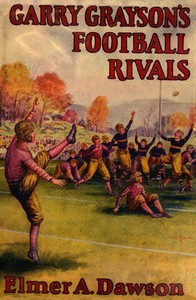
Garry Grayson's football rivals — Background and Themes
(0 User reviews)
153
Project Gutenberg
2025
Not confirmed
Teenage boys -- Juvenile fiction; High schools -- Juvenile fiction; Football stories
Readers of public-domain and historical texts
Project Gutenberg digital edition
en
Edition facts
Words
48,121
Reading time
210 min
Text sections
26
This digital edition of Garry Grayson's football rivals — Background and Themes is described by source-level measurements including 48,121 words, 3 hr 30 min estimated reading time, and 26 detected text sections.
The text analysis averages about 13.1 words per sentence, while the detected sections provide another way to judge how the source is divided.
Project Gutenberg metadata also associates the work with “Teenage boys -- Juvenile fiction,” connecting these edition facts with the source record’s subject description.
Source:
Project Gutenberg record #76086
This editorial note examines how the opening, middle, and later excerpts of Garry Grayson's Football Rivals guide a first reading, focusing on the shift from football anticipation to a mystery involving stolen signals and a roadhouse confrontation.
Editorial Edition Score
4.8/5
★★★★★
★★★★★
Calculated from edition completeness, EPUB availability, text structure and catalogue metadata. Not a user rating.
How this score is calculated
- Description quality20 pts
- Title & short description10 pts
- Source metadata20 pts
- Text length15 pts
- Chapters / structure15 pts
- EPUB file integrity20 pts
Total of 100 points, scaled to a 2.5-5.0 range. Editions with an empty description or a missing EPUB file are not scored.
Edition quality
Read the Text
Garry had succeeded in wresting the improvised weapon from his friend's grasp the sky was definitely overcast with heavy clouds. The prophecy of storm seemed about to be fulfilled.
"Never knew it to fail just when we'd planned to catch some fish and have a good time," grumbled Nick Danter, as he looked disconsolately at his fishing rod.
"Oh, stop your grouching," counseled Rooster. "We're close to the creek now and we'll have plenty of time to catch a mess before it rains. Those clouds may blow over. Anyway, we've got a better chance to make a catch on a cloudy day."
"Righto," asserted Garry. "I'm for the fish every time. A few drops of rain won't hurt us, anyhow."
"It may make the wood too wet to burn, though," observed Ted Dillingham. "And there's no fun catching fish if you can't cook them."
"I guess we can rake enough dry brush together for a fire," predicted Bill hopefully.
"You fellows are talking as though we had a mess already," laughed Nick. "Perhaps we won't have a nibble."
"We won't, eh?" scoffed Ted. "Just watch me land 'em! Say, who's got that can of worms?"
Rooster Long produced that highly necessary adjunct to a fishing excursion, and the boys hastened their steps down the narrow woods path that led to the stream.
It was by no means their first visit to the spot. The creek was an inlet to Bass Lake and abounded in fish that had many times had their numbers depleted by the young fishermen.
"The fellows that don't catch any will have to build the fire," pronounced Garry Grayson, as he got his tackle ready. "Is that a go?"
"Seems like rubbing it in," returned Rooster, grinning. "But you can't bluff me. Bet I land the first one."
"And I'll get the biggest one," predicted Ted.
"Brag's a good dog, but Holdfast's a better," remarked Bill Sherwood, with a superior air, as he baited his hook.
Nick said nothing, but his line hit the water first and was grabbed almost immediately by a hungry perch that the boy landed in fine style.
"I'll let the fish do my talking for me," and he grinned tantalizingly as he displayed his catch.
"If it can talk more like a fish than you do, it's pretty good," Rooster came back at him.
A few minutes later Garry landed a still bigger perch. Then Ted caught a catfish and Bill captured a bass. Other fish were captured from time to time, but luck constantly eluded Rooster Long, though several times he sought what he thought might be better positions for his purpose.
At the end of twenty minutes Garry counted their catch.
"Nine in all," he announced. "That's more than we can eat, and I'm as hungry as a wolf. Rooster's the goat. Come, varlet," he commanded, addressing that youth, "rustle us some brushwood and make a fire for your betters."
Rooster picked up a fish and threw it at him, but Garry dodged and the fish caught Ted Dillingham square in the mouth.
"Say!" sputtered that young lad indignantly, as he used his handkerchief vigorously, "why don't you hit what you aim at? Are you cross-eyed? Think I want my fish raw?"
"There, there, Ted," said Garry soothingly, "you ought to be glad to suffer for a friend. Think of how much worse you'd have felt if it had hit me."
"Not on your life I wouldn't!" grumbled Ted, still plying his handkerchief. "I'll smell that fish all day."
"I don't see why," remarked Bill innocently. "It's perfectly fresh."
"Not half as fresh as some fellows I know," retorted Ted, as he looked about for something to throw at his tormentors.
But they laughingly scurried out of reach and then turned to cleaning the fish. By the time Rooster had the fire going, the fish were ready, and soon the delicious aroma whetted still further the young appetites that needed no sharpening.
They had brought cocoa with them in two milk bottles and this they heated in an old saucepan that Garry Grayson's mother had loaned to them for such occasions. There were plenty of sandwiches, besides buttered rolls and jam. The feast was one fit for a king, the boys thought, as they munched fish and rolls and drank cocoa out of tin cups.
"This is the life!" sighed Rooster Long contentedly. "And this fish," with another huge bite, "sure is the berries."
"Keep still a minute!" cried Bill Sherwood. "What's that?"
Complete silence fell upon the group, broken only by the crackling of the fire. Then through the quiet came a humming sound like the whirring of a powerful motor.
"It's either a car burning up the road--" began Ted.
The opening chapter, 'Falling from the Skies,' immediately establishes a dual focus: football and an unexpected aerial incident. Garry and his friends discuss the upcoming season, naming graduated players like Dittler, Minter, and Payne, and expressing eagerness to move beyond being 'lowly freshmen.' Their banter is laced with football jargon—'bucking the line,' 'skirting the ends'—and a clear hierarchy of team positions. Yet the chapter title and the sudden appearance of a wounded aviator introduce a plot thread that veers from the gridiron. This juxtaposition signals that the story will intertwine sports with adventure, a hallmark of the series.
Football as a Lens for Character and Conflict
The early excerpts reveal that football serves not just as a backdrop but as a measure of character. Garry is portrayed as modest and strategic: 'It isn't a cinch for anybody,' he says, acknowledging the competition. His friends, like Rooster Long and Nick Danter, are defined by their roles and aspirations—Rooster's foot 'itching for the feel of the pigskin,' Bill Sherwood tired of being a 'doormat.' The team's loss of stars like Ralph Wynn, praised for using 'his brains every minute,' sets up a need for new leadership. This focus on teamwork and merit suggests that the football plot will test Garry's abilities and integrity.
The Mystery of the Stolen Signals
By the middle excerpts, the narrative shifts from practice to a mystery. Garry and his friends are 'barred from athletics' due to planted hip flasks, a 'dirty trick' by rivals. The subtitle 'The Secret of the Stolen Signals' gains weight as Cal Yates confronts Jake, a roadhouse proprietor, about the frame-up. Cal's dialogue—'I happen to know where Sandy Podder and his friends got those hip flasks'—introduces a subplot involving illegal alcohol and blackmail. The tension escalates with threats to Jake's license, linking the school conflict to broader adult corruption. This section shows how the football rivalry extends off the field.
Confrontation and Moral Stakes
In Chapter XIV, 'Brought to Book,' the confrontation with Jake raises the moral stakes. Cal uses leverage—knowledge of Jake's illegal sales—to force cooperation, but he frames it as justice: 'I'm out to see justice done to Garry Grayson.' Jake's fear of Garry's father, a lawyer who 'sent Gyp Mooney to jail,' ties the school drama to family reputation. The dialogue is sharp, with Jake's dialect ('I dink nod') contrasting Cal's calm persistence. This scene suggests that the resolution will depend on adult intervention and that the football plot is intertwined with themes of fairness and corruption.
Pacing and the Role of the Aviator
The opening's aviator incident, though not detailed in the excerpts, likely serves as a catalyst. The chapter title 'Falling from the Skies' and the subsequent 'Wounded Aviator' chapter hint at a rescue or information that propels the plot. Given the series' pattern of mixing sports with adventure, this thread may provide a clue or ally. Readers should note how this early event connects to the later mystery—perhaps the aviator is a witness or victim. The excerpts do not reveal the connection, but the structure suggests a deliberate weaving of disparate elements into a single narrative.
As you read, pay attention to how the football scenes—team selection, practice, games—alternate with the mystery plot. The excerpts show that the story balances on-field action with off-field intrigue, and that Garry's character is tested in both arenas. The resolution likely hinges on the stolen signals and the frame-up, but the excerpts leave the outcome open. Note how the author uses dialogue to reveal character and advance the plot, and how the setting of Lenox High and its surroundings grounds the adventure in a recognizable world.
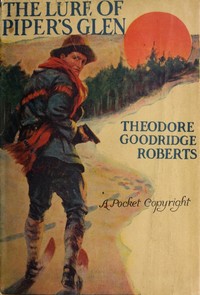
I kept returning to the opening of Garry Grayson's Football Rivals, where the pitch’s roar fades into stolen signals, and it felt oddly familiar. That same quiet shift—from anticipation to unease—was in The lure of Piper's Glen — A Reader’s Guide. Both hold a moment where the game stops mattering, and the shadow beneath it takes over. I still wonder about that roadhouse.
There are no reviews for this eBook.
There are no comments for this eBook.
Reader reflection
Record your reading impressions
A brief reflection can help important ideas stay with you longer.
Your progress
0
/
10
2
What was your overall reaction to the book?
3
Would you pass this book on to a friend?
4
Did the language feel accessible?
5
How valuable was this book for your own interests?
6
How original did the book feel?
7
How strong was your personal connection to the text?
8
Did this book create an emotional response?
9
What is the main idea you are taking away?
10