1

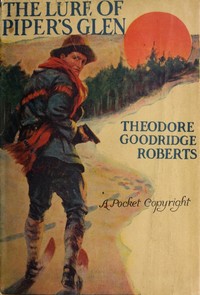
The lure of Piper's Glen — A Reader’s Guide
(0 User reviews)
1137
Project Gutenberg
2022
Not confirmed
Young men -- Juvenile fiction; Logging -- Juvenile fiction; Americans -- Canada -- Juvenile fiction
Readers of public-domain and historical texts
Project Gutenberg digital edition
en
Edition facts
Words
32,481
Reading time
142 min
Text sections
3
This digital edition of The lure of Piper's Glen — A Reader’s Guide is described by source-level measurements including 32,481 words, 2 hr 22 min estimated reading time, and 3 detected text sections.
The text analysis averages about 14.1 words per sentence, while the detected sections provide another way to judge how the source is divided.
Project Gutenberg metadata also associates the work with “Young men -- Juvenile fiction,” connecting these edition facts with the source record’s subject description.
Source:
Project Gutenberg record #69136
Theodore Goodridge Roberts opens with a vivid depiction of log-driving on Racket River, establishing physical courage as a central value. The excerpts trace young Jim's navigation of rivalries and romance in a remote logging community, with precise details of boots, caulks, and river jams grounding the action.
Editorial Edition Score
4.5/5
★★★★★
★★★★★
Calculated from edition completeness, EPUB availability, text structure and catalogue metadata. Not a user rating.
How this score is calculated
- Description quality20 pts
- Title & short description10 pts
- Source metadata20 pts
- Text length15 pts
- Chapters / structure15 pts
- EPUB file integrity20 pts
Total of 100 points, scaled to a 2.5-5.0 range. Editions with an empty description or a missing EPUB file are not scored.
Edition quality
Read the Text
Millbrook was in the heart of the wilderness, thought of which appealed most to young Jim Todhunter, and there also seemed to be a business opportunity there. A Mr. Hammond carried on a business in timber and supplies at this pioneer outpost, where, according to his uncle's friend, there were moose, caribou, deer, and bear right at the door. No doubt Hammond would welcome as assistant a young American with a little capital, which might eventually be invested in the business, although, of course, salary would be meager to start with.
A rapid interchange of letters took place, and it ended in Hammond's writing to say he'd find a place for a young chap with some capital of his own--Jim's modest hundreds would go quite a way in the timber country. James's uncle's friend didn't know much of Hammond himself, but "splendid fellows, all of them, in those virgin lands: big hearted, big souled," he assured young Todhunter genially, and betook himself to his own affairs.
Thus it was that one September day young James Todhunter found himself being lurched along in the single passenger car of a single track railway, eventually to reach Covered Bridge, the end of iron of that particular system of transportation.
His baggage consisted of the pick of his late uncle's assortment and certainly impressed the station-master at Covered Bridge. Here was a picnic-basket, as large as a cabin-trunk and as full of ingenious complications as a lady's dressing-bag. Here was a collapsible bath and an Arctic sleeping-bag. Rifle and gun each reposed in a large case of hard, yellow leather. Here were boots for every phase of life in the North as imagined and experienced by his uncle, a trunkful of them. Here were fishing-rods in canvas cases--a rod for each of every size and variety of finny gamester, from the tarpoon to the sardine. The other necessities of life--clothing, sheath-knives, cases of razors, field-glasses, a photographic outfit, revolvers, a spirit-lamp, and so on--were contained in three large trunks and two smaller cases, also of leather.
The station-master, who was also the telegraph operator, was a busy young man. He had very little time to devote to Jim even after the engine had been reversed on a turntable and had gone away, pushing cars of sawn lumber and cord-wood before it. He walked around the pyramid of Jim's baggage on the open platform seven times, only to retire each time, without a word, to the little red shack that was evidently his office.
Jim sat on one of his boxes and waited for Mr. Hammond. He smoked cigarettes and surveyed the scene. The September sun shone bright upon the wooded hills, the rapid brown river, the narrow fields and the gray bridge. The foliage of maples and birches among the dark green and purple of the forests was showing patches and dashes of red and yellow. There was a pleasant tang in the air suggestive of wood-smoke and sun-steeped balsam and running water and frost-nipped ferns.
The station-master came out of his shack for the eighth time. Again he walked around the formidable pile of baggage. Then he paused and looked Jim in the eye.
"Waitin' for someone?" he asked.
"Yes, for Mr. Hammond of Millbrook," answered Jim.
"My name's Harvey White."
"Mine is James Todhunter."
Jim hadn't, and he said so: and White invited him into the red shack, where there was a stove with a fire in it. The kettle was singing. White made tea, set the table, brought a crock of baked beans from the oven and an apple pie from the pantry and pushed a chair against the back of Jim's legs.
"We can keep a look-out for Hammond through the window," he said.
Jim was hungry and the food vanished swiftly.
"Goin' into the woods from Millbrook?" asked White.
"Yes, I expect to, of course," replied Jim.
"Who's yer guide? The Ducats up to Piper's Glen are slick men in the woods, but it ain't always that any of 'em will take a sport into their country."
Young Todhunter started to explain, then stopped.
"Well, ye're after moose, I guess, ain't you?" added White.
"I hope to go after moose, of course, and whatever other game you have here--but my chief reason for coming is to work for Mr. Hammond," answered Jim.
The section of pie which White was raising to his mouth fell from the blade of his knife. He stared for a moment, then lowered his glance and his knife and resumed his interrupted consumption of pie.
"Why not?" asked Jim, who had two perfectly good eyes in his head.
"D'ye know him?" returned the other.
"I've never met him."
"Are you in business with him?"
The opening chapter immerses readers in the dangerous work of stream-driving on Racket River, where logs are guided downstream after winter logging. Roberts describes the rivermen's boots—each sole and heel fitted with fifty steel caulks—and the cold, churning water that threatens to sweep them away. The protagonist, Mark Ducat, is introduced as the most daring negotiator of log jams, earning the title "cock of the upper river." This technical, sensory detail immediately establishes a world where skill and courage are measured against the river's force.
The excerpts also introduce Jim, a young man from the Kettle Pond country, who becomes entangled in local tensions. A scene in the Ducat kitchen reveals a love triangle: Flora Ducat, Mark's sister, is courted by both Melchior Hammond and Homer Steeves. Jim's quiet intervention against Homer's rudeness hints at his own emerging role in the community's social dynamics.
The River as a Character
The opening pages devote considerable attention to the river itself, personifying it as a force that "strikes and recoils and backs up" behind log jams. Roberts uses active verbs and sensory details—"spray flies," "clear water spouts," "twisted timbers heave and groan"—to make the setting feel alive and threatening. This is not mere backdrop; the river dictates the rhythms of work and danger. The description of boots with caulks ("a hundred teeth for every stream-driver") emphasizes how men adapt to the environment, turning their footwear into tools for gripping slippery logs. Readers should note how the river's behavior shapes the plot: when the drive moves smoothly, tensions ease; when jams form, they demand physical courage and quick thinking.
Social Codes and Confrontations
The kitchen scene in Chapter X reveals a complex web of social expectations. Homer Steeves challenges Jim's presence, asking Flora if Melchior is courting her. Jim responds by invoking Mark Ducat's authority: "You wouldn't bawl your ill-mannered questions at her if Mark were here." This moment shows that respect is tied to physical prowess and reputation. Flora's dry retort—"There's still some of the same arnica we used on the last man who picked a fight with you"—suggests a history of violence that is treated with matter-of-fact humor. The exchange ends with Homer backing down, but the tension lingers. Roberts uses dialogue to convey unspoken hierarchies: Jim's quiet confidence contrasts with Homer's bluster, while Flora's sharp wit mediates between them.
Winter's Sudden Onset
After the kitchen confrontation, the narrative shifts to a description of freezing weather: "The Racket River country froze hard and deep that night and all the next day." Roberts details the progression from open water to ice, noting how rapids seal over except for "steaming airholes." The landscape is described as "dead" without snow, then softened by a merciful snowfall. This passage serves as a transition, signaling a change in both the natural world and the story's mood. The cold isolates characters and creates new challenges for travel and work. Readers should observe how Roberts uses weather to punctuate emotional beats: the freeze follows a heated argument, while the snow arrives like a truce.
Character Through Action and Dialogue
Roberts reveals character primarily through what people do and say, not through interior monologue. Jim's competence is shown when he shoots a moose and navigates the Kettle Pond country; his restraint appears in his measured response to Homer's taunts. Flora is defined by her directness: she laughs at tension, serves Jim supper with cream and strawberry jam, and deflects Homer's questions with a joke about arnica. Even minor figures like old Archie McKim have distinctive voices: "Leggo the young man's hand an' git 'im his supper." The excerpts offer no access to characters' private thoughts, so readers must infer motives from gestures—like Melchior's "peculiar significance" in his smile—and from the gaps in dialogue.
The excerpts provide a focused view of the novel's early conflicts and setting, but the full story likely extends beyond the kitchen and the river. The table of contents hints at later developments: "The Westward Trail," "The Man-Hunter," and "Tricky Plays" suggest adventure and pursuit. Readers should pay attention to how the opening's emphasis on physical skill and social maneuvering carries forward. The title's "lure" may refer to Piper's Glen itself, a place that draws characters into danger or opportunity.
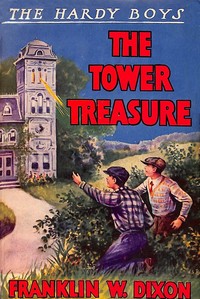
That log-driving world in Piper’s Glen, where courage is measured in boots and river jams, stayed with me for days. It reminded me of the quiet thrill I felt with The tower treasure — Context and Discussion—not for the danger, but for how both stories make you feel the weight of a place, the way a river or a tower can hold a whole life together.
There are no reviews for this eBook.
There are no comments for this eBook.
Reader reflection
What was your reading experience?
Capture what you thought, learned, and would like to remember.
Your progress
0
/
10
2
How much did you enjoy the reading experience?
3
Is this a title you would suggest to others?
4
What was the reading difficulty like?
5
What was the strongest part of the book?
6
How understandable was the text?
7
How valuable was this book for your own interests?
8
Did any part of the book feel personally relevant?
9
What did this book teach you most?
10