1

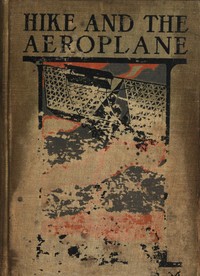
Hike and the aeroplane — Reading Companion
(0 User reviews)
324
Project Gutenberg
2023
Not confirmed
Adventure and adventurers -- Juvenile fiction; Inventors -- Juvenile fiction; Airplanes -- Juvenile fiction
Readers of public-domain and historical texts
Project Gutenberg digital edition
en
Edition facts
Words
64,226
Reading time
280 min
Text sections
33
Before opening Hike and the aeroplane — Reading Companion, the edition data offers a quick orientation: 64,226 words, 4 hr 40 min estimated reading time, and 33 detected text sections.
The text analysis averages about 16.3 words per sentence, while the detected sections provide another way to judge how the source is divided.
Project Gutenberg metadata also associates the work with “Adventure and adventurers -- Juvenile fiction,” connecting these edition facts with the source record’s subject description.
Source:
Project Gutenberg record #71212
Sinclair Lewis's early juvenile novel follows sixteen-year-old Hike Griffin and his friend Poodle through aeroplane flights, yacht wrecks, and a rescue in Canyon Diablo. The catalog subjects emphasize adventure and invention, but the excerpts reveal a stronger focus on fraternity signals, coded singing, and resourceful escapes than on aviation technology.
Editorial Edition Score
4.8/5
★★★★★
★★★★★
Calculated from edition completeness, EPUB availability, text structure and catalogue metadata. Not a user rating.
How this score is calculated
- Description quality20 pts
- Title & short description10 pts
- Source metadata20 pts
- Text length15 pts
- Chapters / structure15 pts
- EPUB file integrity20 pts
Total of 100 points, scaled to a 2.5-5.0 range. Editions with an empty description or a missing EPUB file are not scored.
Edition quality
Read the Text
ke Griffin had handled the Freshman football team at Santa Benicia Military Academy, all the fall before. “Hike” wasn’t his only name. His father, Major James Griffin, of the army Signal Corps, had named him Gerald. Hike had feared that the fellows at Santa Benicia would call him “Geerawld.”
They started to, but when he took his hazing like a man, and captured the hearts of all his classmates, he was christened “Jerry.” Then he became right half and captain of the Freshman football team. With a splendid sixty-yard run or “hike” as westerners call it, he made the touch-down which won the Freshmen’s great annual game with San Dinero Prep.
While he was dashing down the field with the ball under his arm, the Santa Benicia rooters went mad, yelling “Hike, Jerry, hike! Griffin, hike, _hike_!” After that, he was known as “Hike.” The same meaning, said Poodle Darby, “to go with speed, like a whale-fish!”
In the spring, he had done some more hiking, when he won the half-mile and cross-country races, running along easily, as though he were a little chilly, and wanted to get warm. There was no more danger that he would be insulted by “Geerawld.”
So he was quite happy when he went home to the Monterey Presidio for summer vacation, and took with him his classmate and roommate, Torrington Darby.
You must not think that Torrington Darby was _called_ that! You would have known he couldn’t have been, if you had seen him—round, sleek as a dove, always grinning all over his happy face, and usually drawling songs he made up himself; very lazy and very cheerful. Just the same he always got his lessons. In fact, he was much quicker at the books than was Hike.
He made life so interesting to all his friends that they decided he must have a better handle than “Torrington.” So they sat upon him, one evening; one on his face and another on his chest, while a third tied up his legs. This was so that he could not interfere with their important decision. Darby looked very patient and folded his hands and whined like a small dog, after kicking Left Eared Dongan vigorously; so they named him “Poodle,” and made him beg for small sticks, out in the Yard.
It was Poodle Darby who was riding behind Hike Griffin, along the canyon trail, making the day hideous by singing that good California chant, “Hallelujah, I’m a bum.”
They had been out on the trip for four days, and the excellent Poodle had sung that thing ninety thousand, seven hundred and steen times, Hike figured.
“Come on, Poodle; we’ll have to hustle if we’re going to reach the top of the trail for camp to-night,” Hike shouted.
“Oh, why don’t you work, as other men do— All right then, hike, Hike, and I’ll fol-lol-low you!”
So Poodle carelessly bawled back, and ground his heel into the side of his horse, kicking it into a canter.
The horse started. A rock slipped on the hillside above and rattled down, striking her flank. She flung up her head. Poodle vainly pulled on the rein, as she pranced skittishly.
Her back feet slipped. Over the side of the trail she slid. She pawed furiously with her front hoofs, but could not get hold of the slippery rock. She was surely sinking—close to the drop of a thousand feet.
For a moment her rear hoofs stuck, safe, on a tiny ledge.
Poodle cried “Hike!” once. Then he was silent, trying to keep from thinking of the awful drop below him.
Hike looked around. He did not make a sound. He spurred his horse, reached a broader spot in the trail, turned, and came loping back.
Quietly he said to Poodle, “Jump.”
“Can’t—make her lose footing,” stammered Poodle.
Hike dropped from his horse and ventured down the side of the cliff. His calmness gave courage to the trembling Poodle. He held out his hand and commanded, “Put foot on that. Jump.”
Poodle obeyed. Hike clutched an old mesquite root with his left hand, to hold himself in place, and almost threw Poodle up to safety. The horse was not dislodged from the position to which she desperately clung.
Taking her bridle, Hike coaxed. She shivered, but would not move. As quietly as though he were petting her in the stable, Hike rubbed her nose and urged her. Still she would not move.
Sinclair Lewis's Hike and the Aeroplane (1912) opens with two boys on horseback along a trail overhanging Canyon Diablo, dressed in khaki and puttees, their hats looking "as though they had slept in them." The catalog subjects—adventure, inventors, airplanes—suggest a straightforward tale of technological wonder, but the excerpts show that the aeroplane itself is often secondary to the boys' resourcefulness and their coded fraternity signals. Hike Griffin, age sixteen, has "quiet, gray eyes that never seemed to worry" and a mouth with "little laughter-wrinkles." His friend Poodle, in a later chapter, hides under a rubbish heap, picks at cabin logs till his fingers bleed, and deciphers Hike's singing as a secret message: "To-night. Meeting here. Heard Jolls." The narrative invests more in these covert communications and physical endurance than in detailed descriptions of flight.
Fraternity Signals and Coded Communication
The excerpts repeatedly emphasize secret signs and verbal codes between the boys. When Poodle whispers "Hike! It's Pood'!" from his hiding place, Hike responds by crossing his fingers twice—"the sign of the Santa Benicia fraternity." Later, Hike sings what sounds like nonsense: "Santa Benicia, Santa Benicia, Santa Benicia Acada mee." The guard dismisses it as poor singing, but Poodle recognizes it as a coded message. He extracts instructions: "To-night. Meeting here. Heard Jolls. ... Have him arrested. Come in Hustle." This reliance on fraternity rituals and hidden communication is a recurring structural device, more prominent in the excerpts than any technical discussion of aeroplanes.
Physical Ordeal and Landscape
The excerpts portray a harsh, physically demanding world. Poodle's escape involves "twelve miles of hard, fast walking" under a Virginia August sun that makes his head ache, with "dust, the endless deep dust of the road" caking on his wet feet and legs. Earlier, Hike is tied on a cabin floor, "ankles and wrists tied, and a rope bound about his waist ... hitched to a ring in the wall." The landscape is not merely scenic but a source of threat: Canyon Diablo drops a thousand feet below the trail, and the yacht wreck is introduced with "the waves were increasing—the yacht could not last much longer." The boys' endurance of heat, dust, and physical restraint is detailed more concretely than any aeronautical feat.
The Aeroplane as a Peripheral Element
Despite the title and catalog subjects, the aeroplane appears only briefly in the provided excerpts. Chapter IV is titled "The Aeroplane's First Flight," and later chapters mention "Aviating Again!" and "Air-Pilot Poodle," but the actual flying is not described in the selected text. Instead, the excerpts focus on ground-level action: a rescue, a secret meeting, a long walk. The frontispiece caption—"The waves were increasing—the yacht could not last much longer"—and the list of illustrations show scenes of a yacht wreck and a confrontation ("Lay that gun down or I'll throw you off this machine") rather than flight. The aeroplane functions more as a plot device than as a central subject, at least in the portions available here.
Readers approaching Hike and the Aeroplane expecting a technical aviation manual will find instead a boys' adventure story steeped in fraternal codes, physical hardship, and improvised rescues. The aeroplane is present but often offstage; the real engine of the plot is the bond between Hike and Poodle, expressed through signals and whispered plans. Pay attention to the chapter titles—they hint at action that the text may deliver obliquely.
I remember summer afternoons when my brother and I invented our own codes, much like Hike’s fraternity signals. That feeling of secret belonging came back reading Hike and the aeroplane. Mary Christmas — Text and Context holds a similar quiet warmth, reminding me how small traditions bind us, long after the adventure fades.
There are no reviews for this eBook.
There are no comments for this eBook.
Reader reflection
Before you leave, reflect on the book
Use these questions to collect your thoughts before moving on.
Your progress
0
/
10
2
What was your overall reaction to the book?
3
Would you encourage someone else to read it?
4
How much effort did this book require?
5
Did the book meet your expectations?
6
What was its emotional impact?
7
Would you like to discuss this book with someone?
8
Which element worked best for you?
9
In one sentence, what did you learn?
10