1

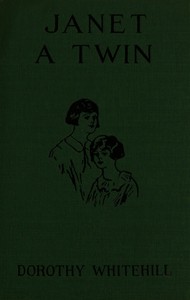
Janet, a twin — Key Ideas to Explore
(0 User reviews)
1184
Project Gutenberg
2025
Not confirmed
Twins -- Juvenile fiction; Sisters -- Juvenile fiction; Reunions -- Juvenile fiction
Readers of public-domain and historical texts
Project Gutenberg digital edition
en
Edition facts
Words
38,884
Reading time
170 min
Text sections
4
For Janet, a twin — Key Ideas to Explore, the stored edition analysis reports 38,884 words, 2 hr 50 min estimated reading time, and 4 detected text sections.
The text analysis averages about 14.0 words per sentence, while the detected sections provide another way to judge how the source is divided.
Project Gutenberg metadata also associates the work with “Twins -- Juvenile fiction,” connecting these edition facts with the source record’s subject description.
Source:
Project Gutenberg record #75755
This editorial note examines how the opening, middle, and later excerpts of Dorothy Whitehill's 'Janet, a Twin' guide a first reading, focusing on the protagonist's voice, the Enchanted Kingdom setting, and the twin revelation.
Editorial Edition Score
4.6/5
★★★★★
★★★★★
Calculated from edition completeness, EPUB availability, text structure and catalogue metadata. Not a user rating.
How this score is calculated
- Description quality20 pts
- Title & short description10 pts
- Source metadata20 pts
- Text length15 pts
- Chapters / structure15 pts
- EPUB file integrity20 pts
Total of 100 points, scaled to a 2.5-5.0 range. Editions with an empty description or a missing EPUB file are not scored.
Edition quality
Read the Text
A tiny cloud of dust curtained them all for a minute; when it settled, it disclosed a rigid tableau. Janet held the dog's collar in one strong little brown hand, and with the other and the aid of one foot she grasped the snake.
"Do something!" she demanded excitedly, as she turned angry eyes toward a fat, roly-poly figure that still remained partially hidden by the scrub oak, watching the scene with an expression of fear and distaste in his pale blue eyes.
This was Harry Waters.
"What do you want me to do?" he asked sulkily.
Janet was too much occupied to look at him, but her voice expressed the contempt she felt.
"You might take Boru," she suggested.
Harry made a wide detour and, snatching the dog, retreated hurriedly back to the side of the road.
"You're not going to kill him," he said nervously, and he pointed a trembling finger at the wriggling snake.
For answer, Janet picked up a large stone. Harry turned his face away. He wanted to put his fingers in his ears so that he would not hear the soft thud that followed, but the frantic dog made that impossible.
"Come on back," Janet said at last; "he's quite dead, and I've thrown him into the bushes, so you won't even have to look at him." Her voice sounded very grown up and patronizing, and Harry justly resented it.
"Now look here, Janet Page," he exploded; "you needn't put on airs. It's not such a big thing to kill a snake anyway," he finished lamely. "I could have done it only I didn't see any sense in it; even if it had bitten Boru, it wouldn't have hurt him any." Harry was trying hard to justify an act that he hardly understood himself. He was a nice boy, two years Janet's senior, and until to-day he had never let her forget his advantage.
He tried to assert it now.
"You see, I'm older than you are and I've got lots more sense. I knew that a snake like that couldn't really hurt a dog and so I just--" He paused, and under Janet's cool gaze he blushed very slowly, right up to the roots of his hair.
"Why don't you tell the truth?" she asked quietly. "You know you are afraid of snakes."
"Well, what if I am?" Harry shifted his feet uncomfortably. "I can't help it, can I? Anyway, your grandmother says--"
"Never mind what my grandmother says," Janet interrupted angrily. "I know it all by heart. She says you are a very mannerly little boy; that's because you never forget to take off your hat when you go into her room. And she says you're respectful; that's because you always say 'yes, ma'm; no ma'm; thank you, ma'm,' and she says you always look tidy, and that's because you never climb trees and always wear shoes and stockings, no matter how hot it is, and--"
"Can't help it if my mother makes me, can I?" Harry blazed out.
Janet paused to consider.
"No, I don't suppose you can," she said at last; "only somehow I wish you were different." Her gaze traveled slowly from his round-toed boots to his neatly brushed hair; a dreamy look came into her eyes, and the little flecks of gold in the soft-brown iris caught the sun's rays and glistened. She sighed profoundly.
"But if you couldn't kill a snake," she said, speaking more to herself than to him, "why, you couldn't ever kill a dragon, you see; nor ride a coal-black charger, nor fight for your lady's favor--" Her brow wrinkled in a puzzled frown, but it cleared almost at once. "I was forgetting," she laughed; "you wouldn't want to anyway, so it doesn't matter; that is, not so very much."
She looked around her for Boru; he was busily investigating the remains of the snake in the bushes, but at her whistle he trotted obediently to her heel, and together they walked off down the road.
Harry, after a miserable minute of indecision, followed.
They walked in silence, Janet a little ahead, until they reached the road that ran along the waterfront and passed the white gate of the old Page house.
"Aren't you going to go with me any more!" Harry asked forlornly.
Janet stopped and looked at him.
"Well, I don't care if you don't; you're just a girl anyway." Harry's lip trembled ever so slightly and he turned on his heel and hurried off, trying to hold his head high.
Janet swung on the gate for a few minutes and watched him until a bend in the road hid him from view, then she went up the long flight of stone steps.
The first chapter introduces Janet Page in a whirl of action: she grabs a snake, commands a timid boy, and shows no fear. The prose matches her energy—short clauses, vivid verbs, and a comic tone. The road is 'broad and dusty and flat,' yet the scene is anything but ordinary. This opening primes readers for a heroine who acts decisively and speaks bluntly, as when she tells Harry Waters, 'Do something!'
The excerpts also establish a pattern of Janet claiming spaces. She calls a hilltop house the 'Enchanted Kingdom' and enters through a window, not the door. The text signals that her world is one of self-made rules and secret discoveries.
Janet's Voice and Agency
From the first lines, Janet speaks and acts without hesitation. She orders Harry to take the dog, kills the snake with a stone, and later laughs off Mr. Simpson's apology. Her dialogue is direct: 'I hope you'll tell Mrs. Page that I am sorry my duty lay in the direction it did,' she says, then adds a pointed request about ringing the bell. The narrator never undercuts her confidence. Even when she is frightened—by the mysterious boy's grey eyes—she jumps and looks up, not away.
This consistent voice shapes the reading experience. Readers expect Janet to confront obstacles head-on, whether they are snakes, adults, or secrets. The excerpts offer no evidence of her ever being passive.
The Enchanted Kingdom as a Reflective Space
Janet's private name for the house on the hill—the Enchanted Kingdom—is more than a child's fancy. The excerpts show her approaching it from the land side for the first time, noting the 'broad sweep of driveway' and the 'fairy castle' appearance. Inside, she goes straight to the library, runs her hand over the books, and reads aloud from Elizabeth Barrett Browning's 'Little Ellie.' The poem's lines about a girl sitting alone and choosing 'the sweetest pleasure' mirror Janet's own habit of losing herself in daydreams.
The house is both a refuge and a place of loneliness. Dead leaves swish against the door, and she wishes for Peter's 'cheery hello.' The setting thus becomes a barometer for her emotional state: when she is alone there, the roof seems to sag.
Clues and the Unfolding Mystery
The excerpts plant several mysteries without resolving them. A folded piece of paper appears on the library floor, addressed 'Dear Princess,' and Janet reads it with 'excited interest.' The frontispiece shows her looking into the grey eyes of 'the mysterious boy.' The chapter titles hint at a twin revelation—'The Greatest Surprise in the World' and 'Twins Indeed'—but the excerpts never confirm who the twin is or how the reunion occurs.
Readers are left with questions: Who is the mysterious boy? What does the letter say? How does Janet's kingdom connect to her family history? The text invites speculation while withholding answers, a technique that sustains curiosity through the middle chapters.
The Role of Adults and Authority Figures
Adults in the excerpts are either comic obstacles or distant authorities. Harry Waters is a timid boy, not an adult, but Mr. Simpson, the former state officer, embodies official power. He apologizes profusely after mistaking Janet for a trespasser, and she handles him with amused grace—laughing 'so heartily that Clinker pricked up his ears' once he is out of earshot. Mrs. Todd offers a key, but Janet prefers to enter through the window, asserting her own rules.
Mrs. Page, Janet's mother, appears only in references: Janet says she will tell her about Mr. Simpson's apology. The excerpts give no sense of parental control. This absence of adult supervision reinforces Janet's independence and suggests that the story's conflicts will be resolved by her own actions.
These excerpts depict a girl who creates her own adventures and interprets the world on her terms. The twin plot, hinted at in the title and chapter headings, remains a promise rather than a payoff in the available text. Readers should watch for how Janet's assertive voice and her attachment to the Enchanted Kingdom prepare the ground for the revelation of her twin—and whether the kingdom itself holds the key to that discovery.
Reading about Janet’s Enchanted Kingdom made me remember my own childhood hideout behind the garage, where the world felt private and alive. The quiet thrill of her twin revelation reminded me of the kinship I felt in The Crimson Banner — Reading Notes, where belonging arrived through a shared secret. Both books felt like finding a door left slightly open.
There are no reviews for this eBook.
There are no comments for this eBook.
Reader reflection
Before you leave, reflect on the book
Use these questions to collect your thoughts before moving on.
Your progress
0
/
10
2
How did the book work for you overall?
3
Would you pass this book on to a friend?
4
How demanding did the text feel?
5
How understandable was the text?
6
Did the book offer a fresh perspective?
7
How strong was your personal connection to the text?
8
What was the strongest part of the book?
9
What changed or sharpened your thinking?
10