
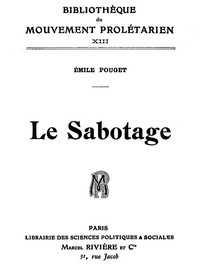
Le Sabotage by Emile Pouget
First off, let's clear something up. When you hear 'sabotage,' you probably think of dramatic explosions or cutting wires. Emile Pouget's 1910 pamphlet, Le Sabotage, is about something far more subtle, and in many ways, more powerful.
The Story
There isn't a traditional plot with characters. Instead, Pouget builds his case like a lawyer arguing for the legitimacy of a forgotten tool. He starts by looking at the brutal reality of industrial work at the turn of the 20th century—long hours, poverty wages, dangerous conditions. He argues that when strikes fail or aren't possible, workers have another option: the deliberate, calculated withdrawal of efficiency. He walks us through the methods: the 'Italian Strike' (working scrupulously, painstakingly slowly to the letter of the rules), producing shoddy goods, 'misplacing' crucial components, and fostering general, contagious bad service. The 'story' is the tension between the faceless power of the boss and the quiet, collective power of the fed-up employee.
Why You Should Read It
This book grabbed me because it’s so blunt. It's not a lofty philosophical treatise; it's a field manual. Pouget writes with the fiery conviction of someone who's been on the factory floor. Reading it, you get this eerie sense of time collapsing. The specific grievances are from 1910, but the feeling of being a cog in a machine you don't control is utterly modern. It makes you look at everyday workplace frustrations—the pointless meeting, the broken coffee machine, the software update that ruins your day—in a completely new light. It’s a short, punchy read that’s more about mindset than action. It argues that resistance isn't always a grand, public gesture; sometimes, it's in the quiet, shared understanding of not playing the game.
Final Verdict
This is a fascinating slice of history for anyone curious about labor movements, anarchist thought, or the roots of social protest. It’s perfect for the politically-minded reader who enjoys primary sources, or for anyone in a modern service job who needs a dose of historical solidarity. It’s not an easy, breezy novel—it’s a provocative argument. But at under 50 pages, it’s a quick, mind-bending look at a form of protest that never really goes out of style. Just maybe don't leave it on your desk at work.
This title is part of the public domain archive. Distribute this work to help spread literacy.
Barbara Perez
4 months agoThe clarity of the introduction set high expectations, and it addresses the common misconceptions in a very professional manner. Simple, effective, and authoritative – what else could you ask for?
Margaret Smith
2 years agoI found the data interpretation to be highly professional and unbiased.
Donald Garcia
1 year agoMy first impression was quite positive because the cross-referencing of different chapters makes it a great study tool. A trustworthy resource that I'll keep in my digital library.
Betty Hill
6 months agoAfter finishing this book, the clarity of the writing makes this accessible. I learned so much from this.








Patricia Moore
10 months agoFrom a researcher's perspective, the nuanced approach to the central theme was better than I expected. I'm genuinely impressed by the quality of this digital edition.