
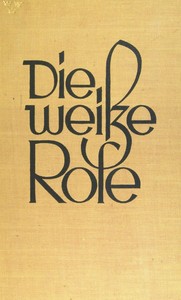
Die Weiße Rose by B. Traven
B. Traven is one of those mysterious, almost mythical authors. We don't even know his real name for sure. But in 'Die Weiße Rose,' he drops us straight into the dusty heart of Mexico with a premise that’s both simple and utterly compelling.
The Story
The story follows Conrad 'Gales,' an American oil prospector who makes the discovery of a lifetime on a remote piece of land called 'The White Rose.' The problem? The owner, Don Jacinto, is a humble, principled farmer who values his family's legacy over money. Gales sees a resource to be exploited; Don Jacinto sees his home. The novel becomes a tense negotiation, not just of land, but of two completely opposed worldviews. Gales, representing modern capitalism and foreign interests, tries every method—from straight purchase to complicated partnership deals—to get what he wants. Watching him twist in the wind, trying to justify his greed while facing Don Jacinto's quiet dignity, is where the real drama unfolds.
Why You Should Read It
What grabbed me wasn't just the plot, but how Traven refuses to paint anyone as a pure villain or hero. Gales is frustrating, but you understand his ambition. Don Jacinto is noble, but his stubbornness has consequences. Traven lets you sit with that discomfort. He’s showing us the raw mechanics of exploitation: how it's often not done with a gun, but with contracts, persuasion, and the assumption that progress is always right. The book feels incredibly relevant today. It asks the big questions: Who really owns the land? What do we owe to each other when there's a fortune on the line? It’s a critique of colonialism and unchecked capitalism, but it never feels like a lecture. It feels like a story about two men, one piece of land, and a whole lot of moral gray area.
Final Verdict
This book is perfect for anyone who loves a smart, thought-provoking story that’s light on action but heavy on ethical tension. If you enjoyed the moral complexities of Steinbeck or the stark social observations of someone like Upton Sinclair, you’ll find a lot to love here. It’s not a beach read; it’s a sit-in-your-chair-and-stare-at-the-wall-afterwards read. You’ll come for the intriguing premise, but you’ll stay for Traven’s unique voice and the haunting question at the book's core: What would you do if you could get away with it?
This content is free to share and distribute. Feel free to use it for personal or commercial purposes.
Elizabeth Williams
1 year agoThis work demonstrates a clear mastery of contemporary theories.
Mary Jackson
1 year agoIt took me a while to process the complex ideas here, but the concise summaries at the end of each section are a lifesaver. I appreciate the effort that went into this curation.
Nancy Williams
11 months agoThe clarity of the introduction set high expectations, and the author doesn't just scratch the surface but goes into meaningful detail. It definitely lives up to the reputation of the publisher.
Emily Moore
8 months agoMy first impression was quite positive because the objective evaluation of the pros and cons is very refreshing. This adds significant depth to my understanding of the field.






Sarah Rodriguez
4 months agoI took detailed notes while reading through the chapters and the logic behind each conclusion is easy to follow and verify. This adds significant depth to my understanding of the field.